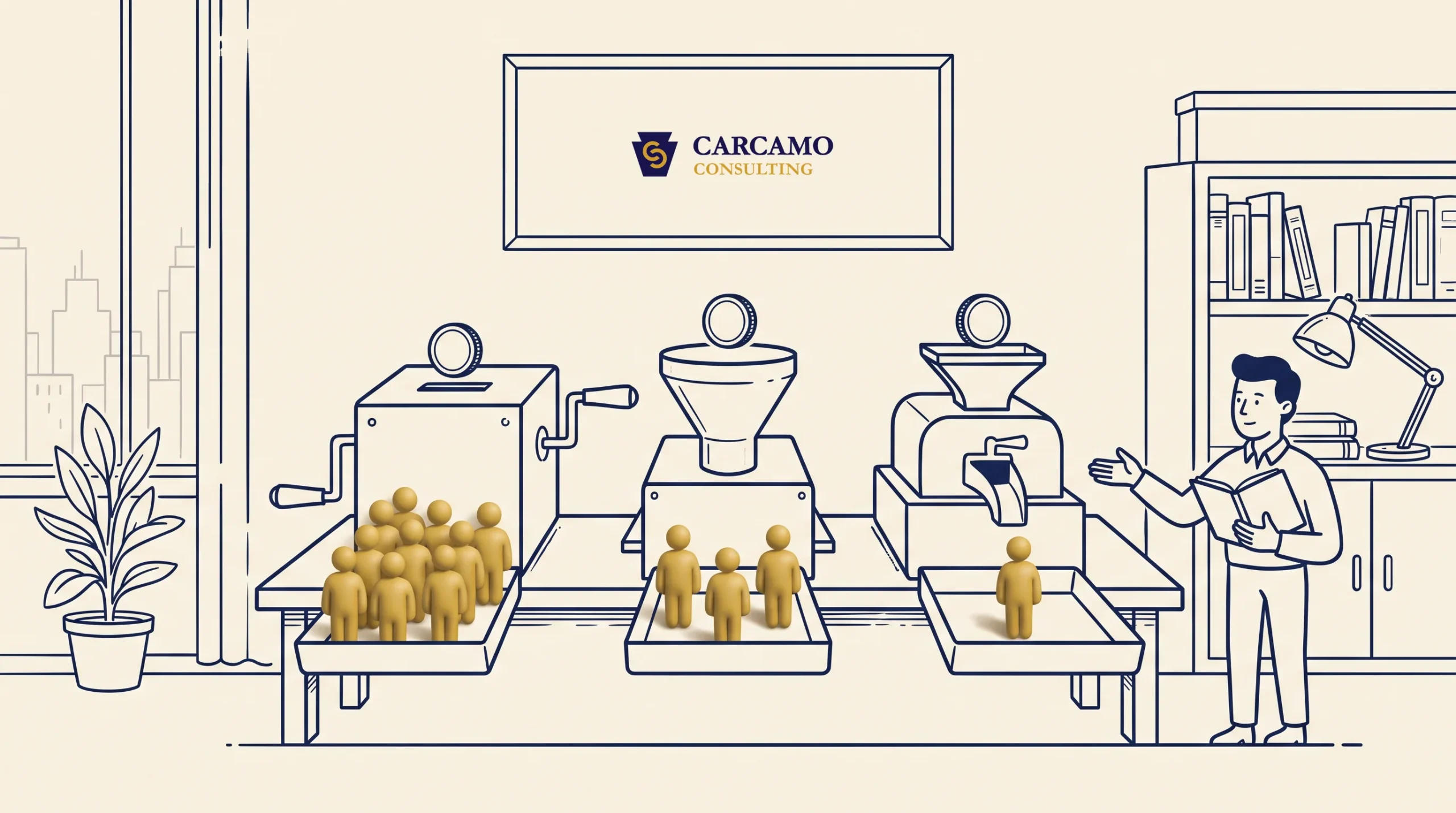

For most Pennsylvania small business owners, no — a Delaware LLC is not better. If you operate in Pennsylvania, you’ll need to register your Delaware LLC as a foreign entity in PA anyway, paying fees in two states and managing dual compliance. A domestic PA LLC is simpler and almost always cheaper.
The Delaware LLC myth is one of the most persistent pieces of bad advice circulating in small business communities. It comes from legitimate advice — for large corporations raising venture capital — that has been repeated out of context until it sounds universal. Here’s the full picture.
Where the Delaware Myth Comes From
Delaware genuinely is the gold standard for one type of entity: large corporations seeking institutional investment. Delaware’s Court of Chancery is a specialized business court with over 200 years of corporate case law. Venture capital firms and institutional investors often require portfolio companies to be Delaware corporations because the legal landscape is deeply predictable.
That context does not apply to a Pennsylvania LLC running a service business, consulting firm, or small operation. The reasons Delaware makes sense for a Series A startup do not transfer to a sole-member LLC doing $200K in annual revenue.
When formation service websites suggest Delaware for every business, they often benefit from higher filing fees and the recurring revenue of dual-state registered agent contracts. That financial incentive is worth keeping in mind.
The Problem Nobody Tells You About: Foreign Qualification
This is the most important piece of information in this entire post, and it’s the one most consistently buried or omitted by generic LLC guides.
If you form your LLC in Delaware but operate in Pennsylvania, you are legally required to also register that LLC in Pennsylvania as a foreign LLC. This is called foreign qualification, and it is not optional.
“Doing business in Pennsylvania” triggers the requirement, and that includes:
An unregistered foreign LLC operating in PA faces real consequences under 15 Pa. C.S. § 411: it cannot maintain a lawsuit or legal action in a Pennsylvania court until it registers, and it may face back taxes, penalties, and fees for the period it operated without registering.
What It Actually Costs: A Real Comparison
| Cost Item | PA Domestic LLC | Delaware LLC + PA Foreign Registration |
|---|---|---|
| State formation filing fee | $125 (one-time) | $90 DE (one-time) |
| PA foreign registration | Not required | $250 (one-time) |
| Annual report / franchise fee | $7/yr (PA Annual Report) | $300/yr DE franchise tax + $7/yr PA Annual Report |
| Registered agent (PA) | Optional ($49–$125/yr) | Required in both states (~$100–$250/yr combined) |
| Total Year 1 cost (estimate) | ~$125–$250 | ~$640–$900+ |
| Total ongoing per year | ~$7–$125 | ~$314–$550+ |
The numbers above assume you use a registered agent service for privacy. The Delaware path costs hundreds more per year for a small business that operates entirely in Pennsylvania — without providing any meaningful legal or tax benefit in return.
The Tax Benefit Is a Myth Too
A common misconception is that forming in Delaware somehow reduces Pennsylvania taxes. It does not.
Pennsylvania taxes income based on where it is earned and where members reside — not where the LLC was formed. A Delaware LLC earning income from Pennsylvania customers, with a Pennsylvania-resident member, generates exactly the same Pennsylvania income tax liability as a domestic PA LLC. The PA flat rate of 3.07% applies regardless of your formation state.
Delaware also has no state income tax on income earned outside Delaware — but that exemption only helps if you’re actually doing business in Delaware. If you live and work in Pennsylvania, you’re earning income in Pennsylvania, and Pennsylvania taxes it.
When Delaware Does Make Sense
Delaware LLC formation is a legitimate choice in specific situations. The key question is whether the benefits outweigh the dual-state cost and complexity.
Raising Institutional Venture Capital
If you’re building a startup that will seek formal venture capital investment or go through accelerator programs like Y Combinator, many institutional investors require a Delaware C-corp. For VC-backed startups, Delaware is often not optional. Note: this applies to Delaware corporations, not typically LLCs.
Pure Holding Companies with No PA Operations
A Delaware or Wyoming LLC used purely as a holding company — to hold real property, intellectual property, or investment accounts, with no active operations in Pennsylvania — may avoid the foreign qualification trigger. Holding structures with minimal Pennsylvania nexus can legitimately benefit from Delaware’s privacy or Wyoming’s cost profile. This is a narrow exception and should be evaluated with an attorney.
Multi-State Businesses with Significant Non-PA Revenue
If your business operates substantially in multiple states and you’re already managing several foreign registrations, forming in Delaware might make sense as a neutral home state. For a business primarily serving Pennsylvania customers, this scenario doesn’t apply.
What About Wyoming?
Wyoming LLCs get mentioned alongside Delaware as an alternative for privacy or low costs. Wyoming has no state income tax, no franchise tax, lower formation fees, and stronger charging order protection than many states.
For a Pennsylvania-operating business, the same foreign qualification issue applies. You’d pay $102 to form in Wyoming plus $250 to foreign qualify in PA, and you’d owe Wyoming’s $60/year minimum fee plus Pennsylvania’s $7/year annual report. The math still doesn’t favor Wyoming over a domestic PA LLC unless you have a specific reason.
Wyoming is worth considering for anonymous holding structures where the PA foreign qualification requirement doesn’t apply — the same narrow exception as Delaware.
The Bottom Line for Pennsylvania Business Owners
Form in Pennsylvania if:
Consider Delaware or Wyoming only if:
For the overwhelming majority of Pennsylvania entrepreneurs starting or running a business here, a domestic PA LLC formed through the PA Business Filing Services portal for $125 is the right answer.
Frequently Asked Questions
Delaware does not tax income earned outside of Delaware, so you won’t owe Delaware income tax on Pennsylvania operations. But you will owe Pennsylvania income tax on income earned in Pennsylvania regardless of where your LLC is formed, plus Delaware’s annual franchise tax of $300. The net effect is higher total costs, not lower taxes.
Delaware does not require member or manager names in its public filings, which provides some privacy at the Delaware level. However, if you foreign qualify in Pennsylvania, the PA registration is also public record. If privacy is your goal, the better approach is a domestic PA LLC using a registered agent service — or the double LLC method using an anonymous holding LLC in New Mexico or Wyoming as the PA LLC’s member.
No. If you conduct business in Pennsylvania — serving PA customers, working from PA, holding property in PA — you are legally required to register as a foreign LLC in Pennsylvania. Operating without registration puts you at risk of not being able to sue in PA courts, and you could owe back fees and penalties for the unregistered period.
The Pennsylvania Foreign Registration Statement filing fee is $250 (one-time). Foreign LLCs registered in Pennsylvania also owe the $7 annual report fee each year, the same as domestic LLCs.
Almost certainly not in a practical way. Delaware’s Court of Chancery provides predictable, sophisticated legal interpretations that matter when institutional investors, complex shareholder agreements, or large M&A transactions are involved. For a small LLC with a single member or a few members operating a business, a dispute is far more likely to play out in Pennsylvania anyway — especially if your operations, members, and assets are all in PA.
 Previous