If you’re not getting customers, the cause is almost always one of six things, and they sit in a fixed order. Not enough people know you exist. The wrong people are finding you. The right people can’t tell what you do.
Or they don’t trust you yet, or nobody ever asked them to buy, or you’re only ever talking to the small slice of the market that’s ready today.
Work down that list in order and you’ll find yours, usually within an afternoon.
Owners reach for the same explanation first, almost every time, and it’s the one cause that’s rarely responsible for any of it.
The Four Things That Have to Happen Before Anyone Buys
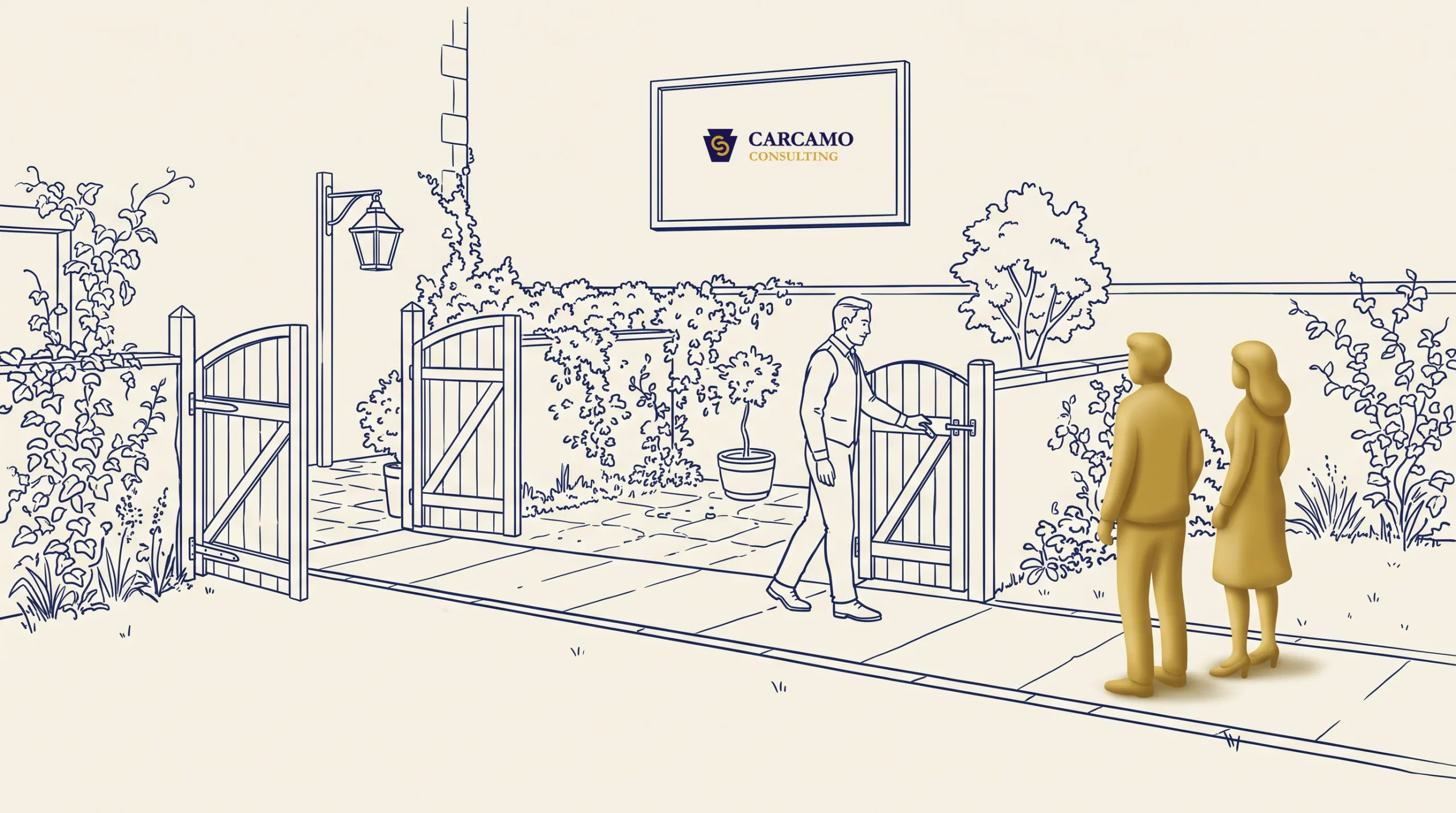
Every customer you’ve ever had passed through four gates in the same order. Reach, then fit, then trust, then the ask.
- Reach: they encountered you at all, whether that’s a search result, a sign, a post, a neighbour’s recommendation.
- Fit: they were actually someone who could use what you sell, in your area, at your price.
- Trust: they believed you’d do the job properly and not disappear.
- The ask: somebody, at some point, invited them to take the next step, and then followed up when they didn’t.
A closed gate stops everything downstream. A beautiful website behind zero reach gets nobody. Enormous reach at the wrong people gets nobody. This is why fixing things in a random order feels so unrewarding: you can spend three weeks and $2,000 improving a gate that was already open.
That’s the ordinary version of this story. A landscaper redesigns his website twice in a year and nothing changes, because the site was never the problem; sixty people a month were reaching it and forty of them lived outside the towns he serves. He rebuilt a gate that was already open while the closed one sat two steps upstream, untouched and free to fix.
Diagnosis is just finding the first closed gate, and the rest of this is how to do that quickly.
Why You’re Not Getting Customers: Match the Symptom to the Cause
Start with what you actually observe, not with what you suspect.
| What you’re seeing | Most likely cause | Where to look first |
|---|---|---|
| Almost no calls, forms, or messages at all | Nobody knows you exist | Search your own service in your own town and see if you appear |
| Plenty of enquiries, none of them a real fit | The wrong people are finding you | The wording of your ads, listings and posts |
| Website visits, no calls | They can’t tell what you do or why you | Your homepage’s first screen, on a phone |
| Calls that go well, then nothing | They don’t trust you enough yet | Your reviews, photos, and how fast you respond |
| Quotes sent, silence after | Nobody ever asked them | Whether you follow up at all, and how many times |
| Bursts of work, then long dead spells | You’re only speaking to today’s buyers | Whether anything you do reaches people before they need you |
One row will feel uncomfortably familiar. That’s your starting point, and it’s usually the only one worth working on this month.
If two rows feel true, take the higher one in the table. The list runs in the order customers move through, so the earlier cause is the one holding back everything under it, and clearing it often makes the second problem look smaller than it did.
Nobody Knows You Exist
The most common reason a small business isn’t getting customers is the least dramatic one: not enough people have encountered it. No amount of polish fixes an audience of nobody.
The test takes two minutes. Open a phone you’re not signed in on, search the way a customer would (“emergency plumber near me”, “office cleaning Wilkes Barre”), and look at what comes back. If you’re not in the map results, not on page one, and not in the sponsored slots, then for the purposes of that search you don’t exist.
The fixes here are unglamorous and they work:
- Claim and complete your Google Business Profile, with real photos, correct hours, every service listed, and your service area set properly. For a local business this is usually the single highest returning hour of work available.
- Ask for reviews on purpose, from every satisfied customer, every time. Reviews are both a trust signal and a ranking signal, so they pay twice.
- Get listed where customers actually look for your trade, whether that’s directories, trade association pages, or the local groups where people ask for recommendations.
- Tell the people who already know you. Past customers, neighbours, and the businesses next door are reach you already have and mostly aren’t using.
This cause gets under diagnosed for an uncomfortable reason: it’s the least interesting one. Nobody wants to hear that the answer is a business listing and a habit of asking for reviews, so owners skip past it toward something that feels more like strategy. The businesses that quietly do the boring version end up with a phone that rings while their competitors are still choosing a colour palette.
If you have almost no inbound activity, stop here. Every other cause is downstream of this one, and none of them matters yet.
The Wrong People Are Finding You
This one is deceptive, because it looks like activity. The phone rings, the inbox fills, and none of it turns into work. People want something you don’t do, live outside your area, or want it at a price no one could deliver.
Three usual culprits:
- Your service area is set too wide, so half your enquiries are drives you’d never take.
- Your wording describes a category, not a customer. “Cleaning services” attracts everyone from a landlord doing one move out to a hospital wanting a contract, and the two have nothing in common.
- You never decided who you’re for. Trying to appeal to everyone is what produces messaging so general that it connects with nobody, and it’s why defining your ideal customer does more for lead quality than any change to your ads.
The fix is narrowing, and it feels like turning away money. It isn’t. Naming the customer you want out loud filters out the ones you don’t, and a smaller number of right enquiries beats a large number of wrong ones on every measure that pays a bill.
They Can’t Tell What You Do or Why It Should Be You
If people are reaching you and going quiet, look at what they see when they arrive.
Pull up your own homepage on your phone and give it five seconds, the way a stranger would. In five seconds a visitor should be able to answer three questions: what does this business do, does it serve me, and how do I get in touch. If any of those takes scrolling, hunting, or guessing, you’re losing people who were genuinely interested.
The recurring problems are boring and fixable:
- The headline describes an ambition (“excellence you can trust”) instead of a service.
- The phone number isn’t visible without scrolling on a phone.
- There’s no clear next step, or there are six competing ones.
- The photos are stock images of people who don’t work there.
- The page never says what area you cover.
Clarity beats cleverness at every point in this list, which is why the conversion basics on your own website are usually worth more than another month of ad spend. You’re not persuading anyone here. You’re getting out of the way of people who already want what you sell.
They Don’t Trust You Enough Yet
Sometimes the conversation goes well, the price is fine, and the customer still doesn’t book. Nine times out of ten that’s trust, and trust with a stranger is built out of evidence rather than enthusiasm.
What actually moves it for a local business:
- Reviews, in volume and recent. A handful from three years ago reads worse than a steady trickle from this month.
- Photographs of your own work, not stock. Before and after beats a gallery of finished shots.
- Speed of response. Answering within an hour signals reliability more powerfully than any claim on your website.
- A written quote that explains what’s included, which quietly says you’ve done this before.
- Proof you’re real: licenses, insurance, how long you’ve been going, your face and your name on the page.
Notice that none of those is persuasion. Trust isn’t built by insisting you’re trustworthy, and the businesses that say it loudest on their homepages tend to have the least evidence behind them. It’s built by stacking small, checkable facts until a stranger has no reason left to doubt you.
A shortcut worth knowing: your existing customers are the cheapest trust you’ll ever buy. One customer willing to say your name in a local group does more than a month of your own posting, because the recommendation is the evidence.
Nobody Ever Asked Them
This one costs more money than the rest combined, and it’s the easiest to fix.
Most small businesses quote and wait. The quote goes out, nothing comes back, and the owner reads the silence as a no. Usually it’s neither yes nor no; the customer got busy, wanted to talk to a partner, or is waiting on someone else’s timeline entirely.
Look at your own numbers. How many quotes went out last month, and how many did you follow up on more than once? For most owners the honest answer is that follow up happens when they remember, which means it happens rarely and inconsistently.
Two changes fix it:
- Make the next step explicit and small. “Would you like me to hold Thursday morning?” gets an answer. “Let me know” doesn’t.
- Follow up on a schedule, not a feeling. A short message a few days later, another the following week, and one more a month on. There’s a way to follow up without being pushy that most owners never learn, mostly because a single unanswered message feels like rejection when it’s usually just a busy week.
You’re Only Speaking to the People Ready Today
If your work arrives in bursts with long dead spells between, the problem may not be any of the above. It may be timing.
At any given moment only a small slice of your market is actually shopping. Chet Holmes’ Buyer’s Pyramid puts it at roughly 3 percent ready to buy right now. In business to business markets, Professor John Dawes at the Ehrenberg-Bass Institute put a sharper number on it with the 95:5 rule. About 5 percent of buyers are in market in a given quarter, because most companies change suppliers only once every five years or so.
Whatever your exact slice, the consequence is the same. A business that only ever speaks to today’s buyers is fishing in a pond that refills slowly. And judging a channel by this month’s sales badly underrates anything that reaches people before they need you.
The fix isn’t more urgency. It’s staying visible to the other 90 odd percent so that when their moment arrives, you’re the name they already know.
That means reviews accumulating, a Google profile that answers real questions, occasional useful posts, and past customers who hear from you once in a while. None of it converts today. All of it decides who gets called in March.
What Is Usually Not the Reason
Here’s the explanation owners reach for first: the price. “People think we’re too expensive” is the most common self diagnosis in small business, and it’s rarely the real cause.
Price is what a customer says when they mean something else. If the value isn’t obvious, everything looks expensive; if it is, a higher price often reads as better. Businesses that cut prices to fix a customer problem almost always end up with the same number of customers, less margin, and a harder job raising prices back.
Three other suspects that get blamed more than they deserve:
- Your logo and branding. A dated logo has never been the reason a business had no customers. It matters at the margins, long after the gates above are open.
- Not being on every platform. Being genuinely findable in one place beats being half present in five.
- The competition. In a local market there’s almost always more work than any one business can take. Losing a customer to a competitor who was easier to find is a reach problem wearing a costume.
There is a clean way to tell the difference. Count your last twenty quotes.
If most of them became work and you’re still not making money, your prices are genuinely too low. If most went nowhere and the customers never said why, that’s a trust or follow up problem wearing price as a disguise. And if you never sent twenty quotes in the first place, price has nothing to do with any of it.
Price is worth examining when your close rate is high but your margin is thin, or when you’re losing bids you should win by a hair. Those are pricing problems. “Nobody’s calling” is not.
Fix Them in This Order
Order matters more than effort here, because each gate is upstream of the next.
- Reach first. If nobody can find you, nothing else you do gets seen. Google Business Profile, reviews, and telling the people you already know.
- Fit second. Once enquiries arrive, make sure they’re the right ones before you spend on more of them.
- Clarity third. Fix what a stranger sees in the first five seconds, on a phone.
- Trust fourth. Accumulate the evidence: reviews, photos, response speed, a real quote.
- The ask fifth. Put a follow up rhythm in place and hold to it.
- Timing last. Build the slow, steady presence that reaches people before they’re shopping.
None of this needs a budget to start. Reach, fit, and the ask cost time rather than money, and between them they account for most of the customers a small business is missing. The expensive work only becomes worth doing once those three are handled, which is the opposite of the order most owners try.
Do one at a time and give each a fair run, at least a few weeks, before you judge it. Changing five things at once means you’ll never know which one worked, and the version of this problem you’ll face next year is best solved by knowing which lever actually moves your business. If you want the full playbook rather than the diagnosis, the complete guide to getting customers covers what to do once the gates are open.
Frequently Asked Questions
I get website traffic but no calls. What’s wrong?
Traffic without calls is a conversion problem rather than a visibility problem, so the fix is on the page and not in the marketing. Check three things in order: whether a stranger can tell what you do within five seconds on a phone, whether your phone number and a clear next step are visible without scrolling, and whether the traffic is even the right people. Visitors from outside your service area are a targeting problem in disguise.
How long should it take to start getting customers?
Paid advertising and direct outreach can produce enquiries within days, and a properly completed Google Business Profile often brings calls within a few weeks. Reputation and search visibility take longer, typically six to twelve months to carry real weight. If you’ve been trading for months with almost nothing, that’s not a patience problem, it’s a sign the first gate is closed.
Should I lower my prices to get more customers?
Rarely, and almost never as a first move. If nobody is calling, price isn’t the issue because nobody has heard your price yet. Lowering it before you’ve fixed reach, clarity, and trust usually produces the same number of customers at lower margin, and raising prices back is much harder than holding them. Examine price when you’re consistently losing quotes you should win, not when the phone is quiet.
Why do people ask for a quote and then disappear?
Usually because life got busy, not because they chose someone else. Most owners send one quote and read silence as a decision, when the customer is often still deciding or waiting on a partner. A short, friendly follow up a few days later, then another the next week, recovers a meaningful share of those jobs. If quotes vanish even after follow up, check whether the quote itself explains what’s included clearly enough to say yes to.
Is it my website or my marketing?
Check the volume first. If very few people are arriving at all, it’s marketing, meaning reach. If people are arriving and not contacting you, it’s the website, meaning clarity and trust. The dividing line is whether the traffic exists, so look at your visitor numbers before you spend anything on either.
Do I need to be on social media to get customers?
Not necessarily. For most local service businesses, search visibility, reviews, and referrals produce far more customers than social posting does. Social is useful for staying familiar to people who aren’t ready to buy yet, which is a real job, but it’s a poor substitute for being findable at the moment someone needs you. If your time is limited, complete your Google Business Profile and chase reviews before you post anything.
Not getting customers feels like one large failure, and it almost never is. It’s one closed gate, usually the first one, and gates are specific things you can open. Find the symptom that matches your week, work on that cause alone, and give it long enough to tell you something.
If you’re not sure which gate is yours, that’s a fine question to bring to someone who’s looked at a lot of them. Send it over. It’s free to ask, and a real person answers.
 Previous