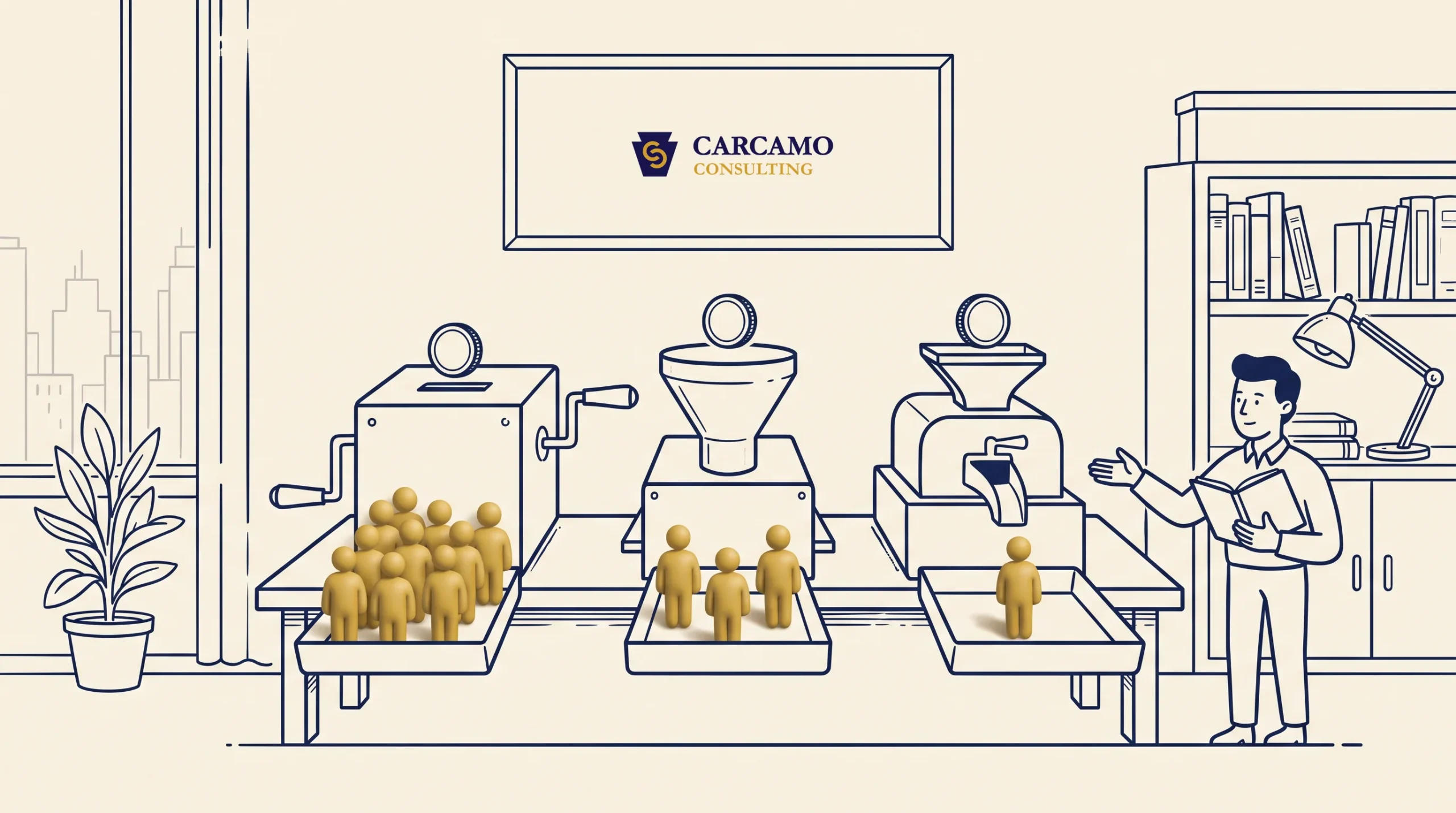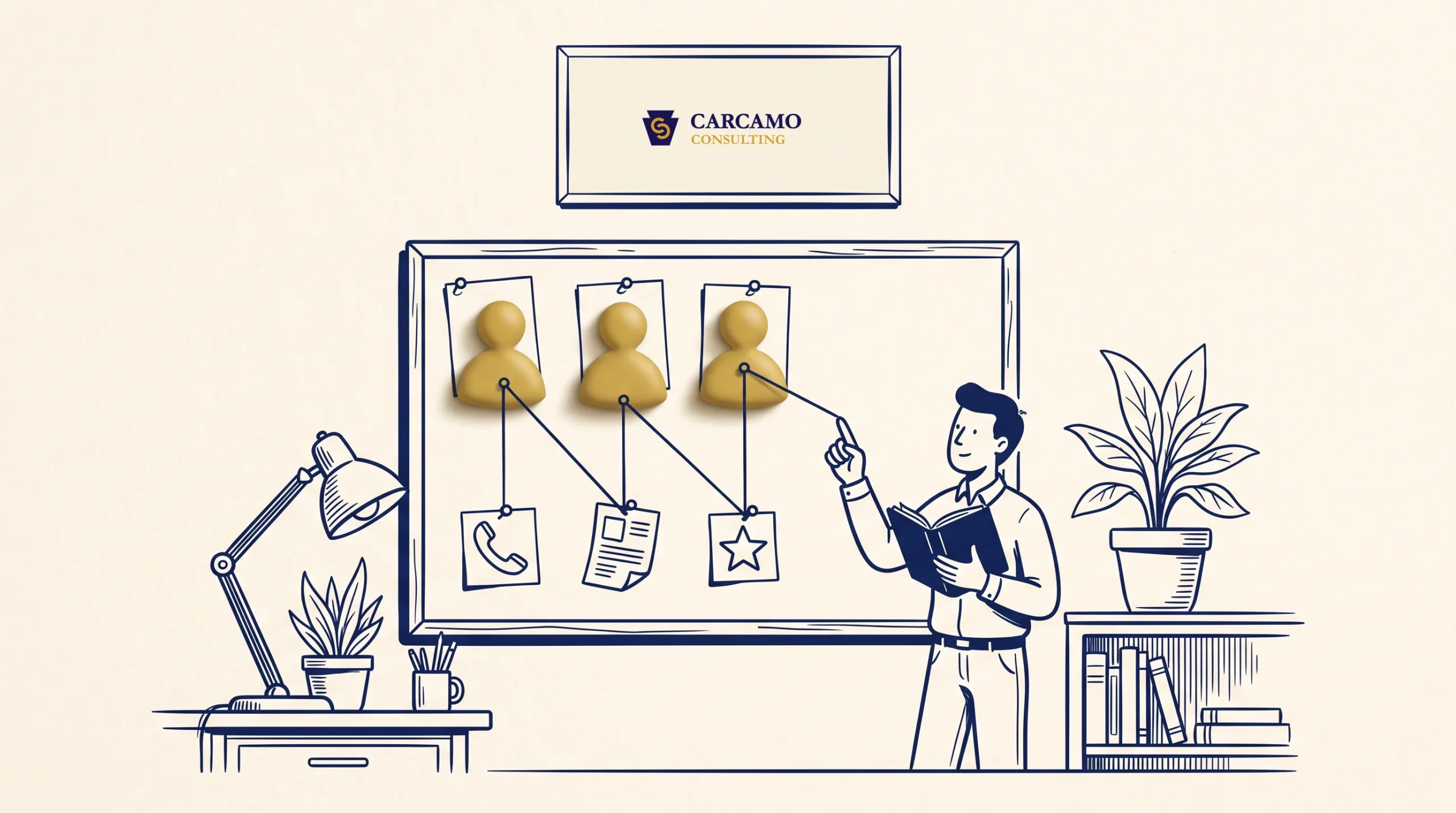

Most networking events will waste your evening. The trick to finding the right networking events is to stop asking “is this a good event” and start asking “will my customers or the people who refer them be in this room.” Match the room to who you serve, and networking starts paying for itself. Walk into the wrong room and you spend two hours trading business cards with people who want to sell to you, not buy from you.
You do not need to attend more events. You need to attend the right two or three, consistently, and skip the rest without guilt.
The one test that sorts good events from bad
Before anything else, run every event through a single filter: is this room full of buyers, or full of sellers?
A room full of other business owners who all want new customers is a room full of sellers. Everyone is there to pitch, nobody is there to buy, and you leave with a pocket of cards and no leads. A room where your actual customers gather, or where the people who serve your customers gather, is where the work happens.
For a local service business, that usually means one of two things. Either the room has your ideal customers in it (a community group, a trade association your customers belong to, a local business your customers run), or it has your referral partners in it (businesses that serve the same customer right before or after you do). Those are the rooms worth your time. Everything else is practice at best.
First, get clear on who you are actually trying to meet
You cannot pick the right room until you know who you want in it. Spend five minutes and answer two questions.
Who is my ideal customer? Not “anyone with money.” The specific person: a homeowner planning a remodel, a small business that needs bookkeeping, a bride planning a wedding. The clearer this is, the easier every event decision gets.
Who already serves that customer? These are your referral partners. A remodeler and a real estate agent. A caterer and a wedding planner. An accountant and a business consultant.
If an event is full of these people, it can be gold even if not a single customer is in the room.
With those two answers, most events sort themselves. If the attendee list is neither your customers nor the people who serve them, it is the wrong room, no matter how nice the venue is.
The types of events worth your time
Not all formats are equal. Here is how the common ones actually perform for getting clients.
Referral and lead groups (BNI and similar)
These are structured around one thing: members passing business to each other. Each seat is usually exclusive to one trade, so there is one plumber, one lawyer, one you.
If you rely on referrals, this is often the highest return format, because the whole point of the room is sending each other work. The trade-off is a real weekly time commitment.
Chamber of Commerce events
Your local Chamber runs mixers, lunches, and ribbon cuttings, and it connects you to other local business owners and the community. It is a strong, low cost place to start, especially if your customers are local and you want to be known around town. It leans more toward relationship building than immediate leads, so treat it as a long game.
Industry associations and trade shows
If you sell to a specific industry, the association or trade show for that industry puts you in a room full of exactly those buyers. This is the closest thing to a room full of customers, which is why trade shows are a workhorse for businesses that sell to other businesses.
Community and interest events
Chamber-adjacent community events, local charity functions, and even hobby meetups can work when your customers are local consumers. You are not pitching, you are becoming a known, trusted face in the community, which is how local word of mouth starts.
General “business networking” mixers
The open mixer where anyone can come is the format most likely to be a room full of sellers. It is not useless, you can meet a referral partner anywhere, but it has the lowest hit rate, so do not build your plan around it.
Finding the right networking events: where to look
Once you know the kind of room you want, finding specific events is quick:
- Your local Chamber of Commerce website. The single best starting point for local events, usually with a public calendar.
- Eventbrite and Meetup. Search your city plus your industry or your customer type. Filter by date and location.
- Industry associations. Almost every trade has one, and they list their events and conferences.
- LinkedIn and local Facebook groups. Follow peers and local business pages and watch for what they post about attending.
- Ask three business owners you respect what they actually attend each year. This one line of research beats any search, because they have already filtered out the duds.
Vet an event before you commit the evening
Before you register, run a quick check. Any event that fails most of these is a skip.
- Who attends? Look at past photos, the host, the sponsor list. Can you tell whether your customers or partners will be there? If you cannot tell, ask the organizer directly.
- Buyers or sellers? Is this built to connect businesses with customers, or is it business owners networking with each other? Both can work, but know which one you are walking into.
- What does it cost, in money and time? A free two hour mixer and a paid weekly commitment are very different bets. Match the cost to how likely the room is to hold your people.
- Is it recurring? Relationships form through repetition. A recurring event you can attend monthly beats a one time gala, because the value is in showing up again.
If an event clears this check, put it on the calendar and commit to attending it a few times before you judge it. One visit is never a fair test.
Pick two or three, then show up like you mean it
The goal is not a packed calendar. It is a short, deliberate list you actually work.
If you serve local consumers, start with your Chamber and one community group where your customers gather. Become a familiar local face, and let word of mouth build.
If you serve other businesses, prioritize the industry association or trade show where your buyers already are, plus one referral or lead group to keep partners sending you work.
If referrals are your lifeblood, a structured lead group is worth the weekly commitment, because it is engineered to do exactly what you need.
Whatever you pick, the money is made after the event, not during it. A short follow up the next day turns a handshake into a relationship, and it is the step that quietly gets skipped.
If the crowded-room part still drains you, there are quieter ways to build the same relationships in our guide on how to network when you hate networking. And the partners you meet at these events are the start of the referral partnerships that keep work flowing.
Frequently asked questions
What networking events are best for getting clients?
The ones where your actual customers or your referral partners gather, not general business mixers. For local service businesses that usually means Chamber of Commerce events, an industry association or trade show for the customers you sell to, and a structured referral group. Skip open mixers full of other owners all looking for the same thing you are.
How do I find networking events near me?
Start with your local Chamber of Commerce calendar, then search Eventbrite and Meetup for your city plus your industry or customer type. Check the trade association for your field, watch local Facebook and LinkedIn groups, and ask a few business owners you respect what they attend each year. That last question usually surfaces the best events fast.
Are Chamber of Commerce events worth it?
For local businesses, usually yes, especially early on. They are low cost, they connect you to the local business community, and they help you become a known face around town. Treat them as relationship building and a long game rather than a source of instant leads, and they pay off through word of mouth and referral partners over time.
Is BNI worth it for getting clients?
If your business runs on referrals, a structured lead group like BNI is often worth it, because the entire format is built around members passing business to each other and each trade seat is usually exclusive. The catch is the weekly time commitment. If you cannot commit to showing up consistently, you will not see the return, so be honest about that before you join.
How do you know if a networking event is worth attending?
Ask who will be in the room. If you cannot tell whether your customers or referral partners will be there, ask the organizer before you register. Then weigh the cost in money and time against how likely the room is to hold your people, and favor recurring events over one time galas, since relationships form through showing up again.
How many networking events should I go to?
Fewer than you think. Two or three well chosen events you attend consistently will do more than a dozen you drop in on once. A crowded networking calendar usually means shallow relationships, and shallow relationships do not send you clients. Pick a short list and work it.
If you are not sure which rooms actually hold your customers, that is exactly the kind of thing we can help you figure out. Send us your question, it is free, and a real person will help you build a networking plan that fits your business instead of just filling your calendar.
 Previous