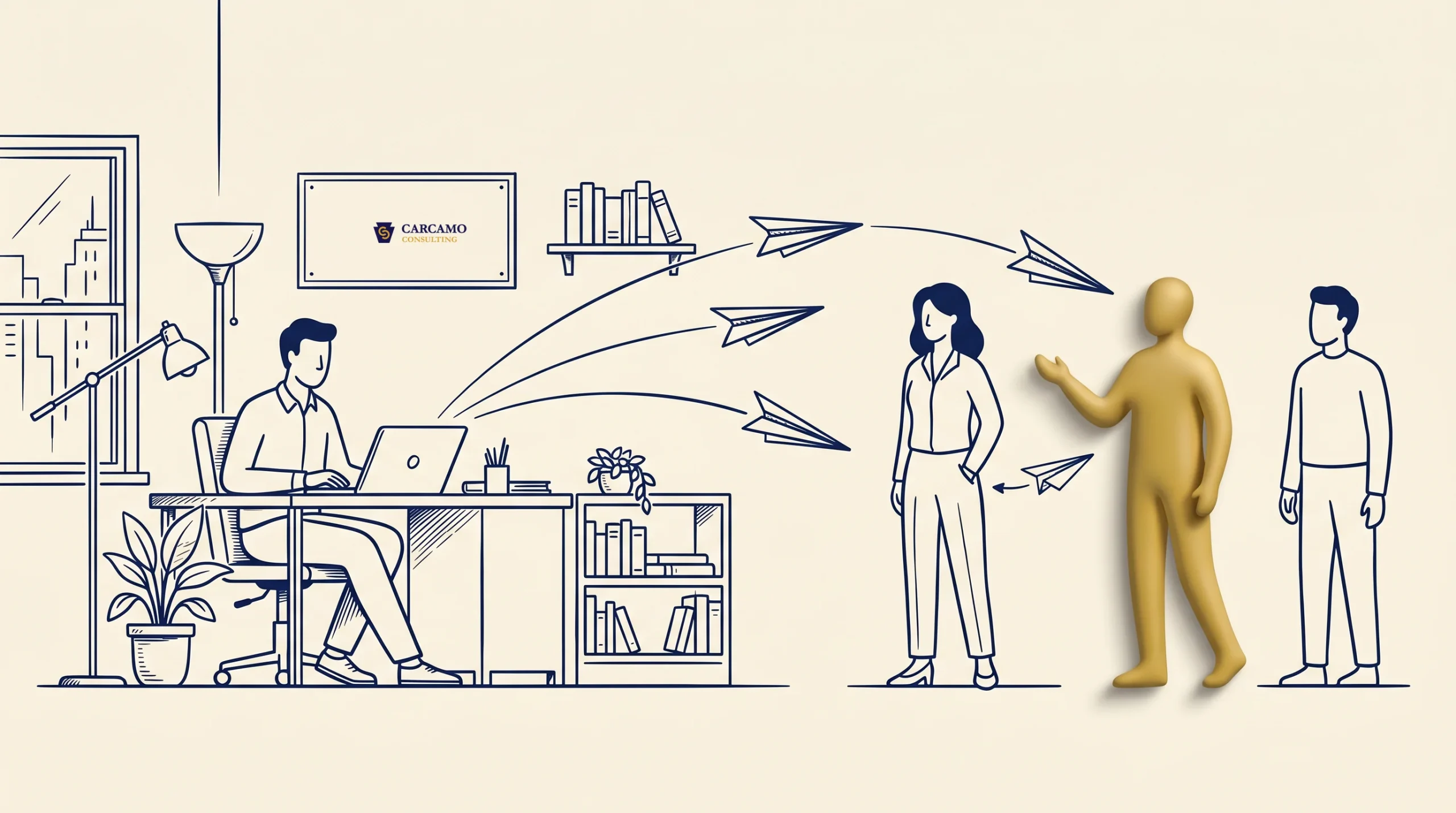
Most ways of getting customers mean waiting to be found. You post, you optimize, you run ads, and you hope the right person notices. Direct outreach flips that. Instead of waiting, you go straight to the specific people you want as customers and start a conversation.
You get customers with email and direct outreach by choosing exactly who you want to reach, leading with something useful instead of a pitch, keeping the message short and personal, and following up more than once. It is one of the few channels where you control who hears from you, and for a small business it can produce customers faster than anything that depends on being discovered.
What direct outreach actually is
Direct outreach means proactively contacting a specific person to start a business relationship. Email is the workhorse, but the channel also includes LinkedIn messages, direct messages on social platforms, and plain phone calls.
It splits into two kinds, and the difference matters:
- Warm outreach goes to people who already know you: past customers, old leads that went quiet, people you met once, contacts who asked about your work. They recognize your name, so the barrier is low.
- Cold outreach goes to people who have never heard of you but fit exactly who you serve. The barrier is higher, so relevance and personalization do all the work.
Almost every small business should start with warm outreach, because it is faster, friendlier, and more likely to convert. Cold outreach is the growth lever you add once the warm list is worked.
Outreach is the clearest form of outbound. If you are still deciding whether to lean on proactive outreach or on getting found, our breakdown of inbound versus outbound is a useful place to start.
When outreach is worth your time
Direct outreach is not right for every business or every moment. It shines in specific situations:
- You know exactly who your customer is. Outreach rewards a clear target. If you can name the type of person or business that needs you, you can reach them directly.
- Each customer is worth a meaningful amount. The effort per contact is real, so it pays off best when one new client is worth hundreds or thousands, not a few dollars.
- You sell to other businesses, or to a definable niche. Reaching a property manager, a clinic, or an office is straightforward. Reaching “anyone who might want a coffee” is not.
- You need customers sooner than SEO or content can deliver. Outreach can start conversations this week, which the slow build channels cannot.
If you sell low price items to a broad general audience, your energy is better spent on visibility channels. If you sell a considered service to a specific kind of buyer, outreach may be your single best channel.
How to get customers with email and direct outreach the right way
The gap between outreach that lands and outreach that gets deleted comes down to a handful of habits. None of them require software or a sales team.
Start with who, not what
The most common outreach mistake is a good message sent to the wrong people. Before you write a word, define who you are reaching: the exact type of business or person, and why they specifically need what you do. A sharp list of 50 right fit prospects beats a random blast to 500.
Lead with value, not a pitch
Nobody wants to be sold to by a stranger. They will happily accept help. Open by showing you understand their situation, and offer something useful before you ask for anything: a relevant observation, a quick tip, a genuine compliment on something they did. The pitch, if there is one, comes after the value.
Keep it short and make it personal
A cold email that shows you actually looked at the recipient beats a long, polished template every time. Reference something specific to them. Keep the whole message to a few sentences. Close with a low pressure question, not a hard ask, something like “Would it be helpful if I sent a few ideas?”
Follow up, then follow up again
This is where most small businesses leave money on the table. People are busy and forget to reply, even when interested. A short, polite follow up a few days later, then one more after that, is where a large share of all replies actually come from.
You are not being annoying if each touch is brief and useful. You are being persistent, which is different.
Go multichannel
An email plus a LinkedIn message plus, when it fits, a phone call reaches people that any single channel misses. For business buyers especially, pairing email with a thoughtful LinkedIn note works well, and our guide to getting B2B customers on LinkedIn goes deep on that channel.
Keep it legal and ethical
Outreach done wrong damages your name and can break the law. Done right, it is completely legitimate. In the United States, business email is governed by the CAN-SPAM Act, and the rules are simple to follow:
- Tell the truth in your headers and subject line. Your From, Reply address, and subject must be accurate, not tricks to get opened.
- Give a real physical address. Commercial messages must include a valid postal address for your business.
- Make opting out easy, and honor it fast. Give people a clear way to say “stop,” and stop within 10 business days. Never sell or pass on the address of someone who opted out.
Penalties are steep, assessed per email, so this is not a corner to cut. Beyond the law, the ethics are just good business: never buy junk email lists, never disguise an ad as a personal note, and never keep messaging someone who asked you to stop. Respect earns replies. Spam earns a block.
The numbers to expect
Outreach is a game of relevance and volume, and honest expectations keep you from quitting too early.
- Reply rates are low, and that is normal. Even good cold email campaigns see replies in the low single digits as a percentage. A 3 in 100 reply rate is not failure, it is the channel working as designed.
- Warm outreach converts far better than cold. Messaging people who know you can reply and convert at many times the rate of strangers, which is why you start there.
- Follow-ups do the heavy lifting. A meaningful share of replies come from the second and third message, not the first. Send once and stop and you leave most of the results uncollected.
- It is a pipeline, not a lottery. Steady, targeted outreach a little each week compounds into a reliable stream of conversations, which is the real product of the channel.
A conversation is not a customer yet. Once someone replies with interest, the sale is won the same way any sale is: by helping, not pushing. If that part makes you nervous, here is how to turn a conversation into a customer without being salesy.
Build the list outreach runs on
Outreach only works if you have people to reach, and the best list is one that grows on its own.
Warm contacts come from every customer, inquiry, and conversation you have ever had, so save them. Cold prospects come from clearly defining your ideal customer and then finding where they are listed, gather, or work.
You can also make people raise their hand so warm outreach fills your list for you. A simple offer on your site that collects an email in exchange for something useful turns strangers into contacts you have permission to reach. That is exactly what lead magnets do, and they pair perfectly with an outreach habit.
Keep the list clean and organized, note who you contacted and when, and treat it as the asset it is. The list is what makes outreach repeatable instead of a one-time scramble.
Frequently asked questions
Does cold email still work?
Yes, when it is targeted and personal. Reply rates are low by nature, usually in the low single digits, but a small percentage of a well chosen list still produces real conversations. Cold email fails when it is generic and blasted to the wrong people. It works when each message is relevant to the specific recipient and backed by a genuine follow up.
Is cold emailing legal?
In the United States, yes, as long as you follow the CAN-SPAM Act. That means accurate From and subject lines, a real physical address in the message, a clear and easy way to opt out, and honoring opt out requests within 10 business days. You must never keep emailing someone who asked you to stop. Buying shady lists and disguising ads as personal notes is how businesses get into trouble.
What is the difference between cold email and email marketing?
Cold email is a one to one message to a specific prospect who has not heard from you, aimed at starting a conversation. Email marketing is sending to a list of people who opted in to hear from you, usually the same message to many, aimed at nurturing and selling over time. Outreach starts relationships; email marketing deepens them.
How many follow ups should I send?
Two or three is a sensible range for most small businesses. A large share of replies come from follow ups rather than the first message, so stopping after one leaves results on the table. Keep each follow up short, useful, and polite, space them a few days apart, and stop once someone replies or clearly is not interested.
How do I find the right person to contact?
Start by defining exactly who your customer is, then look where they are already visible: local business directories, professional associations, LinkedIn, company websites, and events. For local businesses, reaching the owner or manager directly is usually best. A short, specific list of the right people beats a long list of the wrong ones every time.
How long before outreach brings in customers?
Faster than most channels, but not instant. Warm outreach can produce replies and even sales within days. Cold outreach usually takes a few weeks of consistent sending and following up before it turns into steady conversations. Treat it as an ongoing habit rather than a one-time push, and the pipeline builds within a month or two.
Direct outreach gives you something no other channel does: control over exactly who hears from you. Start with the people who already know you, reach the right strangers with genuine relevance, lead with value, and follow up. Do that consistently and you stop waiting to be found.
If you are trying to figure out which customer acquisition channels deserve your limited time, that is exactly the kind of thing we help small business owners sort out. Send us your question and a real person will get back to you with a plan.
 Previous