Retargeting shows your ads only to people who have already visited your website, and that’s why it’s the cheapest way to get customers with paid ads. You’re not paying to introduce yourself to strangers; you’re paying pennies on the dollar to follow up with people who walked into your store and walked out. If your site already gets steady traffic, retargeting is usually the first paid campaign that pays for itself.
That “if” matters, though. There’s one number in your website analytics that decides whether retargeting can work for you this month or not at all, and most owners have never checked it.
Why Retargeting Is the Cheapest Paid Win
Most people who visit your website leave without doing anything. Commonly cited industry data puts it around 97 percent of first time visitors gone without a purchase, a call, or a form fill. That’s not a broken website; that’s how people shop. They browse, they compare, they get interrupted by dinner, and they forget you.
Think about what that 97 percent means for a minute. If 300 people visit your site this month and 10 become customers, you didn’t fail with 290 people; you got a first meeting with 290 people who then got busy. Cold advertising ignores them and buys 300 new strangers next month. Retargeting goes back for the 290.
Retargeting exists to fix the forgetting. A small piece of code on your site (a pixel) quietly builds a list of everyone who visited. Your ads then follow that list around Facebook, Instagram, YouTube, and millions of other sites, reminding them you exist until the timing is right.
The economics work because the audience is warm. These people already chose to visit you once, so they click more and convert more, and the platforms charge you less for it. Stat roundups consistently put retargeting clicks 30 to 60 percent cheaper than cold campaign clicks, with retargeted visitors far more likely to convert than first timers.
There’s a second, quieter benefit. Even the people who never click see your name again and again. When the need finally gets urgent, you’re the business they remember, and that visit shows up as “direct traffic” that your retargeting quietly earned.
The Number That Decides: Your Monthly Visitors
The number promised at the top: how many people visit your site each month. Retargeting has a hard floor, and it’s built into the platforms.
Meta won’t serve ads to a custom audience until it holds at least 100 people from one country. Google’s display remarketing needs at least 100 active visitors in the last 30 days before it runs. Those are minimums to function, not to thrive: an audience that small spends slowly and gives the platform little to learn from.
A workable rule of thumb:
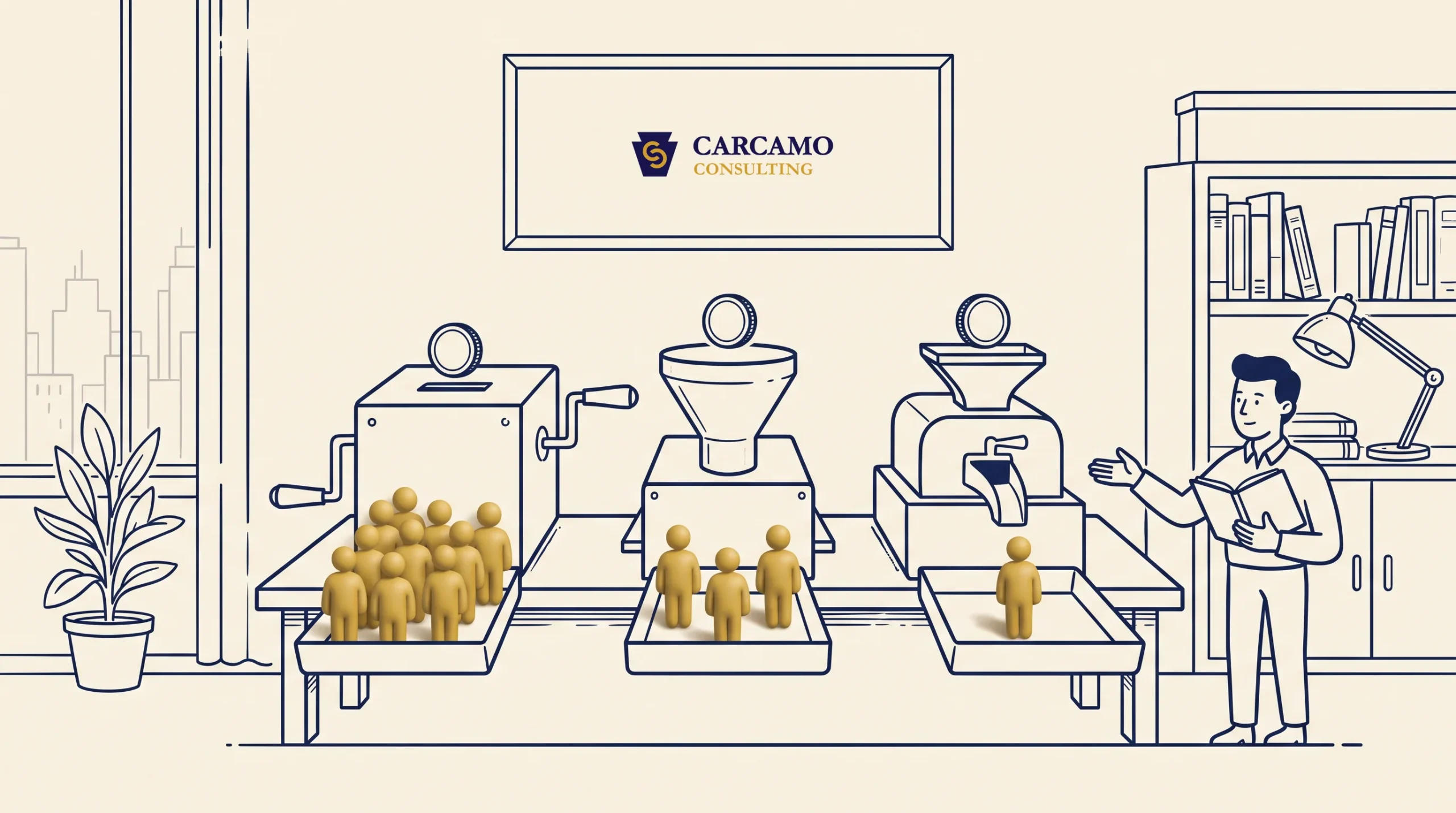
- Under 100 visitors a month: retargeting can’t run yet. Spend your energy (or your first ad dollars) on getting traffic, and install the pixel today anyway.
- 100 to 500 visitors a month: it runs, modestly. A few dollars a day, one audience, patient expectations.
- 500 to a few thousand visitors a month: this is the sweet spot for a small business. Retargeting at this size is routinely the best performing campaign in the account.
- More than that: segment the audience (recent visitors, key pages, cart abandoners) and treat each differently.
Make it concrete. A Scranton remodeler’s site gets about 800 visitors a month. Over a 60 day audience window that’s a warm pool of roughly 1,500 people, minus repeat visits.
That’s a small room, but every person in it looked at a remodeling company recently, on purpose.
A cold campaign would pay to find 1,500 strangers and hope a fraction care. The retargeting campaign starts where the caring already happened, which is why its cost per lead routinely comes in at a fraction of the cold number.
Check the number in Google Analytics or your host’s stats before you build anything.
Install the Pixel Before You Need It
The pixel only remembers forward. It starts collecting visitors the day you install it and knows nothing about anyone who came before, which means every month without a pixel is an audience you paid for (in effort or ad spend) and lost.
So the single most useful move is also the least glamorous: install the Meta pixel and the Google tag now, even if you don’t plan to run ads for months. Both are free, both take minutes with a WordPress plugin or a copy and paste into your site header, and both quietly build the audience you’ll advertise to later.
There’s no downside to waiting with a live pixel. It costs nothing to collect, it never shows an ad until you tell it to, and the audience it builds is yours to use whenever the budget appears.
Meta keeps website visitors in an audience for up to 180 days, and Google display lists can hold them for up to 540 days. A pixel installed this week means that when you’re ready to spend in the fall, you launch to a full room instead of an empty one.
How to Get Customers With Retargeting, Step by Step
Once the pixel has data and you’ve cleared the traffic floor, the build is simple. This is one campaign, one afternoon:
- Pick one platform to start. For most local and service businesses that’s Meta (Facebook and Instagram), because its retargeting is cheap, visual, and easy to run. Google display is the alternative when your buyers live outside social feeds.
- Build the core audience: all website visitors, last 30 to 60 days. Recency matters more than size; someone who visited 5 months ago has mostly gone cold.
- Build one exclusion: people who already converted. Exclude recent customers, or at minimum visitors to your thank you page. Paying to chase people who already bought is the most common silent waste in small accounts.
- Run two or three ads, not one. One reminder ad (who you are, what you do), one proof ad (a review, a before and after, a real result), one nudge ad (the offer, the free estimate, the question invitation). The same person will see all of them in rotation, which reads as a business with depth rather than a broken record.
- Cap the frequency at two to three impressions per person per day. Past that you’re not persuading anyone, you’re funding their annoyance.
- Set a small budget and leave it alone. More on the dollars below.
Notice what’s not on the list: interest targeting, lookalikes, demographics. The pixel already found your audience. Your job is just to show up well.
What It Costs (Less Than You Think)
Retargeting budgets are small because the audience is small. A site with 1,000 monthly visitors gives you an audience a few thousand strong at most, and $5 to $10 a day covers it comfortably. Many small businesses run effective retargeting for $150 to $300 a month.
Run the math on a real month. Say $8 a day, $240 for the month, against that remodeler’s warm pool. At typical warm audience click costs, that buys roughly 150 to 250 return visits from people who were already considering you.
If the site converts even modestly, that’s a handful of estimate requests, and one signed kitchen pays for years of the campaign. The numbers stay small at every step except the last one.
The spending shape is different from cold advertising, too. In a cold campaign, most of the budget buys strangers’ attention and much of it is wasted on the wrong strangers. In retargeting, every dollar lands on someone who already raised a hand. That’s why a common allocation once an account matures is 10 to 20 percent of total ad spend on retargeting, quietly producing an outsized share of the actual customers.
One honest caveat: retargeting harvests interest, it doesn’t create it. It multiplies whatever your traffic already is. If the site gets 80 visits a month, retargeting has almost nothing to work with, and the money is better spent on the channels that build traffic first, the choice we walked through in picking your first paid channel between search and social.
And the page they return to has to hold them. If visitors bounced the first time because the site is confusing or slow, ads that bring them back to the same page buy the same bounce twice. Fix the conversion basics on your website before you pay for return visits.
The Ads That Bring People Back
Retargeting creative has one job: continue a conversation that already started. That changes what you write.
Skip the introduction. They know who you are; they were on your site Tuesday.
Speak like the second interaction it is: “Still comparing remodelers? Here’s what our last kitchen cost, start to finish.” A cold stranger needs context; a warm visitor needs a reason to come back.
Proof beats promises here. The visitor’s unspoken question after browsing you is “can I trust these people?” A photographed finished job, a named review, a specific result answers it better than any slogan.
Rotate the creative monthly. The audience is small and sees your ads often, so the same image for 90 days trains their eyes to slide past it. Fatigue in retargeting isn’t a risk; it’s a schedule. Fresh creative resets it.
One more habit separates good retargeting from wallpaper: write to the objection, not just the reminder. If your prospects stall on price, the proof ad should be a real project with a real number attached. If they stall on trust, it’s the review from the customer who had the same doubt. You know why people hesitate before hiring you; the retargeting slot is exactly where that answer belongs, because the person seeing it is mid-hesitation right now.
Match the offer to the page they saw where you can. Someone who read your pricing page is ready for “book a free estimate.” Someone who bounced off the homepage in 9 seconds gets the gentler reminder. Platforms let you build audiences per page for exactly this, once your traffic supports splitting.
Where Retargeting Fits in Your Paid Plan
Retargeting is a multiplier, not an engine. The engine is whatever fills the site with visitors: search ads, social ads, SEO, referrals, the beginner’s paid advertising strategy you may already be running.
The order matters more than the effort. A pixel takes ten minutes once and pays forever. Traffic takes months and costs real money. Retargeting takes an afternoon and only works stacked on the other two.
If you’re already running one paid channel profitably, retargeting is the natural second campaign, and at $5 a day it barely dents the budget while catching the visitors the first channel paid for and lost. If you’re running nothing yet but have organic traffic, retargeting is a fine first campaign precisely because it’s cheap and warm.
Either way the sequence is the same: pixel first, traffic second, retargeting third. Owners who reverse it, turning on retargeting over a trickle of visitors and judging paid ads by the silence, conclude ads don’t work when what actually happened is the math never had a chance.
Frequently Asked Questions
What is the difference between retargeting and remarketing?
In practice, nothing worth worrying about; the words are used interchangeably. Strictly, retargeting usually means ads shown to past website visitors, while remarketing historically meant re-engaging past customers by email. Google calls its version remarketing and Meta calls its version retargeting, and both mean the same thing: advertising to people who already interacted with you.
Do retargeting ads actually work?
Yes, more reliably than almost any other paid campaign, because the audience is pre-qualified. Industry surveys consistently rank retargeting among the best performing digital tactics, with retargeted visitors converting at far higher rates than cold traffic. The catch is scale: it only works on people who already visited, so it can’t replace the channels that bring visitors in.
How much do retargeting ads cost?
Less than cold advertising, usually by a wide margin. Clicks commonly run 30 to 60 percent cheaper than cold campaign clicks because the audience already knows you. For a typical small business site, $5 to $10 a day covers the whole warm audience, and total budgets of $150 to $300 a month are normal.
Why do ads seem to follow people around the internet?
That’s retargeting doing exactly this. A pixel on a site someone visited added them to that business’s audience, and ad platforms then show that business’s ads across other sites and apps. As an advertiser you control how often it happens with frequency caps, and audiences expire automatically, 180 days at most on Meta website audiences.
How long should a retargeting campaign run?
Continuously. Unlike a promotion with an end date, retargeting is maintenance: as long as the site gets visitors, the audience refreshes itself and the campaign keeps working. What does need a schedule is the creative; swap the ads roughly monthly so the small, frequently exposed audience doesn’t tune them out.
How many website visitors do I need before retargeting works?
The platform floors are about 100 people: Meta needs 100 in an audience before serving, and Google display needs 100 active visitors in 30 days. Practically, retargeting starts feeling worthwhile around a few hundred monthly visitors and hits its stride from 500 up. Below the floor, install the pixel anyway and build traffic first.
If you’re staring at your analytics wondering whether your traffic clears the bar, or the pixel install has been sitting on your list for a month, ask us. Carcamo Consulting runs retargeting for our own Pennsylvania businesses, we read every message, and it’s free to ask. We’ll tell you plainly whether retargeting is your next move or whether the traffic needs to come first.
 Previous