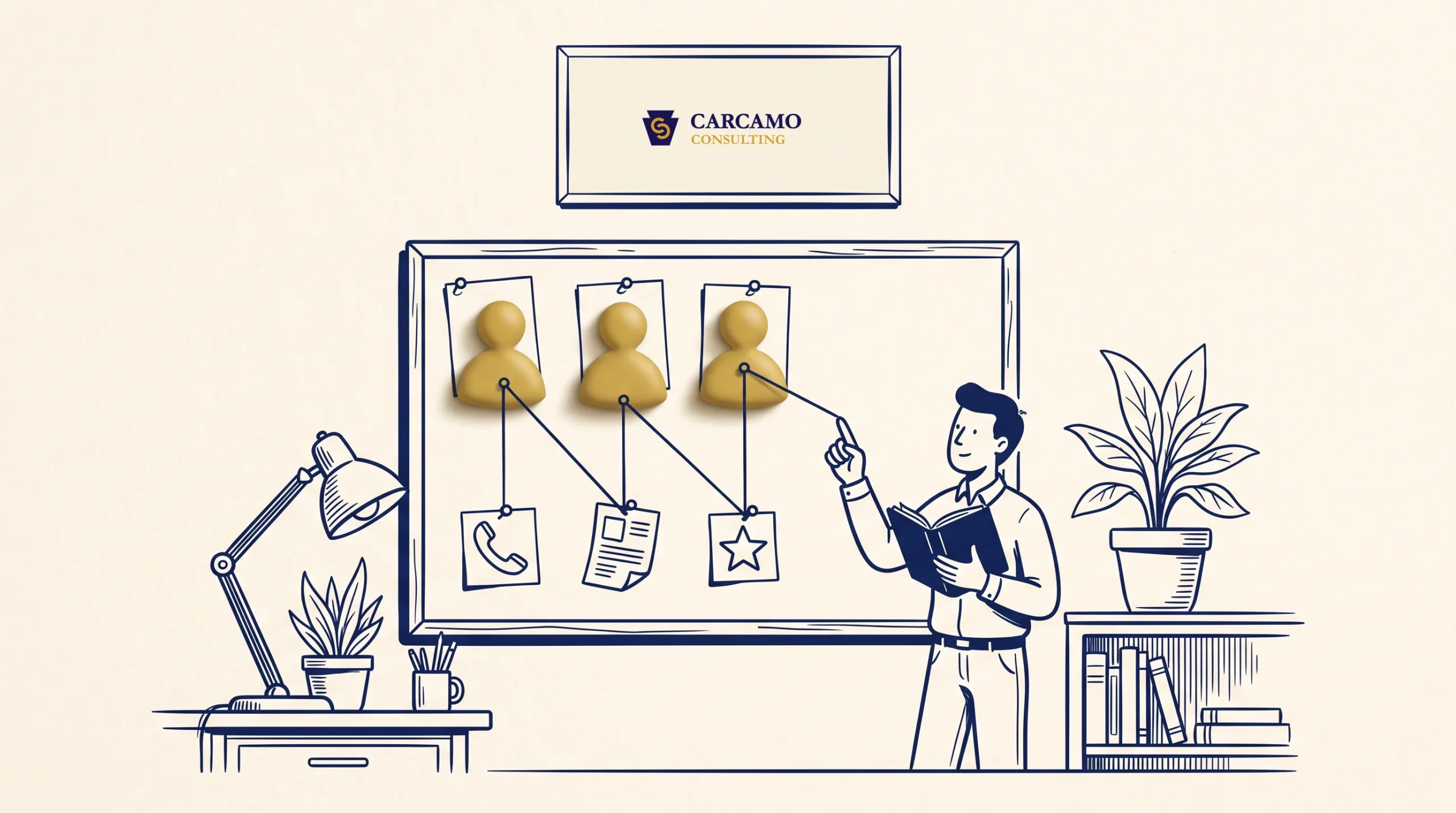

Plan on five to eight outreach touches to turn a stranger into a conversation, and more like ten or twelve before money changes hands. Research on sales prospecting puts the average at eight touches just to land a first meeting, and widely cited follow up studies find that 80 percent of sales take five or more contacts to close.
Most owners never get near that number. They send one message, maybe two, hear nothing, and quietly write the prospect off. The math on where replies actually land is further down, and it is the part worth reading twice, because it says the touches you are skipping are the ones that pay.
How Many Outreach Touches Does It Take? The Real Numbers
Different studies count differently, so the honest answer is a range that depends on who you are contacting:
| Who you are reaching out to | Typical touches before they buy |
|---|---|
| A past customer or old lead | 1 to 3 |
| A warm lead (referral, follower, past inquiry) | 5 to 12 |
| A cold stranger | 8 to 20, sometimes more |
A few anchor points from the research:
- Eight touches to a first meeting. A survey of 489 sellers who prospect for a living found it takes an average of 8 touchpoints to get an initial meeting with a new prospect. The top performers got there in about 5, mostly through better targeting.
- Five or more contacts to close. Widely cited follow up research finds 80 percent of sales require at least five follow ups after the first contact, while nearly half of sellers stop after one.
- Replies cluster in the middle. Practitioners consistently report that most replies arrive between the third and fifth touch, often spread over six to eight weeks.
You will also see numbers like “266 touchpoints per B2B deal” floating around. Those studies count every ad impression, website visit, and email open across a whole buying committee. That is a marketing measurement, not your to do list. For a small business doing direct outreach, the working range is the table above.
The Give Up Math: Why Quitting at Two Touches Costs You Almost Everything
Walk through the arithmetic with 50 cold prospects.
At typical cold reply rates, your first message might get 2 or 3 responses. If you stop there, that is your whole harvest, and you paid full price for it: researching the list, writing the message, sending it.
The replies that come later are nearly free by comparison. The prospect already knows your name, the message takes two minutes to write, and the data says touches three through five are where most of the yeses actually live. One benchmark study found a simple three follow up cadence captured roughly 93 percent of all the replies a sequence would ever get.
So the owner who quits after touch two has paid the most expensive part of outreach and walked away right before the payoff. The first message buys the lottery ticket. The follow ups are the drawing.
We run local service businesses ourselves, and the pattern holds: commercial accounts almost never say yes to a first contact. The jobs get won by whoever is still politely showing up a month later, and that is usually nobody, which is exactly why it works.
What Counts as a Touch (It Is Not Five Copies of the Same Email)
A touch is any moment your name lands in front of the prospect:
- An email or a reply to their post
- A phone call or voicemail
- A LinkedIn or Instagram DM
- A comment on something they published
- A postcard, a dropped off flyer, or meeting them at an event
- A useful article or referral you send with no ask attached
Two rules make touches count. Vary the channel: an email, then a call, then a comment reads as a person being helpful; five identical emails read as a robot on a timer. And add something new each time: a fresh piece of value, a relevant example, a question, never “just bumping this to the top of your inbox.”
The first message carries the most weight, and it is worth crafting for exactly one person. We broke down how in writing a first outreach message that gets a reply.
A Simple Touch Plan for a Busy Owner
You do not need software or a sales team. You need a calendar and fifteen minutes a day. For each prospect worth pursuing:
- Day 1: the first message. Personal, specific, one clear reason you are reaching out. If email is your channel, cold email that does not get ignored is the standard to hit.
- Day 3 or 4: first follow up. Two or three business days later, while the first message is still findable. Add one new piece of value, keep it to three sentences.
- Day 10: change the channel. If you emailed, call or comment on something they posted. You are becoming a familiar name, not a recurring subject line.
- Day 17: the fourth touch. A short, useful nudge: a relevant example, a quick answer to a question businesses like theirs ask.
- Day 24 to 30: the polite close. One last note saying you will stop reaching out, with the door left open. These messages get replies at surprising rates, because a respectful ending is rare.
That is five touches over about four weeks, which is exactly the window where most replies land. After the close, move them to a low effort nurture list: one genuinely useful check in per quarter. People buy on their timeline, not yours, and quarter three is often when the timing finally matches.
How to Need Fewer Touches
The touch counts above are averages, not fate. Three things pull your number down toward the top performer range:
- Warm them up first. A referral, a few weeks of engaging with their posts, or any prior contact can cut the required touches in half or better. The full comparison is in warm vs cold outreach, but the rule is simple: familiarity before the first message means fewer messages.
- Pick better prospects. Top performers reach meetings in five touches mostly because they choose people who actually fit what they sell. Ten well chosen prospects beat fifty scraped names.
- Make each touch worth opening. A touch that teaches, helps, or entertains earns the right to the next one. A touch that only asks spends trust you have not built yet.
Outreach is one channel in a bigger system, and it works best pointed at the right people with the right message. If you are building that system from scratch, start with the overview in getting customers with email and direct outreach.
If you would rather have someone look at your specific situation, tell us what you sell and who you are trying to reach. Asking is free, and a real person from our Pennsylvania team will map out a touch plan with you.
FAQ
What counts as a touchpoint in sales?
Any interaction where the prospect encounters you or your business: an email, a call, a voicemail, a DM, a comment on their post, an in person conversation, a piece of mail, or content of yours they see. In practice, direct outreach touches are the ones you control, so those are the ones to plan.
How long should you wait between follow ups?
Send the first follow up two to three business days after the original message, then widen the gaps: roughly a week, then another week or more. Benchmarks show follow ups on about day 3, day 10, and day 17 capture the large majority of replies a sequence will ever get.
How many touchpoints are too many?
Past five or six touches in a single sequence, returns drop sharply and you risk becoming noise. Send a polite closing message, then move the prospect to an occasional nurture rhythm, one useful contact a quarter. A hard no, at any point, means stop entirely.
Why do most sales need five or more follow ups?
Because timing rarely lines up on the first try. Prospects are busy, budgets have cycles, and trust builds through repeated small exposures. The follow ups are not pestering; they are keeping you visible until the prospect’s timing catches up with your offer.
Do cold prospects really need 20 or more touches?
Pure cold contacts in competitive B2B markets can require 20 to 50 touches across channels before buying, which is why volume alone is a hard road. Warming prospects first, through referrals, engagement, or shared communities, routinely drops the requirement into the 5 to 12 range.
 Previous