You build an email list from scratch by giving people one clear reason to sign up, then asking for the address everywhere your business already touches people: your website, your invoices, your counter, your social profiles, and your past customers. No existing audience required, and no ad budget. What it takes is a small setup, an offer worth trading an email for, and the habit of asking.
Every address you collect this way is an asset you own, unlike followers or rankings. There is also one collection spot most owners never think of, and it converts better than any website form. It is waiting in step four.
The Setup: What You Need Before You Ask Anyone
Three pieces, one afternoon.
- A free email platform. MailerLite, Mailchimp, Brevo, and Constant Contact all have free tiers that cover a new list. You need the signup form, the hosted landing page, and the automatic unsubscribe handling; any of them provides all three.
- One list, no tags or segments yet. Complexity kills more beginner email programs than any other cause.
- A welcome email ready to go out the moment someone signs up, so the first impression is instant.
If you have not sent a single campaign yet, the full starting stack (platform, first emails, cadence, and the numbers to watch) is covered in our guide to email marketing for customer acquisition.
One rule governs everything below: only people who say yes go on the list. It is what keeps you legal, keeps you out of spam folders, and keeps the list worth owning.
Step 1: Give People One Real Reason to Sign Up
“Join our newsletter” converts almost nobody, because it names no value. The fix is a specific trade: something practical in exchange for the address.
For a service business, the strongest offers are working documents, not brochures:
- A seasonal maintenance checklist for whatever you service
- An honest pricing guide that explains what moves cost up and down
- A questions to ask before you hire sheet for your trade
- For shops and restaurants, a small first visit perk
The offer should attract your future customer, not freebie hunters. A pricing guide for kitchen remodels pulls in people planning a kitchen remodel; a generic gift card giveaway pulls in everyone and converts no one. Building this piece well is its own craft, and we walked through it in lead magnets that turn visitors into leads.
Step 2: Invite the People Who Already Know You
Past customers, current customers, the people who requested quotes, the colleagues who send you referrals: this group signs up at rates no stranger ever will, and most businesses have never asked them.
Ask personally, and ask permission. Never quietly add someone because you have their address from an invoice. A short message does the work:
We just started a short monthly email with seasonal tips and honest pricing advice. Want in? Reply yes and I will add you.
Send it as individual texts or emails, not a blast. A personal invitation from a business someone already trusts is the single highest converting ask in list building, and it can take a list from zero to dozens of engaged subscribers in a week.
Step 3: Put a Form Where Your Website Traffic Already Goes
- Ask for one field: the email address. Add first name only if you will actually use it. Every extra field costs signups.
- Place the form on the pages people actually visit: the end of blog posts, the footer, the contact page, and one visible spot on the homepage.
- Make a dedicated landing page for the offer, with nothing else on it. Every platform above will host one for free, and it gives you a single link to use everywhere: social bios, invoices, texts.
- Try one polite popup: delayed or shown on exit, easy to dismiss, offering the real thing from step one. Polite popups earn their keep; aggressive ones cost trust, and Google penalizes intrusive versions on mobile.
State plainly next to the form what people will get and how often. Clear expectations at signup are what keep unsubscribes low later.
Step 4: Collect Addresses in the Real World
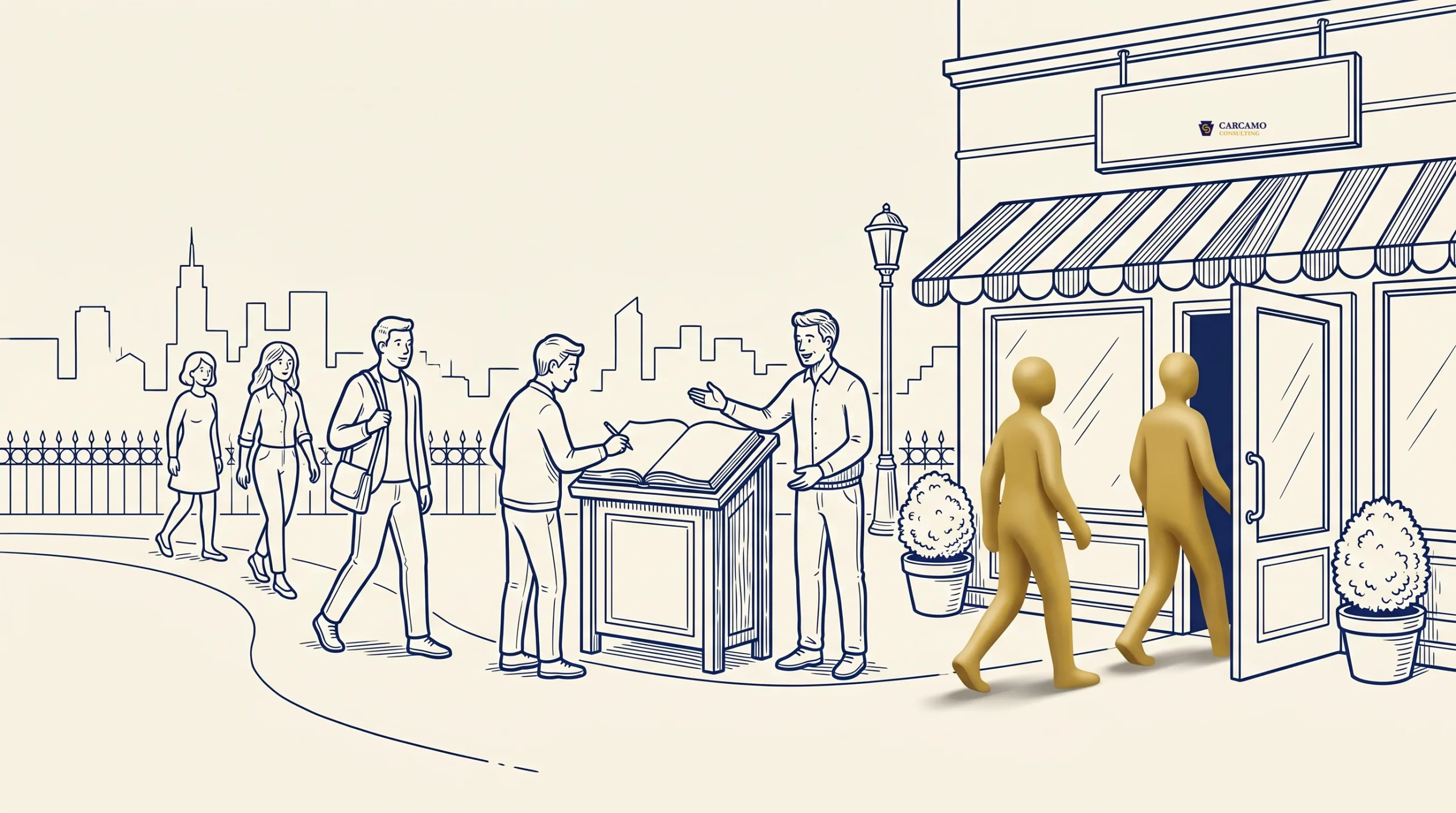
This is where the overlooked spot lives: the moment the work is finished. The final walkthrough, the delivery, the handover at the counter. Satisfaction is at its peak, you are standing in front of the customer, and the ask is natural: “I can email you the seasonal checklist we talked about, want me to add you to the monthly one too?”
The rest of the physical world works the same way:
- Estimates and invoices: one printed line with the offer and a QR code to the landing page
- The counter or register: a small card or QR stand
- Events, markets, and trade shows: a paper signup sheet still works; type the addresses in the same day and keep the sheet as your consent record
For the trades and local shops we talk to across Pennsylvania, these paper and person channels routinely outgrow the website form, because the trust is already built before the ask happens.
Step 5: Turn Followers Into Subscribers
Social followers live on rented ground; an algorithm change can hide you from them tomorrow. Move the relationship somewhere you own it.
Put the landing page link in every bio. Every few weeks, post the offer directly: what it is, what it helps with, where to get it. Mention it in stories when it is relevant to what you are showing. The wider play of converting an audience into buyers is covered in turning social followers into paying customers, and the email list is the bridge in the middle of it.
Step 6: Send Something Right Away, Then Keep the Rhythm
A list you collect and ignore rots. People forget they signed up, and six silent months later your first email reads as spam and earns complaints.
The welcome email goes out the moment someone joins: deliver the offer, say what comes next, add one useful tip. After that, one useful email a month is the floor. Collect at the pace you can serve.
What Never Goes on the List
- Bought or scraped addresses. They wreck deliverability, violate every platform’s terms, and are illegal to email in much of the world.
- Prechecked signup boxes. Consent someone did not actively give is not consent.
- Addresses added without asking. A business card or an invoice email sitting in your files is not permission to market to it.
United States law tolerates more than Canada’s or Europe’s, but the practical standard is the same everywhere: if they did not say yes, do not send.
How Fast Can You Build an Email List From Scratch?
Dozens in the first month, not thousands. A local business that invites its past customers, adds the invoice line, and posts the offer once or twice typically starts with a few dozen engaged subscribers, then adds steadily every week the asks stay in place.
That pace is not a problem, it is the point. A few hundred subscribers who know your business will out earn ten thousand strangers, because they open, they click, and they buy. Deliverability follows the same math: inbox providers watch engagement, so a small active list lands in inboxes while a big cold one drifts to spam.
The compounding is what surprises owners. The asks you set up once (the invoice line, the QR card, the form, the walkthrough habit) keep collecting without any new effort, and the list only moves in one direction.
Your First Week, Day by Day
- Day 1: open a free platform account, create the list, put a one field form on your site
- Day 2: write the welcome email and pick your offer from step one
- Day 3: personally invite past customers with the two line message from step two
- Day 4: add the offer line and QR code to your estimate and invoice templates and the counter
- Day 5: publish the landing page, put the link in every social bio, post the offer once
Then send one useful email a month, every month, and let the system run.
If you want a second set of eyes on your offer, your form, or where email fits next to everything else you are juggling, ask us. It is free to ask, and a real human reads every message.
FAQ
How do I build an email list without a website?
Use the signup tools you already have: your email platform’s free hosted landing page as the link you share, QR codes on receipts and counter cards, a paper sheet at events, and personal invitations to past customers by text. A website helps, but plenty of local lists grow to hundreds without one.
Is it legal to add customers to my email list without asking?
United States law (CAN-SPAM) allows marketing email without prior consent as long as you identify yourself and honor unsubscribes, but Canada and the European Union require permission first, and every major platform’s terms do too. Asking first is both the safe standard and the one that produces subscribers who actually open.
Should I buy an email list to get started?
No. The addresses are stale, the people never agreed to hear from you, and the resulting bounces and spam complaints damage your sender reputation, which then hurts delivery to the people who did sign up. Most platforms will suspend accounts that upload purchased lists.
What is a good lead magnet for a service business?
A practical document tied to what you sell: a seasonal maintenance checklist, an honest pricing guide, or a list of questions to ask before hiring someone in your trade. It should be useful on its own and naturally lead toward your paid work.
How many email subscribers can I get in the first month?
A local business working its existing relationships typically lands a few dozen engaged subscribers in month one, mostly from personal invitations to past customers. Businesses with steady website traffic or a real social following can reach a few hundred. Consistency beats speed; the asks you leave in place keep collecting.
Do popup forms still work?
Yes, when they are polite: delayed or exit triggered, easy to dismiss, and offering something real. Aggressive popups that block the page annoy visitors, and Google penalizes intrusive interstitials on mobile, so keep them gentle.
How many fields should my signup form have?
One, the email address. Add a first name field only if you will personalize with it. Shorter forms convert better, and everything else you might want to know can be learned later from what people click.
 Previous