
The way to get customers from Facebook groups is to become the most helpful person in the room before you ever mention what you sell. Facebook does not ban you for being a business. It bans the behavior that looks like spam: the same pitch pasted into thirty groups, the link dropped into a conversation nobody asked you to join, the post that ignores the rules. Give first, sell almost never, and the leads come to you. That is the whole method, and the rest of this is how to actually run it.
Groups are still one of the best free places to find customers. Facebook has more than three billion monthly users, and people spend more time inside groups than almost anywhere else on the platform. Smaller niche groups, roughly the four thousand to eighteen thousand member range, tend to have far more real conversation than the giant hundred thousand member ones. That conversation is where the work happens.
Why the spammers get banned and you will not
It helps to understand what Facebook is actually watching for, because once you do, staying safe stops feeling like guesswork.
Facebook does not have a rule against business owners posting in groups. What it flags is spam behavior, and there are three signals that trigger it:
- Duplicate content. Paste the exact same message into ten groups and the system notices. Admins notice too. This is the fastest way into what people call Facebook jail.
- Irrelevance. A post that has nothing to do with the group is the thing members are most likely to report, and member reports are one of the strongest signals Facebook and admins act on.
- Link dropping. A bare link with no context, especially to an off platform chat like WhatsApp or Telegram, reads as scammer behavior and can get you removed on sight.
None of those describe a real person having real conversations. When you comment thoughtfully, answer questions in your own words, and post something different in each group because you are actually paying attention, you never look like the thing Facebook is trying to catch. Safety is a byproduct of being genuine, not a separate set of tricks.
Step 1: Join the right groups, not the most groups
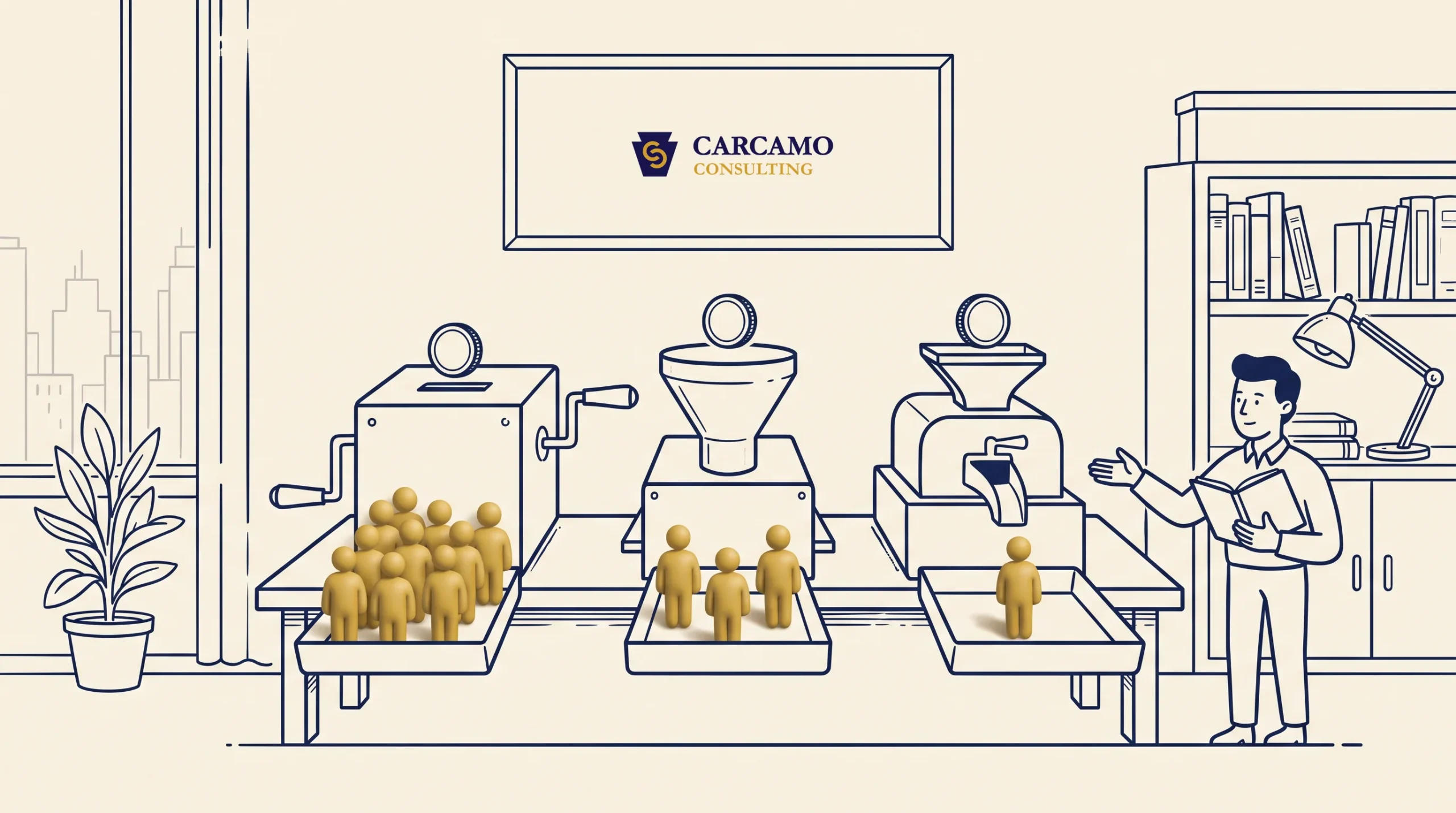
The instinct is to join every group with your keyword in the name. Resist it. Ten groups where your ideal customers actually hang out will beat a hundred where they do not.
Start from who you serve. If you have never nailed that down, get clear on your ideal customer first, because it decides everything else here. A wedding photographer wants local engagement and planning groups, not photography gear groups full of other photographers. A bookkeeper wants small business and freelancer groups, not accounting groups full of competitors.
Look for a few things before you commit your time:
- Real conversation, not a link graveyard. If the feed is wall to wall promo posts nobody responds to, the group is dead for your purposes. Move on.
- Your customers, not your peers. A group full of people who do what you do is a place to learn, not a place to sell.
- Active moderation. A well run group with clear rules means the spam is kept out, which means your genuine help actually stands out.
Facebook groups are one channel among several. If you are still deciding where your hours go, it is worth thinking through which platform fits your customers best before you pour weeks into groups that were never going to pay off.
Step 2: Read the rules and find the promo thread
Every group has rules, and most of them address self promotion directly. Read them before you post anything. This takes two minutes and saves you from a removal that follows your name around.
You will usually find one of three setups:
- No promotion at all. Your only path here is to be helpful in comments and let people find you through your profile.
- A promo thread or self promotion day. Many groups quarantine all selling into a single weekly pinned post, often something like a Tuesday pitch thread. That thread is fair game. The rest of the week is not.
- Promotion allowed with limits. Read what those limits are and stay inside them.
Whatever the rule is, the group owner built that audience with their own time and money. You are a guest. Respect the setup and you get to stay; break it and you are gone, sometimes permanently.
Step 3: Fix your profile so it sells while you sleep
Your profile does quiet sales work here. When you help someone in a group, the interested ones click your name. Your profile is the page they land on, and right now it is probably a photo of your dog and a cover image from 2019.
That profile is doing sales work whether you manage it or not. Make it easy:
- A clear photo of you, a real face, since people buy from people.
- A bio or intro line that says what you do and who you help, in plain words.
- A pinned post or featured link that points to your business, so the curious can take the next step without asking.
You are not turning your personal profile into a billboard. You are making sure that when your helpfulness earns you a click, the visitor immediately understands what you offer.
Step 4: Give first, and keep giving
This is the engine. Before you ever ask for anything, spend real time being useful.
Show up several times a week and add something to the conversation. Answer questions in your area. Share a tip that took you years to learn. Offer honest feedback when someone asks for it. Do this with no pitch attached, over and over, and something quietly powerful happens: you become the person the group associates with your expertise.
A give first comment looks like this. Someone asks why their new bakery is not showing up on Google. You do not reply “DM me, I do this.” You write the actual answer: claim your Google Business Profile, add your hours and photos, ask three happy customers for reviews this week, and it usually starts moving within a month. You just helped for free, in public, and forty people read it. Some of them will remember your name the day they need to hire someone.
That is why this works. It is digital word of mouth, and word of mouth is still the cheapest way to get customers there is. Groups just let you earn it at scale, in front of hundreds of the right people at once.
A few lines you should never cross:
- Do not hijack other people’s posts to pitch yourself. If someone else is getting recommended, congratulating them privately builds more goodwill than crashing the thread ever will.
- Do not argue to look smart. Being right in a rude way costs you every warm lead reading silently.
- Do not vanish after you get a client. The members who watched you help are the pipeline. Keep feeding it.
Step 5: Win the recommendation requests
The warmest moment in any group is the post that starts with “can anyone recommend…” Someone is standing in your group with money in hand, asking who to hire. This is the closest thing to a lead handed to you on a plate, and how you handle it decides whether you get the job or a warning.
When you see a recommendation request in your field:
- Answer the actual question first. If they ask for a photographer and mention a tight budget, speak to the budget. Generic self promotion gets buried; a specific, useful reply gets read.
- Recommend yourself plainly and once. “I do this, here is how I would approach your situation, happy to chat.” No hard sell, no wall of text.
- Let others tag you. The gold standard is when someone else in the group replies “tag so and so, they are great.” That only happens if you have already been the helpful regular for weeks. It is worth ten of your own pitches.
If the group rules forbid even this, hold back and follow up privately or wait for the promo thread. A single warning is not worth one lead.
How long before you get customers from Facebook groups
Set your expectations honestly. This is a relationship channel, not a slot machine. You will not post on Monday and close a client on Tuesday.
For most small businesses, the first real conversations come within a few weeks of consistent, genuine participation, and steady leads build from there over a couple of months. The people who quit at week two quit right before it starts working. The ones who treat it like showing up to the same coffee shop every morning, known, trusted, present, are the ones it pays off for.
If you are weighing this against your other options, groups sit inside a bigger picture. It is worth understanding how social media fits into getting customers overall so you are not betting everything on one channel that rewards patience.
The short version
Get customers from Facebook groups by flipping the usual instinct on its head. Pick a handful of groups where your real customers gather. Read the rules. Fix your profile. Then give, publicly and consistently, until the group knows you as the person who helps. The selling takes care of itself, because by the time someone is ready to buy, they already trust you.
Running a business is hard enough without guessing at this stuff. At Carcamo Consulting we run real businesses of our own, and figuring out where your next customer comes from is exactly the kind of thing we help with. It is free to ask, so if you are stuck, send us your questions and a real person will get back to you.
Frequently asked questions
Can you get banned from Facebook for posting your business in groups?
Not for posting a business, no. Facebook bans spam behavior, not business owners. You get flagged for pasting identical content across many groups, posting where your content is irrelevant, or dropping bare links, especially to off platform chats. Member reports carry real weight, and members report posts that do not belong. Comment genuinely and post something original in each group and you stay clear of all of it.
How many Facebook groups should I join to promote my business?
Quality beats quantity. Ten to twenty highly relevant, active groups where your ideal customers actually gather will outperform a hundred you never really participate in. Groups in the four thousand to eighteen thousand member range tend to have the most real conversation. You cannot be genuinely helpful in fifty groups at once, so pick the few that matter and show up there.
How often should I post in Facebook groups?
Aim to engage a few times a week, mostly through comments and answers rather than posts of your own. Consistent small contributions beat occasional big pushes. What you should never do is blast the same post into multiple groups on the same day, which is the fastest way to look like a spammer to both Facebook and the admins.
How do I respond to “looking for recommendations” posts without being spammy?
Answer the person’s real situation first, then recommend yourself plainly and once: what you do, how you would approach their problem, and an offer to chat. Skip the hard sell. The strongest outcome is when another member tags you instead, which only happens after you have spent weeks being genuinely helpful. Always check whether the group’s rules allow self recommendations before you reply.
How long does it take to get customers from Facebook groups?
Usually a few weeks of consistent participation before the first real conversations, then steady leads building over a couple of months. It is a relationship channel, so it rewards patience and punishes the drive by pitch. Most people who say it does not work quit before they ever became a familiar, trusted name in the group.
Are Facebook groups still worth it in 2026?
Yes, for most small businesses they are. Facebook still has billions of active users, groups are where people spend real time and ask for recommendations, and the whole thing costs nothing but your attention. It is not a fast channel, but for a business willing to show up and help, it remains one of the best free ways to find customers who are already looking.
 Previous