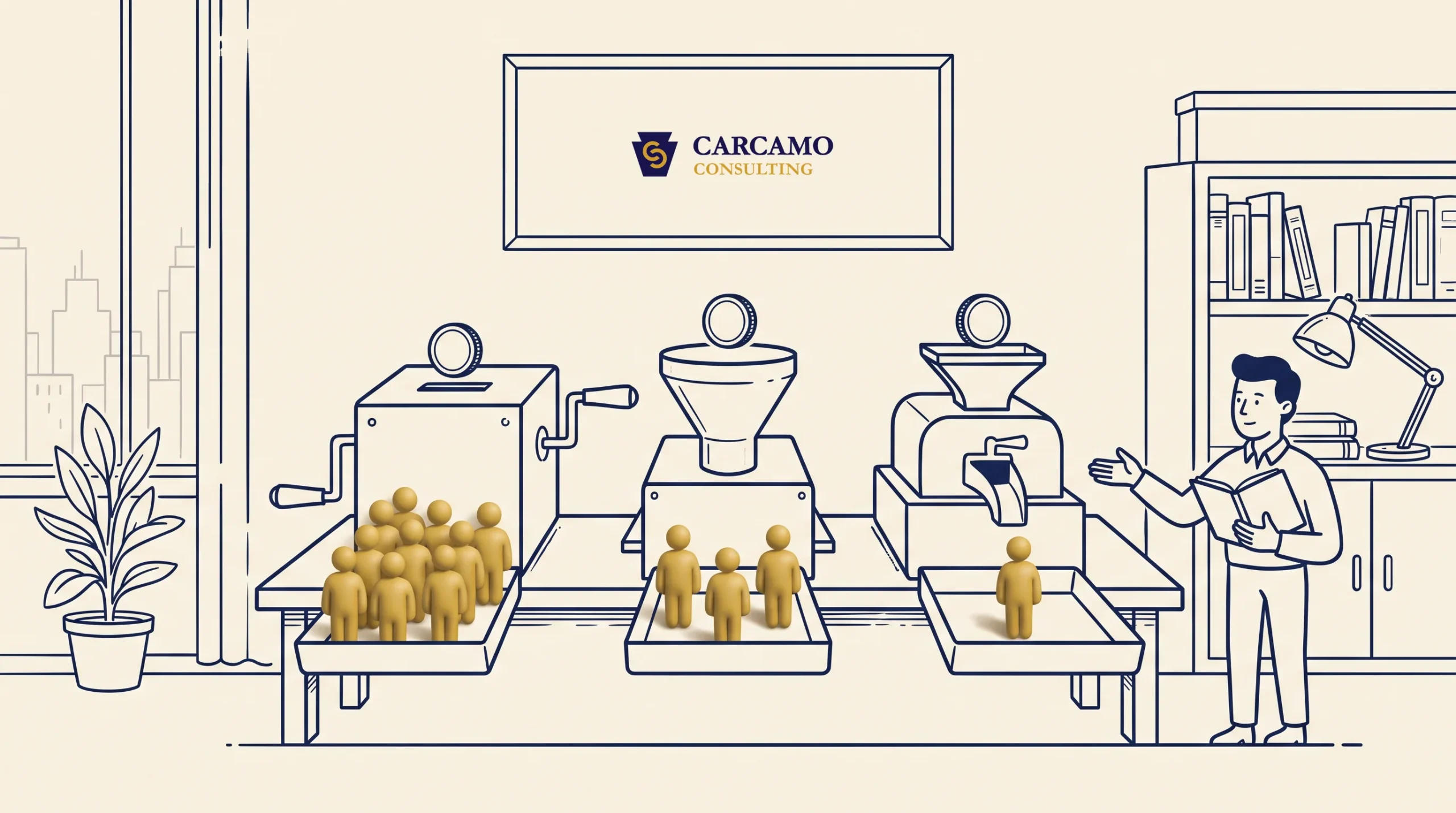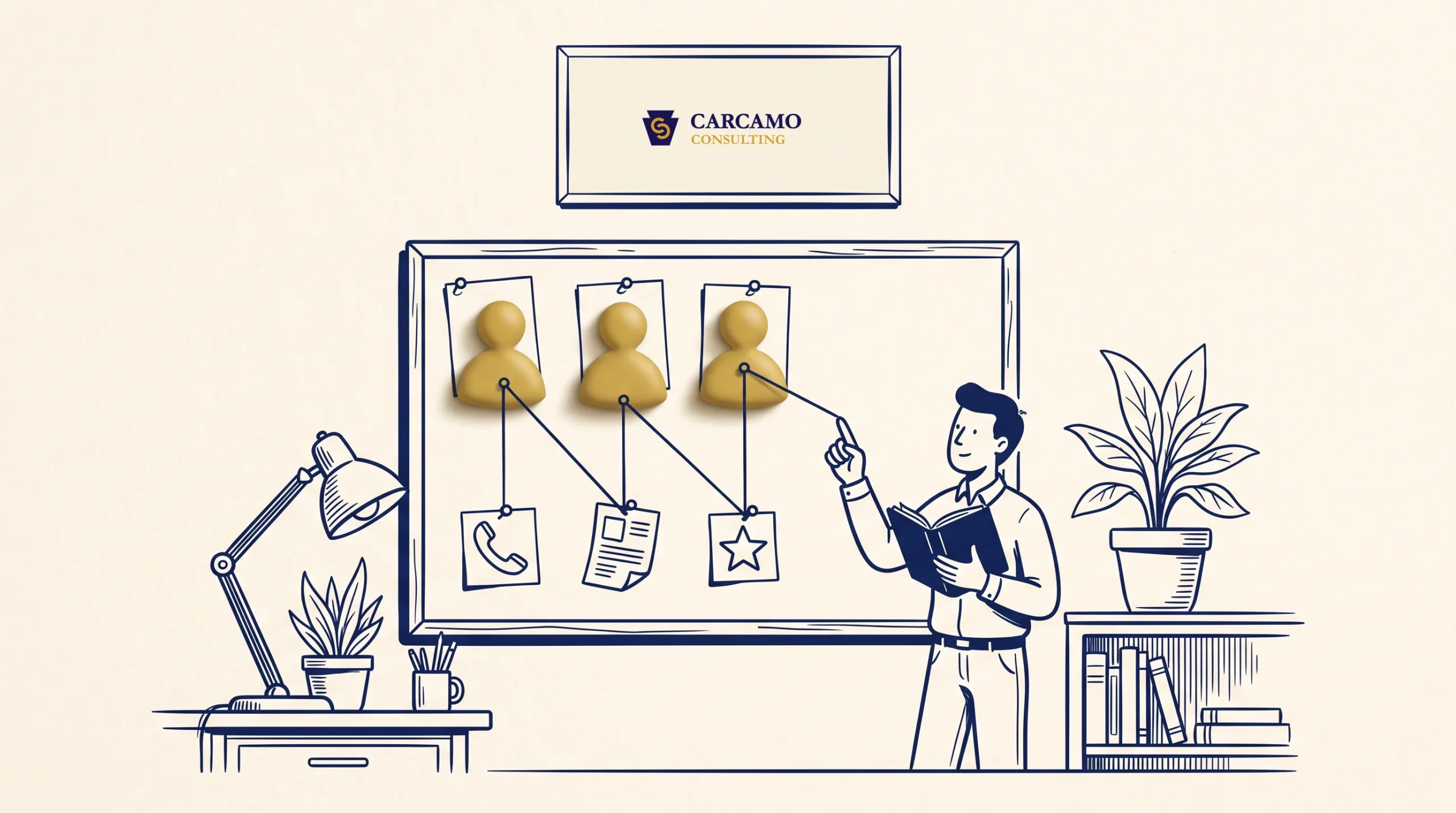
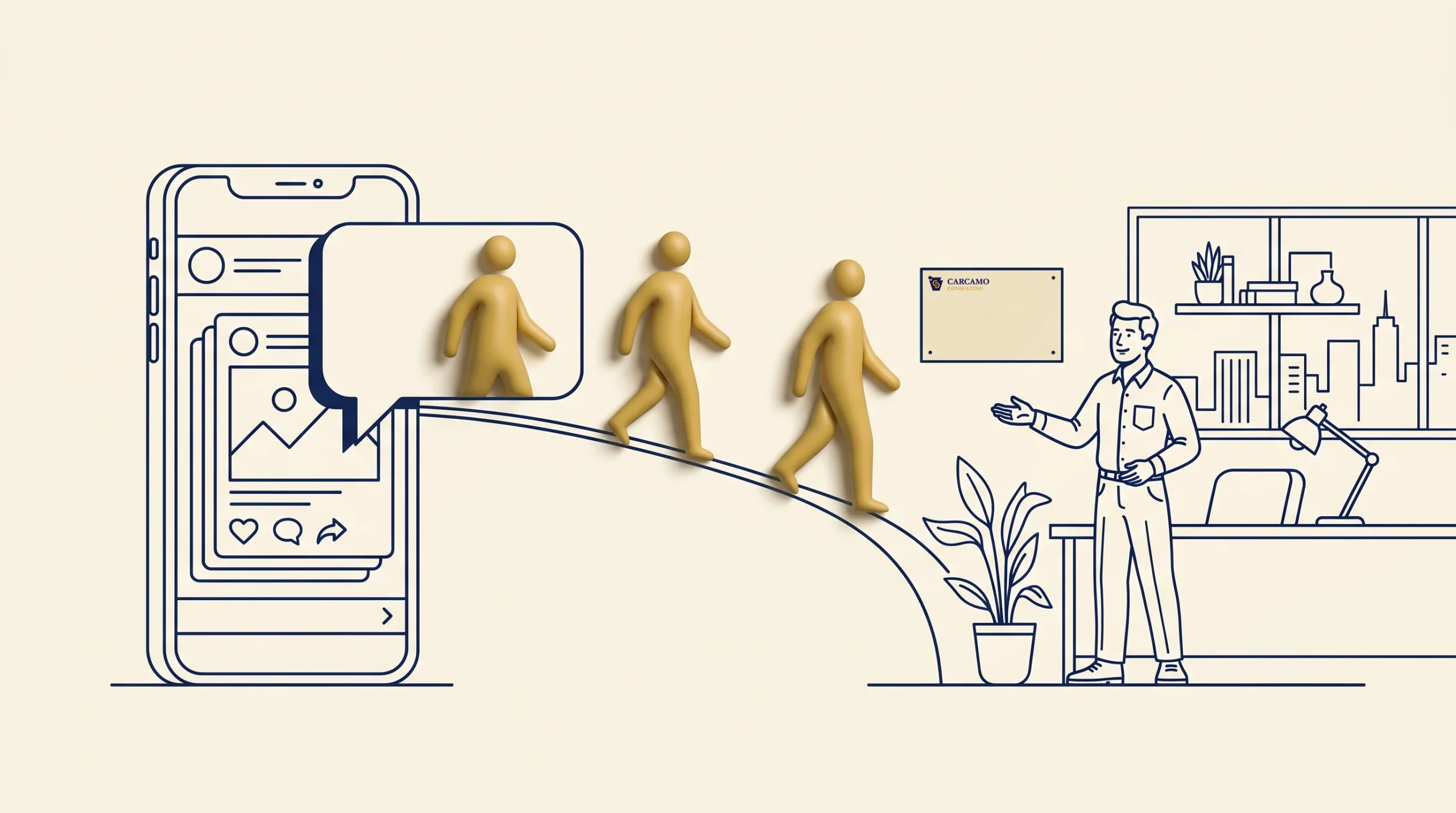
Learning how to get customers from social media comes down to one shift: treat it as a way to start real conversations, not as a billboard. The path is simple to say and harder to do: pick one platform where your buyers already are, post helpful content consistently, talk to people in the comments and DMs, and give them an easy next step to work with you. Followers are not the goal. Conversations that turn into paying customers are.
Most small business owners get stuck because they were told to “just get on social media,” so they posted for a while, heard crickets, and quit. That is the wrong scoreboard. You do not need to go viral or post every day. You need a small, repeatable routine that points strangers toward your business and makes it easy for the interested ones to reach out.
Here is how to build that, even if you are a team of one with almost no time and no budget.
How to get customers from social media: the simple version
The whole process is four moves: get in front of the right people, earn their trust with useful posts, talk to them, and give them an easy way to reach you.
People research and buy through social media every day. They scroll, they see a business solve a problem they have, they check the profile, and they reach out. That is the whole mechanic. Your job is to show up in that scroll and make the next step obvious.
It fails for a few predictable reasons:
- Posting at people, not talking with them. Broadcasting alone rarely converts. The sale usually happens in a reply or a DM.
- You are spread across five platforms and doing none of them well, so nothing builds momentum.
- Your profile is not built to convert. Someone gets interested, taps your name, and cannot tell what you do, who you help, or how to contact you.
- Measuring followers instead of inquiries. A small, engaged local audience beats a big silent one every time.
All four are fixable, and none of them cost money. Getting customers from social media is one of the strongest free channels you have, the same way free channels can carry a brand new business with no budget.
Step 1: Pick one platform and commit to it
You do not need to be everywhere. You need to be consistent in one place where your customers actually spend time. Trying to run four accounts as a busy owner is how most people burn out by week three.
Choose based on who you serve and what you can realistically create:
- Facebook: Strong for local service businesses. Local groups, recommendations, and an older buyer skew make it a workhorse for anyone selling to a town or region.
- Instagram: Visual businesses (food, beauty, trades with great before and afters, anything with a “look”). Good for showing your work.
- TikTok: Short video and fast reach. Powerful if you can talk to a camera and you want to grow quickly.
- LinkedIn: Best when you sell to other businesses rather than consumers.
Pick the one platform where your buyers already are and where you can keep up. You can always add a second later, once the first is running on its own.
If you are weighing social media against other ways to bring in business, it helps to see how it fits among the three customer acquisition channels: organic, paid, and earned. Social can be all three at once, which is part of why it is so useful.
Step 2: Turn your profile into a storefront
Before you post anything, fix your profile. When a stranger gets curious about you, this is the page they land on, and most small business profiles quietly lose the sale right here.
Make sure a first time visitor can answer three questions in five seconds:
- What do you do, and who is it for? Put it in plain words in your bio. “Bookkeeping for Pennsylvania small businesses” beats a clever tagline nobody understands.
- Why should they trust you? A clear photo or logo, a few words of proof (years in business, a specialty, a guarantee), and recent posts that show real work.
- How do they take the next step? A working contact button, a link, a phone number, or a clear “DM us to get started.” If the next step is hidden, interested people just leave.
Your bio and your contact button are doing more selling than any single post. Treat them like the front window of your shop.
Step 3: Post content that earns attention
You are not posting to fill a calendar. You are posting to be useful enough that the right person stops scrolling and thinks, “this business gets it.” A simple way to never run out of ideas is to rotate through a few content types:
- Helpful: Answer a question your customers actually ask. Tips, how-to posts, and “here is the mistake I see all the time” posts build trust fast.
- Proof: Show your work. Before-and-afters, finished jobs, a happy customer, a quick review screenshot. This is the content that quietly closes sales.
- Human: Behind the scenes, the person behind the business, why you do this. People buy from people, especially locally.
- Promotional: A direct “here is what we offer and how to start.” Keep this the smallest slice. Roughly one in five posts is plenty.
A useful balance is to spend most of your posts being helpful or showing proof, and only a small share directly selling. Nobody follows a business that only advertises, but everybody remembers the one that taught them something.
If you have a blog or a website, this is also where social and search start to feed each other. The same expertise that makes a good post makes good website content, and pairing the two is the heart of getting customers with content and SEO.
Step 4: Engage like a human, because that is where sales happen
This is the step almost everyone skips, and it is the one that actually produces customers. Posting starts the conversation. Engagement closes it.
Build a short daily habit:
- Reply to every comment and DM, quickly and like a real person. A fast, friendly reply is often the moment someone decides to hire you.
- Comment on other local accounts and conversations where your future customers hang out. Be helpful, not salesy. Visibility in your own community compounds.
- Answer questions generously in public. When you solve a stranger’s problem in the comments, everyone watching sees that you know your stuff.
Fifteen focused minutes a day on engagement will do more than an hour spent perfecting a single graphic. The relationships you build here are also what fuel word of mouth, and word of mouth is still the cheapest customers you will ever get.
Step 5: Give people an easy next step
A follower is not a customer until they do something: send a message, book a call, join your list, walk in, or buy. If you never ask, most people will quietly admire your posts and never reach out.
Make the next step obvious and low pressure:
- End posts with a clear call to action. “DM us ‘INFO’ and we will send pricing.” “Comment below and we will tag the right resource.” “Tap the link to ask a question.” Tell people exactly what to do.
- Move warm leads off the platform. Social media is rented land. Invite engaged followers to your email list, your website, or a direct conversation so you are not at the mercy of an algorithm.
- Lower the cost of saying yes. A free question, a quick quote, or a simple consultation is far easier to accept than “buy now,” especially for a service business.
You are not begging. You are removing the friction between “interested” and “in touch.”
How long until social media actually brings in customers?
Honestly, plan in months, not days. Most small businesses start seeing real traction after a few consistent months, and the early weeks usually feel slow and quiet. That is normal, not failure.
The owners who win are the ones who keep a small routine going long enough for it to compound. Consistency matters far more than frequency or polish. A few good posts a week plus daily engagement, kept up for a few months, beats a heroic burst that fizzles out.
If you treat social media as one steady channel inside a bigger plan rather than a magic switch, it pays off. For the full picture of how it fits with everything else, the complete playbook for getting customers puts the pieces together.
What to do if you have followers but no customers
A growing follower count with no inquiries usually means one of three things, and all of them are fixable:
- Wrong audience. Followers who will never buy (other businesses in your field, people far outside your service area, freebie hunters) inflate your numbers and nothing else. Aim your content at real local buyers.
- No clear ask. If your posts do not include a clear next step, even interested people drift away. Add calls to action.
- A broken path to buy. A confusing bio, a dead link, or a slow reply quietly kills warm leads. Walk through your own profile as if you were a customer and fix every dead end.
Followers are a vanity number. Conversations and inquiries are the real scoreboard. Optimize for the second one.
A simple weekly routine you can actually keep
You do not need a marketing department. You need a rhythm a busy owner can sustain:
- Three or so posts a week, rotating helpful, proof, and human content, with the occasional direct offer.
- Fifteen minutes a day replying to comments and DMs and engaging with your local community.
- One clear next step in your bio and at the end of your posts, every time.
That is it. Small, consistent, and pointed at conversations rather than applause. Do that for a few months and social media stops feeling like a chore that goes nowhere and starts feeling like a channel that quietly sends you work.
Frequently asked questions
Does social media actually get you customers?
Yes, when you use it to start conversations rather than just broadcast. People discover and research businesses on social media constantly, then reach out through comments and DMs. The businesses that get customers are the ones that post useful content, reply quickly, and give followers a clear, easy next step.
Which social media platform is best for a small business to start with?
The best platform is the one where your customers already are and that you can keep up with consistently. Facebook is a reliable choice for most local service businesses, Instagram suits visual work, TikTok rewards short video and fast reach, and LinkedIn is for selling to other businesses. Start with one, not all of them.
How long does it take to get customers from social media?
Plan in months. Most small businesses start seeing real traction after a few consistent months, with the first few weeks feeling slow. Consistency over time is what produces results, so keep a small routine going rather than expecting an overnight jump.
How often should I post to get customers?
For most small businesses, around three to five posts a week is plenty, paired with daily engagement in comments and DMs. Consistency matters more than volume. A schedule you can actually maintain beats an ambitious one you abandon.
Do I need to run paid ads, or can I get customers for free?
You can absolutely get customers from social media for free through consistent posting and genuine engagement. Ads can speed up reach once you know what works, but they are optional. Plenty of small businesses build a steady stream of inquiries without spending a dollar on ads.
Why do I have followers but no customers?
Usually it is one of three things: you are attracting people who will never buy, you are not giving a clear next step, or the path to contact you is broken. Aim your content at real local buyers, add a clear call to action to your posts, and make sure your profile makes it easy to reach you.
How many followers do I need before I get customers?
Far fewer than you think. A small, engaged local audience that trusts you will outearn a large silent one. Some businesses land customers with only a few hundred followers because those followers are the right people and the path to buy is clear.
If figuring out what to post, where, and how often feels like one more thing on an already full plate, you do not have to sort it out alone. At Carcamo Consulting, we help small businesses across Pennsylvania show up where their customers are and turn that attention into real work. When you are ready, send us your question and a real human will help you build a routine that fits your business.
 Previous