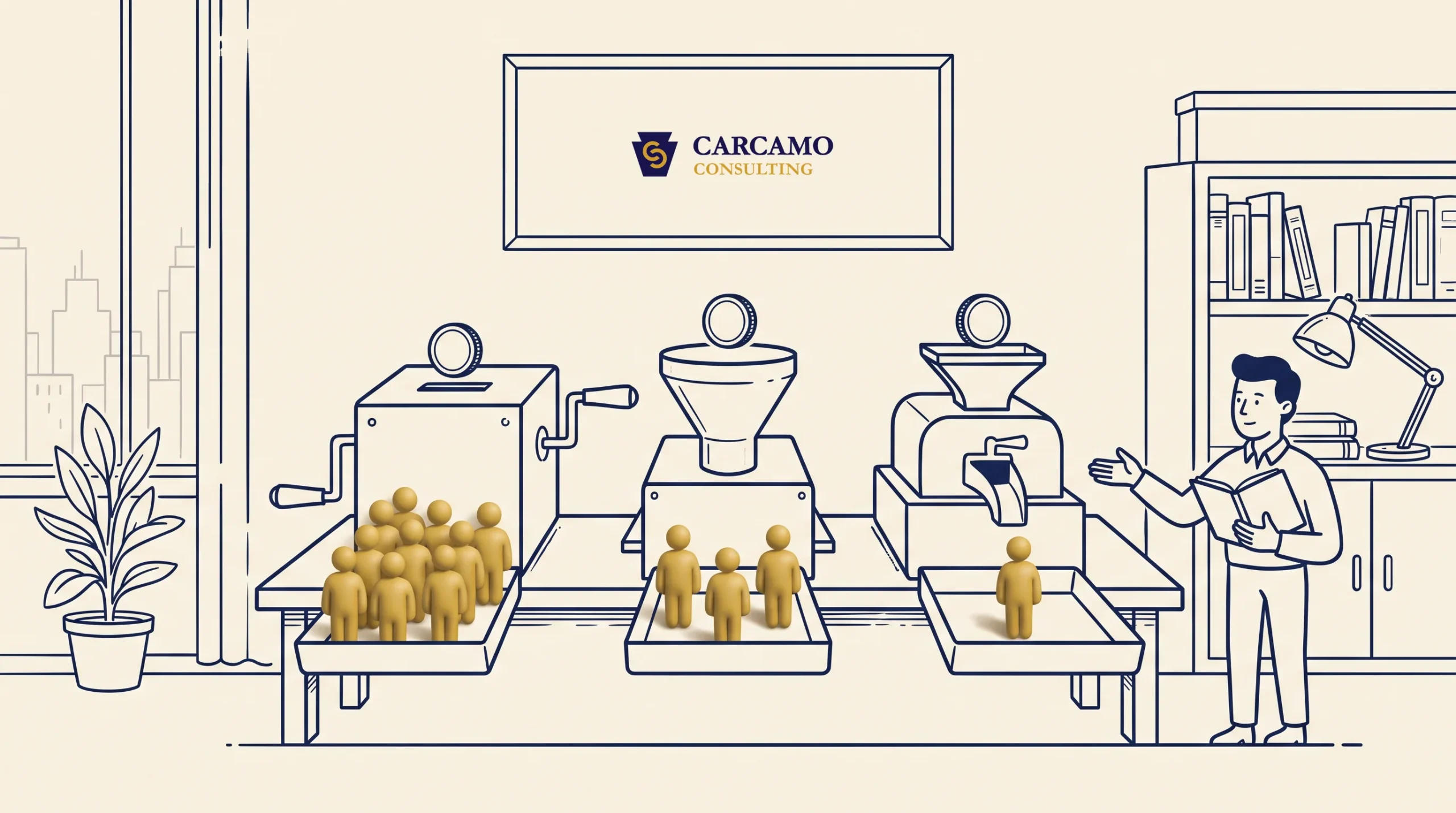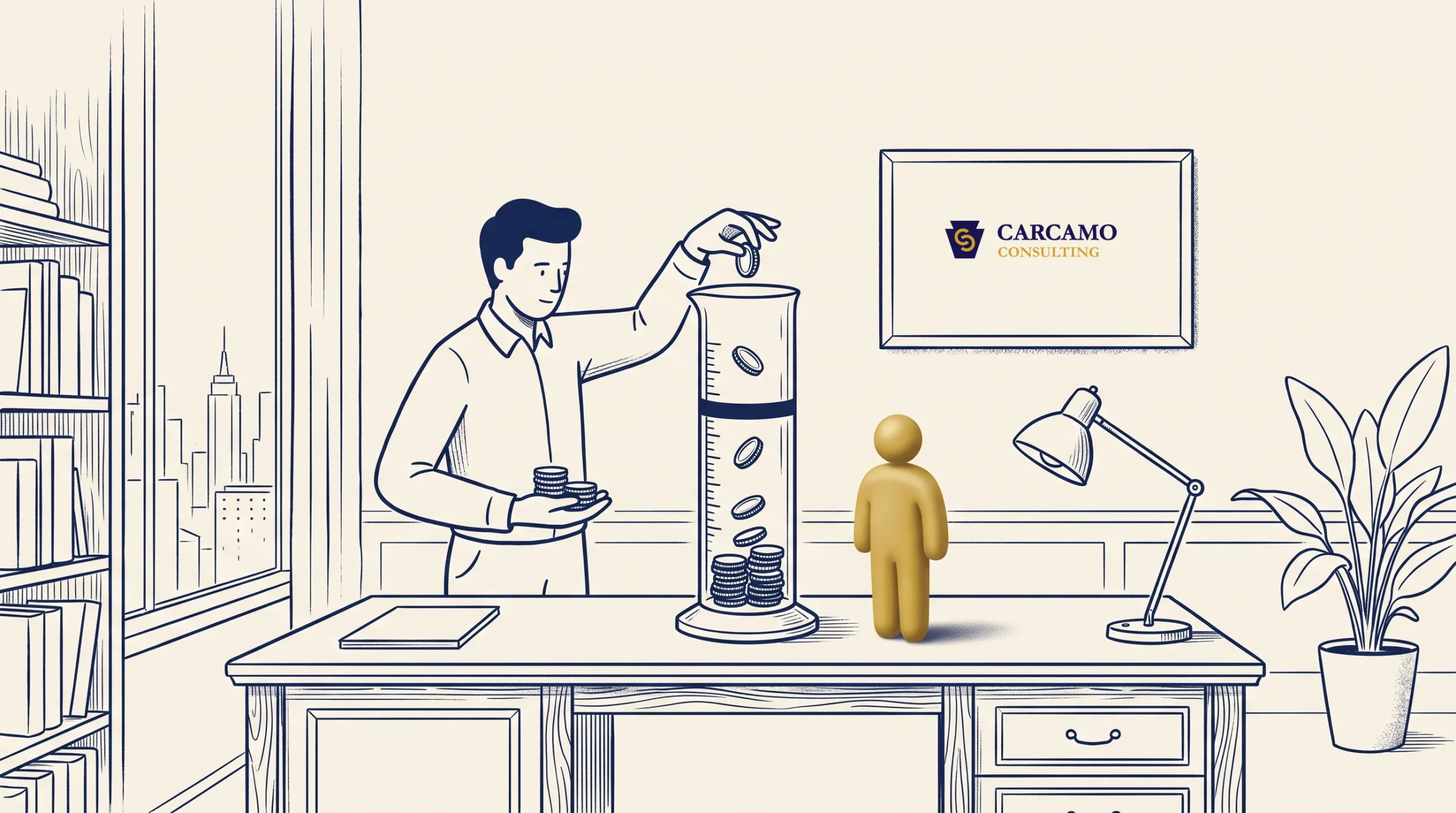

When someone needs what you sell, their first move is almost never a phone call. It is a search. They open Google, type what they are dealing with, and start reading. About 71% of buying journeys now begin with a search engine query, and organic search drives roughly 53% of all website traffic. If your business is not part of what they read, you are not in the running yet.
Learning how to get customers with content and SEO starts right there. Content is the helpful answer you publish. SEO is what makes Google show your answer to the right person at the right time. Put them together and you build a stream of people who find you on their own, already interested, with no ad spend feeding the meter. What follows is how that turns into actual customers, not just traffic, and what it takes to get there.
What getting customers with content and SEO really means
Think of it as putting helpful answers where your future customers are already looking.
Content marketing means creating useful things people want: blog posts, guides, answers to common questions, comparisons that help someone decide. SEO, or search engine optimization, is the set of choices that help those things rank in Google so people can find them.
On their own, each one falls flat. Great content nobody can find does nothing. A page optimized to rank that does not actually help anyone gets clicked and abandoned. Together, they create something rare: a page that ranks, gets read, and turns a stranger into a customer.
The reason this works so well for small businesses is cost and trust. Ads stop the moment you stop paying. A blog post that ranks keeps bringing in readers for months or years after you publish it.
And someone who finds you by searching, reads your answer, and decides you know your stuff arrives warmer than any cold lead. They came looking. Organic search is one of the three core ways to bring in customers, alongside paid and earned channels, and it is the one that compounds.
How a blog post becomes a booking
This is where the money is actually made or lost. Publishing and chasing traffic is the easy part. Turning that traffic into a paying customer is what trips most businesses up.
A piece of content earns a customer in a chain of small steps:
- Someone searches a question they have, like “do I need an LLC to start a cleaning business.”
- Your post ranks and answers it clearly, so they read it and trust you a little.
- The post points them toward a next step that fits where they are, whether that is another article or a quiet invitation to ask you directly.
- When they are ready to buy, you are the name they already know.
Traffic is only the first link in that chain. The links that matter are trust and the next step. A post that pulls in 500 readers and offers them nothing to do next is a leak. A post that pulls in 50 readers and moves five of them one step closer is a machine.
So the goal is not “get more visitors.” The goal is to be genuinely useful to the exact person who could become a customer, and to make the next step obvious. That is the whole game.
Step 1: Know exactly who you are writing for
Content fails most often because it tries to talk to everyone. When you write for everyone, you connect with no one.
Before you write a word, get specific about one real customer. What do they do? What problem sent them searching? What are they worried about? What words would they actually type into Google? A local restaurant owner searching “how to get more dinner reservations” is a different person, with different fears, than a contractor searching “how to find remodeling leads.”
You do not need a fancy persona document. You need to be able to picture one person and write to them like you are answering a friend. Getting this right early saves you from publishing content that reads well and converts nobody.
Step 2: Find the questions people are already asking
SEO is not guesswork. People tell Google what they want millions of times a day, and those searches are a map of what to write.
Keyword research is the part where you find that map. You are looking for the actual phrases your customers search, in their words, not yours.
- The questions you already hear. Every question a customer asks you on the phone is a blog post. “How much does this cost?” “How long does it take?” “What is the difference between X and Y?” Those are searches too.
- Google’s own hints. Type a phrase into Google and read the autocomplete suggestions. Scroll to “People also ask” and “Related searches.” That is free keyword research straight from the source.
- Search intent, not just the words. Someone searching “best cleaning service near me” is ready to hire. Someone searching “how to remove hard water stains” is trying to do it themselves. Both are useful, but they want very different content.
The sweet spot for a small business is specific, lower-competition phrases. You will not outrank a national brand for “marketing tips” tomorrow. You can absolutely rank for “how to get more customers for a cleaning business in Pennsylvania.” Smaller, more specific searches bring fewer visitors, but those visitors are far more likely to become customers.
Step 3: Write content that answers the question better than anyone else
Once you know the question, your job is to give the best answer on the internet for that one thing. Google rewards the page that most completely satisfies the searcher, and so do readers.
A few rules make content rank and convert at the same time:
- The main answer, fast. Put a clear, direct answer near the top, in the first paragraph or two. Do not bury it under a 400-word introduction. Both readers and Google reward a page that gets to the point.
- Genuine depth. Cover the obvious follow-up questions on the same page so the reader does not need to go anywhere else. Depth is what separates a page that ranks from a page that gets ignored.
- A human voice. Short paragraphs. Plain words. Real examples. If it sounds like a person who knows the subject explaining it to a friend, you are doing it right.
- Something only you can add. Your own numbers, your local detail, the mistake you see customers make every week. This is what makes your page different from the ten that already exist, and it is exactly what an experienced operator can offer that a generic writer cannot.
One thorough, genuinely useful post will outperform five thin ones every time. Quality is the strategy, not volume.
Step 4: Handle the SEO basics on the page
You do not need to be a technical expert to get the on-page fundamentals right. A handful of simple habits cover most of what matters for a small business.
- The keyword where it counts. Put the main phrase in your title, your first paragraph, and at least one heading. Naturally, not stuffed.
- A title that earns the click. Your page title and the short snippet under it in Google are an ad for your page. Make them clear and specific so people choose you over the result above and below.
- A page you can skim. Use descriptive headings, short paragraphs, and bullet lists. A page that is easy to skim ranks better and keeps readers longer.
- Links between your own pages. When one post mentions a topic you have covered elsewhere, link to it. This helps readers and helps Google understand your site.
- Fast and mobile-ready. Most of your readers are on a phone. A slow or clumsy mobile page loses both rankings and customers.
That is the bulk of on-page SEO for a small business. The technical rabbit hole goes deep, but these basics carry most of the weight.
Step 5: Do not ignore local search
For a business that serves a specific area, local search is the fastest organic win there is. If you do only one thing from this whole list, make it this.
When someone searches “near me” or includes a town name, Google leans heavily on a few local signals:
- Your Google Business Profile. Claim it, fill out every field, add photos, and keep your hours and services current. This free listing is often what decides whether you show up in the local map results.
- Consistent name, address, and phone number everywhere your business appears online. Mismatches confuse Google and cost you rankings.
- Reviews. A steady flow of recent, genuine reviews is one of the strongest local ranking signals, and it is the thing that makes someone choose you once they find you.
- Location in your content. Mentioning the regions you serve naturally in your pages helps you show up for local searches, as long as you are not stuffing town names into every line.
For many local businesses, getting the Google Business Profile right brings in calls faster than any blog post. Do this first, then layer content on top.
Step 6: Match content to where the customer is
Not everyone who finds you is ready to buy. Someone just realizing they have a problem needs something different from someone comparing two providers this afternoon. Mapping content to the customer journey is how you stop leaving money on the table.
- Top of the journey (just learning): broad, helpful answers. “What does customer acquisition actually mean.” These build trust and pull people in. Keep the sell soft.
- Middle (comparing options): content that helps them decide. Comparisons, cost breakdowns, how-to-choose guides. Here you can position yourself as the obvious choice.
- Bottom (ready to act): content that removes the last doubt. Your process, your guarantees, what working with you looks like. This is where a clear, direct invitation to contact you belongs.
You do not need all of this on day one. You need a mix over time, so that whoever finds you, wherever they are, has a reason to take one more step toward you.
How long it takes and how much you need to publish
Content and SEO are not a faucet you turn on. They are closer to planting. The realistic timeline for a small business is meaningful movement in three to six months, with a steady flow of leads often showing up around five to eight months in. Less competitive or local topics move faster; crowded national topics take longer.
On volume, consistency beats intensity. For most small businesses, two to four well-researched pieces a month is sustainable and effective. Publishing one strong post a week, every week, will outperform a burst of twenty thin posts followed by silence. The businesses that win at this are not the ones that publish the most. They are the ones that keep going after the first few months feel quiet.
That patience is exactly why this channel stays open for the businesses willing to do it. Most quit early. If you do not, you compound while they restart from zero.
A simple way to start
If you have no time and no team, you do not need the full playbook on day one. You need a first move you will actually finish.
- Claim and complete your Google Business Profile this week.
- Write down the ten questions customers ask you most often.
- Turn the top three into clear, thorough blog posts, one at a time.
- Ask happy customers for reviews, every time, as a habit.
- Keep publishing one useful post a week, answering real questions.
That is a real content and SEO engine, built from things you already know. It is not glamorous, and it works. When you are ready to go further, the broader playbook for getting customers lays out how this fits with the other channels.
Content and SEO, or ads?
This is the question most owners are really asking, so it deserves a straight answer. Ads buy attention now and stop the moment you stop paying. Content and SEO take months to build but keep working after you stop, and they tend to bring warmer, cheaper leads over time.
For most small businesses, the smart move is not one or the other. It is to start content and SEO early because it takes time to compound, and use a little paid traffic to bring in customers while it grows. If you want to weigh this properly for your situation, the full comparison of organic versus paid customer acquisition breaks down when each one makes sense.
The thing to avoid is waiting. Content and SEO reward the business that started a year ago. The next best time to start is now.
Frequently asked questions
Does content marketing actually bring in customers, or just traffic?
It brings in customers when it is built to. Traffic is only the first step. The content has to answer a real question, earn trust, and point the reader toward a clear next step. A post that does all three turns readers into inquiries. A post that just chases clicks brings visitors who leave. The difference is whether you wrote for the customer or for the traffic counter.
How long does SEO take to work for a small business?
Expect meaningful movement in three to six months and a steady flow of leads often around five to eight months in. Local and lower-competition topics move faster. The biggest factor is consistency: businesses that publish steadily and keep going see results, while those that stop after a month or two rarely do.
How much content do I need to publish?
For most small businesses, two to four well-researched pieces a month is plenty. Consistency matters more than volume. One thorough, genuinely useful post per week will outperform a pile of thin posts. It is better to publish one strong piece you are proud of than five you rushed.
Can I do SEO myself, or do I need to hire someone?
You can absolutely handle the basics yourself: claiming your Google Business Profile, writing helpful posts that answer customer questions, and using clear titles and headings. That covers most of what a small business needs. Hiring help makes sense when you want to move faster, compete for tougher keywords, or simply free up your time for running the business.
Is SEO worth it for a small local business?
For a local business, it is often the highest-return marketing there is. Local searches like “near me” carry strong buying intent, and a complete Google Business Profile plus a handful of helpful pages can put you in front of people the moment they need you. Because most local competitors do this poorly or not at all, the bar to stand out is lower than you would think.
How do I get customers from Google without paying for ads?
Show up in the results people already trust. That means a complete Google Business Profile, steady reviews, and content that answers the questions your customers search. It takes longer than ads, but the traffic is free once it ranks and tends to convert better because the customer found you on their own.
When getting found online feels like a fog, you do not have to clear it alone. Carcamo Consulting helps small businesses in Pennsylvania and beyond show up on Google and turn that visibility into real customers, in plain English, with no judgment. If you are stuck on where to start, send us your questions and a real human will help you map it out.
 Previous