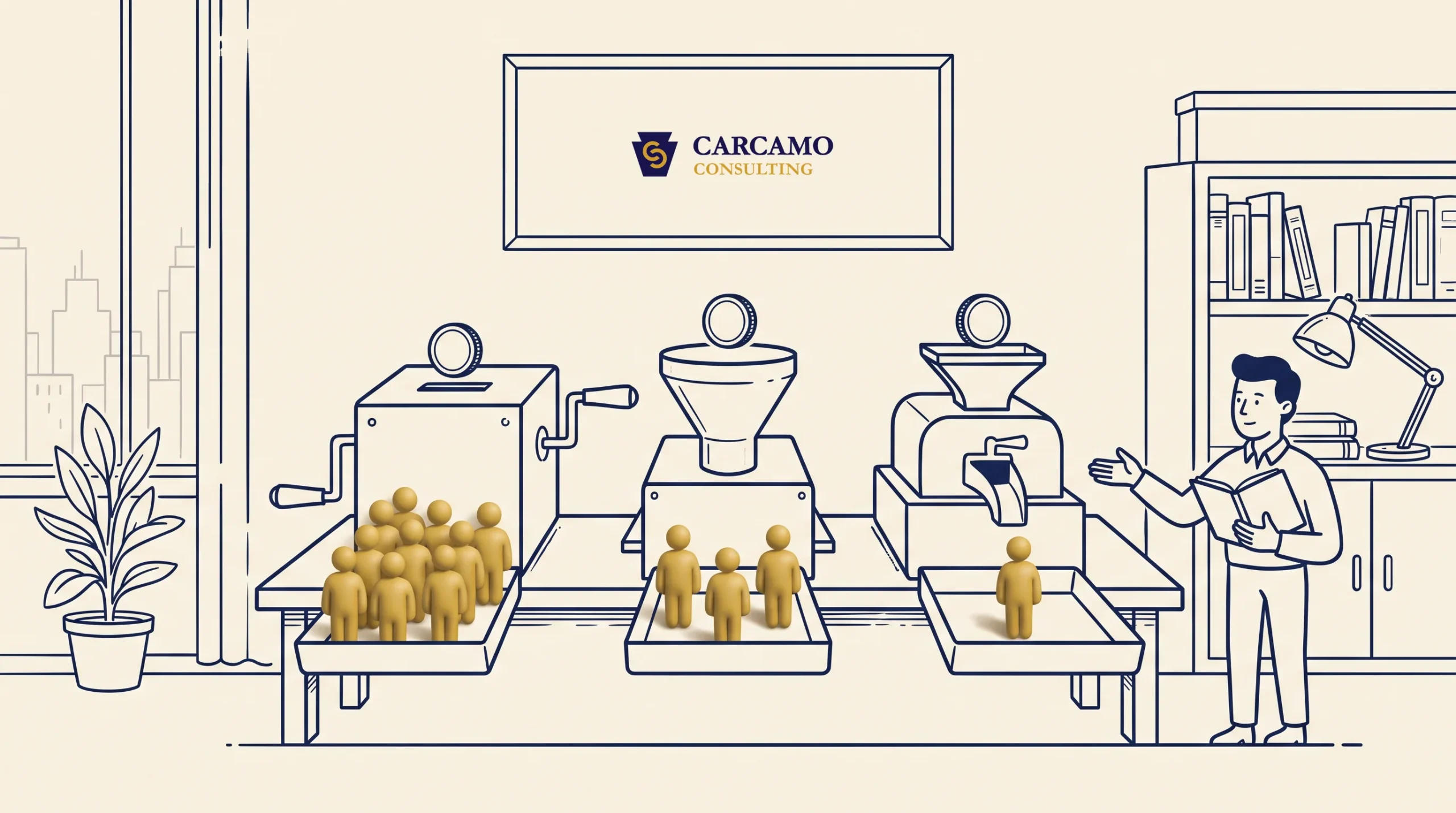

Joining local business groups like BNI or your Chamber of Commerce can be worth it for leads, but only for the right business and only if you show up consistently. BNI is a structured weekly referral group that gives one seat per profession, so you become the only business of your kind in the room, and it pays off over months, not weeks. A Chamber of Commerce costs less and asks less of your calendar, but the leads are looser and come from visibility rather than a formal referral system. Which one is worth it comes down to your business, your budget, and your patience.
Both cost real money and real time, so the honest question is not “are they good,” but “are they worth it for you.” This walks through what each one actually delivers and how to decide.
There is a common way owners waste a full year and a membership fee on one of these, and it has nothing to do with which group they pick. We will get to it.
What each group actually is
They look similar from the outside, a room full of local business owners, but they work in completely different ways.
BNI (Business Network International) is a structured referral group. A chapter meets weekly, usually for about 90 minutes, follows a set agenda, and members pass each other referrals. The defining rule is exclusivity: each chapter holds only one seat per profession, so there is one accountant, one plumber, one web designer. When someone in the room needs what you do, you are the only option. That exclusivity is the entire value.
A Chamber of Commerce is a membership organization built around local visibility and community. You get access to events, mixers, a member directory, and standing in the local business scene. Leads come from being seen and known over time, not from a formal system that hands them to you.
One is a referral machine with rules. The other is a visibility and relationships play. That difference drives everything else.
BNI vs the Chamber at a glance
| BNI | Chamber of Commerce | |
|---|---|---|
| How leads come | Direct member referrals, structured | Visibility, events, word of mouth |
| Exclusivity | One seat per profession | Open to all, competitors welcome |
| Time required | High: weekly meetings plus one to ones | Low to moderate: events when you choose |
| Typical cost | Roughly 700 to 1,500 dollars a year, all in | Usually a few hundred dollars a year |
| Payoff timeline | 6 to 12 months of consistency | Slow build through visibility |
| Best for | Referral friendly local service businesses | Businesses wanting local presence and community |
What BNI really costs you
The membership fee is the smallest part of the bill. Count both money and time before you join.
Money. All in, BNI commonly runs somewhere between 700 and 1,500 dollars a year once you add the base dues, the application fee, weekly meeting meals, materials, and conference costs. The exact number varies by chapter and region, so ask your local chapter for the full breakdown, not just the headline dues.
Time. This is the cost owners underestimate. Weekly 90 minute meetings alone add up to roughly 78 hours a year. Add meeting prep, the one to one coffees members are expected to do, and any committee work, and you are realistically looking at 120 to 150 hours a year.
That time is the real price. If those hours are worth more spent on paying work or another channel, BNI is expensive no matter how low the dues look. If your calendar has room and you close well in person, that same time can turn into a steady referral stream.
What the Chamber gives you
A Chamber membership is a lighter commitment with a different payoff. You are buying visibility and belonging, not a referral pipeline.
- Local presence. Your business shows up in the directory and at events where other owners and community members see it.
- Warm relationships. Regular mixers let you build the kind of loose ties that turn into referrals over time.
- Community standing. Being an active member signals you are established and local, which matters to buyers who prefer to support nearby businesses.
The leads are less direct and slower to arrive, but the cost and time are far lower. For many local businesses, the Chamber is the low risk way to become known before committing to something as demanding as BNI.
Is joining local business groups worth it for leads
Use your business type, your budget, and your patience to decide. This is where most of the answer lives.
- If you run a referral friendly local service (a trade, a financial service, a home service) with a clearly defined ideal customer, and you can commit to 6 to 12 months of weekly attendance, BNI can pay for itself and then some.
- If you want local visibility, community standing, and looser networking without a weekly obligation, the Chamber is the better first step.
- If your niche is still fuzzy, you serve mostly online or national customers, or you need revenue this quarter, neither group is your best move right now. Your time is better spent on faster channels first.
- If you have the budget and the hours, joining both is common: the Chamber for presence, BNI for structured referrals. They do not compete.
Picking the right room matters as much as picking the right group, which is the same idea behind finding the networking events that actually get you clients.
Try before you commit
Here is the mistake that costs owners a wasted year: signing up before ever sitting in the room. Both groups let you sample them, so use it.
- Visit a BNI chapter as a guest at least once or twice before joining. Chapters vary wildly in energy, size, and quality, and the referrals follow the strong chapters. See whether this specific room is active and whether the seat for your profession is even open.
- Attend a Chamber event or two as a non member before you pay. Get a feel for who shows up and whether they are your kind of customer or referral source.
Judge the actual room, not the brand. A weak BNI chapter and a sleepy Chamber will both underdeliver, and you can only tell by showing up first. If networking itself feels like a slog, our take on networking when you would rather not makes the whole thing easier, and it fits naturally into the wider world of getting customers through networking and partnerships.
Frequently asked questions
How much does BNI cost?
All in, BNI commonly runs between about 700 and 1,500 dollars a year once you add base dues, a one time application fee, weekly meeting meals, materials, and conference costs. The exact figure depends on your chapter and region, so ask the chapter you are considering for the full breakdown rather than relying on the advertised dues alone.
Is BNI worth it for a small business?
It is worth it for a referral friendly local business with a clearly defined ideal customer and the ability to commit to weekly meetings for 6 to 12 months before the referrals become steady. It is usually not worth it if your niche is undefined, you serve mostly online or national markets, or you need new revenue faster than the group’s trust timeline allows.
What is the difference between BNI and the Chamber of Commerce?
BNI is a structured weekly referral group with one seat per profession, built to pass members direct referrals. A Chamber of Commerce is a broader membership organization built around local visibility, events, and community standing, where leads come from being seen rather than from a formal referral system. BNI demands more time and money; the Chamber asks for less of both.
Can you visit a BNI meeting before joining?
Yes. BNI chapters welcome guests, and you should visit at least once or twice before committing. Chapters differ a lot in size, energy, and referral activity, so a visit tells you whether this specific room is strong and whether your profession’s seat is open.
How long before BNI brings in referrals?
Plan on 6 to 12 months of consistent attendance before referrals become reliable. The system runs on trust, and trust is built by showing up, giving referrals to others, and doing one to one meetings. Owners who quit after a few months rarely see the payoff.
Is a Chamber of Commerce membership worth it for leads?
It can be, especially for local visibility and relationships, but the leads are looser and slower than BNI’s direct referrals. The value depends heavily on how active your local chamber is and how consistently you show up to events. As a lower cost, lower commitment way to become known locally, it is often a smart first step.
Can you join both BNI and the Chamber?
Yes, and many established local businesses do. The Chamber builds visibility and community presence while BNI drives structured referrals. If you have the budget and the hours for both, they complement each other rather than overlap.
Local business groups can be a real source of leads, but only when the group fits your business and you commit to showing up. If you are weighing whether BNI, the Chamber, or neither is the right spend for you right now, a free question to our team is a good place to start. Tell us your trade, your budget, and how much time you can give, and we will help you decide where those hours actually pay off.
 Previous