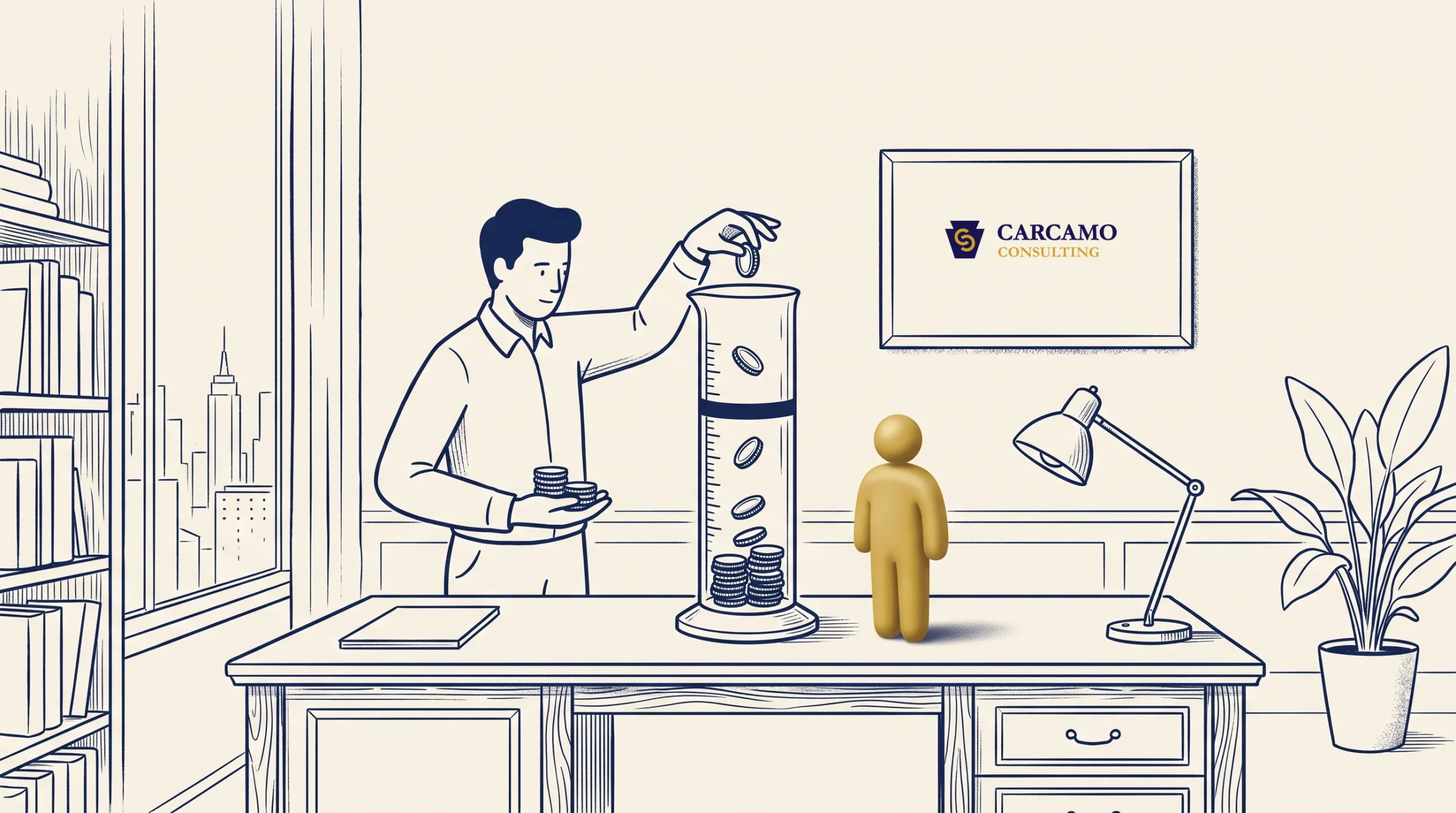
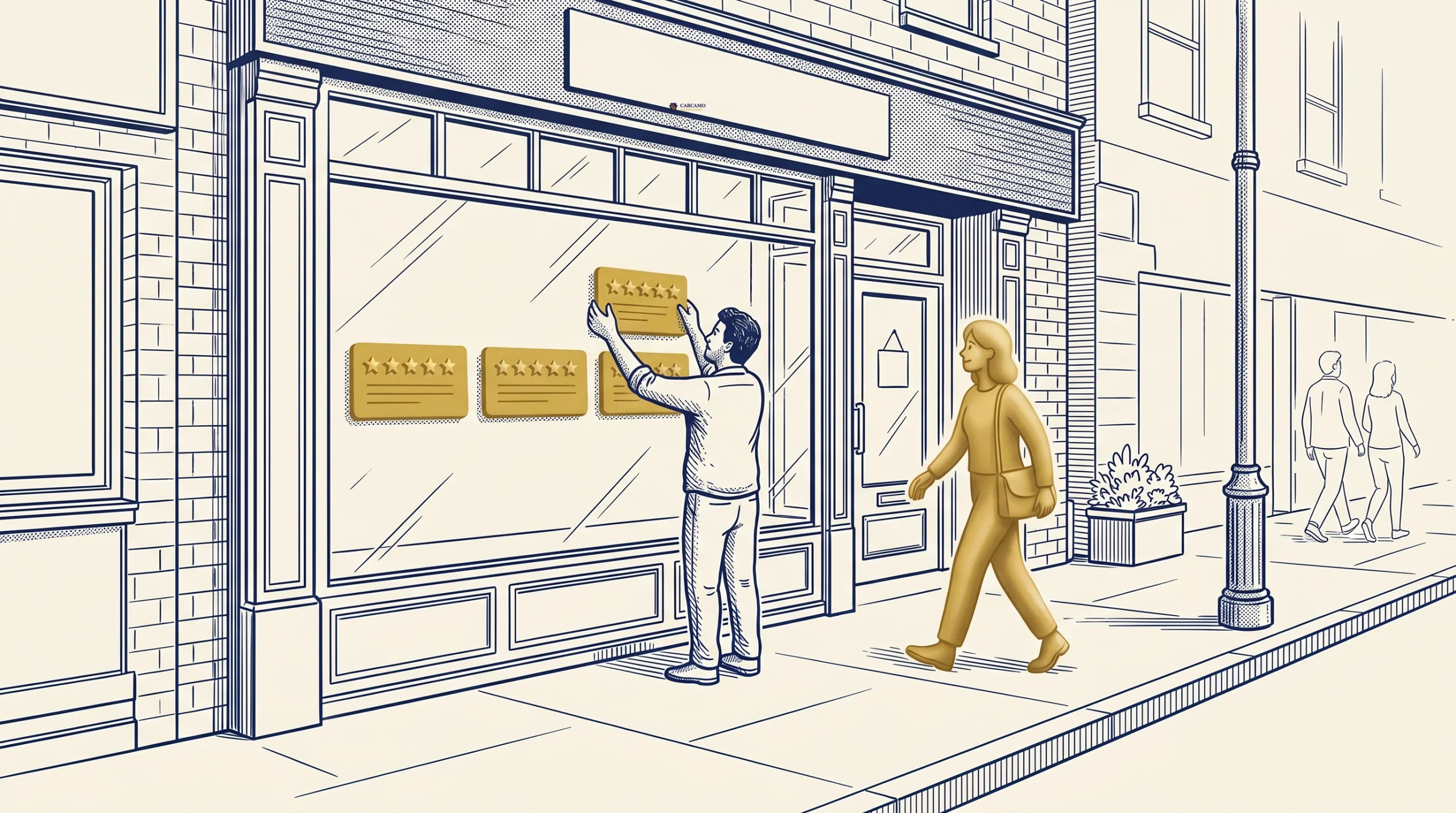
You already have happy customers. The question is whether the next person deciding whether to call you ever hears about them. A review sitting on a Google profile nobody visits does almost nothing. The same words, placed where a hesitating prospect will see them, can be the reason they pick you over the other three names on their list.
Turning reviews and testimonials into new customers means moving that proof out of the places it hides and putting it in front of people at the exact moment they are deciding. Reviews are the cheapest sales tool you own, because your customers already wrote them for free. This is how you put them to work, step by step, as a small local business and not a marketing department.
The system itself is three moves: collect specific reviews, put the strongest ones on the pages where people decide, and make every one feel like a real human said it. The rest of this explains how.
Why reviews close sales that ads cannot
People trust other customers more than they trust you. That is not an insult, it is just how buying works. Most shoppers read reviews before they spend money, and a large majority say positive reviews make them trust a business more.
The reason is simple. You are expected to say you are good. A stranger who paid you and came back is not. That gap is exactly what a prospect is trying to close when they are weighing you against a competitor, and a good testimonial closes it for them.
This is also where your reviews do real work for your pitch. A testimonial is proof of the promise you make on your homepage. If you tell people you show up on time and finish clean, a customer saying “they showed up when they said they would and left the place spotless” is worth more than you repeating it. Strong testimonials are the evidence behind your value proposition, which is why the two should always travel together.
Collect reviews you can actually use
Not every review helps you sell. “Great service, thanks!” builds a star rating but persuades no one. The reviews that convert are specific: they name the problem, what you did, and the result.
When you ask, nudge the customer toward specifics. Instead of “could you leave us a review,” try “would you mind mentioning what we fixed and how it turned out?” That one change turns a vague thumbs-up into a story a future customer recognizes as their own.
A few rules keep your collection honest and legal:
- Never pay for or trade for reviews, because it violates platform and FTC rules and it shows.
- Ask everyone, not just your biggest fans. A steady trickle of recent reviews reads as more trustworthy than a wall of five-year-old raves.
- Get permission to reuse anything you feature. A Google review is public, but if you want to put someone’s words and name on your site or an ad, a quick “okay if we share this?” keeps it clean.
If you are not getting enough reviews to begin with, fix that first. The full workflow for asking at the right moment is in our guide on how to get more online reviews.
Put proof where people decide
Most owners drop testimonials on a single “Reviews” page and stop. Almost nobody visits that page. The reviews need to live where the buying decision actually happens.
Match the proof to the moment:
- Homepage: two or three short, broad testimonials near the top. This is the first-impression slot, so use reviews that say you are reliable and easy to work with.
- Service or pricing pages: results-focused reviews that answer the specific worry of someone on that page. On a pricing page, a review that says “worth every penny and no surprise charges” handles the objection before they raise it.
- Contact or quote page: one strong, recent review right next to the form. This is the last hesitation point, and a nudge here recovers people who were about to close the tab.
- Google Business Profile: keep it active, because for local searches this is where most people look first.
You do not need dozens in each spot. Three relevant, believable reviews on the right page beat thirty generic ones buried on a page nobody opens.
Make on-site testimonials believable
On-site testimonials carry a trap. The moment you put reviews on your own website, some visitors assume you cherry-picked or invented them. If they read as fake, they hurt you. The fix is to make them undeniably real.
- Use full names, photos, and location where the customer agrees. “Maria R., Wilkes-Barre” beats “M.R.” beats “a satisfied customer.”
- Keep the customer’s real wording, tidying a typo but never rewriting their voice into marketing-speak.
- Show specifics, even small imperfections, because “took a day longer than planned but they kept me posted and the work was perfect” sounds far more real than flawless praise.
- Link out to the source when you can. A “see our Google reviews” link tells people you are not hiding anything, because the unfiltered version is one click away.
This is also why third-party reviews carry extra weight. A review on Google or Yelp is one a stranger trusts more, because you cannot edit it. The strongest setup uses both: real reviews on independent platforms, and your best ones featured on your own pages with a clear path back to the source.
Give every review a second life
A review you collected once should work for you in more than one place. Once you have a strong one, reuse it everywhere it fits:
- Turn it into a simple graphic for social media or a Facebook post.
- Drop a line of it into an email or a quote you send a prospect.
- Add a relevant quote to a flyer, a proposal, or a vehicle wrap.
- Pull the best ones into a short “what our customers say” section you can paste into any pitch.
Specific, emotional reviews outperform generic praise by a wide margin, so lead with your most concrete ones. Each strong review is an asset, not a one-time post. The owners who win with social proof are not the ones with the most reviews, they are the ones who put the same good review to work in five places.
Reviews are one stage of a larger path a stranger walks before they buy. To see where proof fits alongside everything else, our breakdown of the customer journey from stranger to customer maps the whole thing.
Start turning reviews and testimonials into new customers
If you do nothing else, do these three things in order. Ask your last five happy customers for a specific review. Take your two best existing reviews and put them on your homepage and your contact page. Add a link to your Google profile so people can see the rest.
That is a working social proof system, built from words your customers already gave you. When you want help wiring it into your site and your marketing so it runs without you thinking about it, that is the kind of thing you can just ask us about.
Frequently asked questions
Do customer testimonials actually work?
Yes. Most consumers read reviews before buying, and a large majority trust a business more after reading positive ones. The effect is strongest when the testimonial is specific and recent, because vague praise reads as filler while a detailed story reads as proof.
Where should I put testimonials on my website?
Put them where people decide, not on a separate page. Use broad trust-building reviews on your homepage, results-focused reviews on your service and pricing pages, and one strong recent review next to your contact or quote form. A dedicated reviews page is fine as a backup, but it should not be the only place they live.
How many reviews do I need before they help?
A handful of specific, recent reviews already help on the page where someone is deciding. For your overall star rating to feel reliable to shoppers, aim higher over time, since people trust a rating more once it is backed by a solid number of reviews rather than just two or three.
Can I use my Google reviews on my own website?
Yes, Google reviews are public, so you can quote them. If you want to feature a customer’s name or photo alongside their words, ask their permission first. Linking back to your live Google profile also makes the on-site version more believable, because visitors can verify it.
Is it okay to edit a testimonial?
Fix an obvious typo, but never change the meaning or rewrite it into marketing language. Edited-sounding testimonials are the fastest way to make real reviews look fake. If a review is too vague to use, the better move is to ask that customer a quick follow-up question for a more specific quote.
Are video testimonials worth it for a small business?
They can be powerful, since many people say a video testimonial helped convince them to buy. But you do not need them to start. A few specific written reviews placed well will do more than a polished video buried where nobody sees it. Add video later, once the basics are working.
 Previous