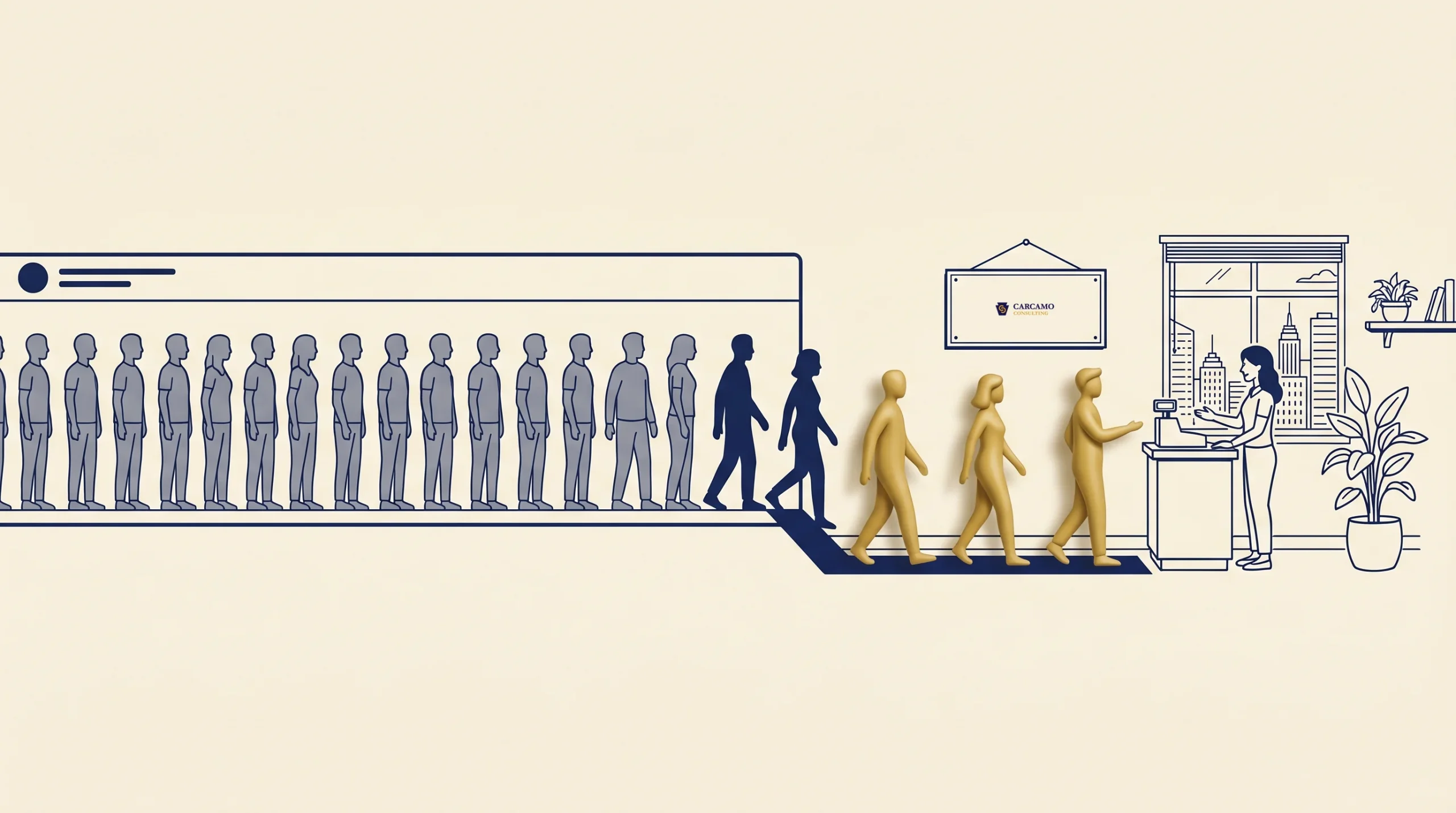
Followers feel like progress. The number climbs, the likes come in, and it looks like the business is growing. Then the month ends and the sales do not match the follower count, and you are left wondering what you did wrong.
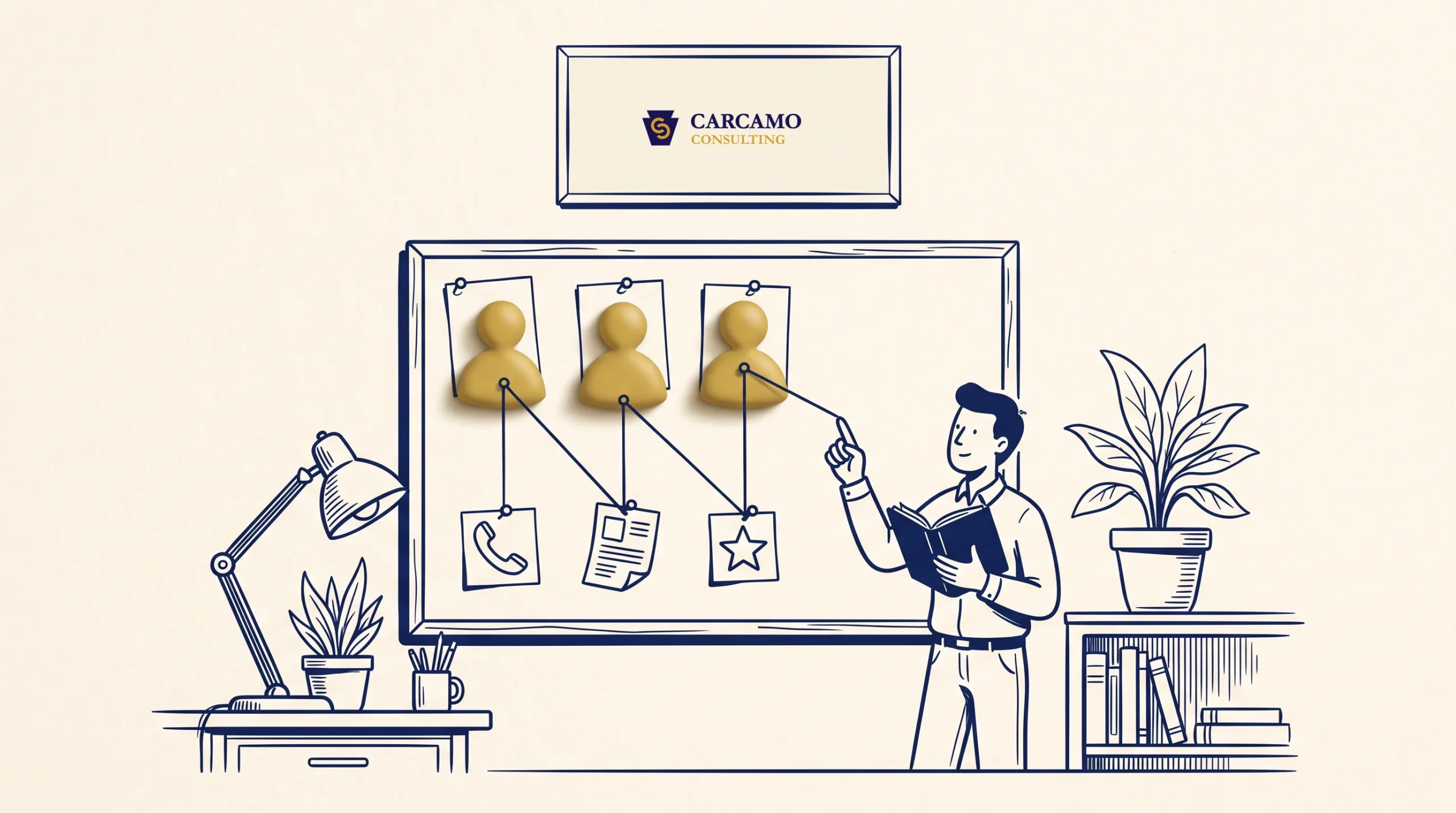
You did not do anything wrong. To turn social media followers into customers, you have to close the gap between two different people at two different stages, and posting more does not close it. A path does: one that walks someone from “I like this account” to “I am ready to pay.” Most social media advice stops at getting the follow. The money is in what happens after it.
Here is the whole path, one step at a time, plus the four reasons engaged followers still do not buy and exactly what to do about each one.
Why followers do not turn into customers on their own
A follow is a low-commitment action. It costs nothing, risks nothing, and means “keep showing me this,” not “I want to buy.” Someone can enjoy your content for months and never once think about hiring you, because you never gave them a reason or a moment to.
When followers are not converting, it is almost always one of four things:
- You attracted the wrong audience. Viral or entertaining content pulls in people who like the content, not people who need the service. A big follower count made of the wrong people converts worse than a small one made of the right people.
- There is no path to buy. People would have to hunt for how to work with you. No clear next step means no step at all.
- They do not trust you yet. Nobody hands money to an account they have followed for a week. Trust is built with proof, consistency, and time.
- You never actually asked. A stream of helpful posts with no offer trains people to consume and scroll on. Value without an ask is a hobby, not a business.
Fix the right one and the sales start to move. The rest of this walks through the path that closes all four.
How to turn social media followers into customers, step by step
Think of it as five moves. Each one hands the person to the next. Skip a move and people fall out of the sequence.
Step 1: Attract the right people, not the most people
Growth is only useful if it is the right growth. Post content that speaks to the specific problem your customer has, in the words they use for it, so the people who follow you are people who could actually become customers.
A remodeling business posting “3 signs your bathroom needs more than a fresh coat of paint” pulls in homeowners with a project. A dance-trend video pulls in people who like dance trends. Both grow the count. Only one grows the business. If you are not sure which platform even puts you in front of buyers, start with which social media platform is best for getting customers before you pour effort into the wrong one.
Step 2: Turn passive followers into conversations
A follower who has never interacted with you is a stranger who happens to see your posts. A follower you have talked to is a warm lead.
You create those conversations on purpose:
- Reply to every comment like a person, not with a thumbs-up emoji. A real reply invites another one.
- Ask questions in your posts that are easy to answer. “What is the one room in your house you avoid showing guests?” gets replies. “Let us know your thoughts” does not.
- Answer questions in the DMs generously, even the ones that are not ready to buy. The person asking what a kitchen remodel usually runs is closer to hiring than the person who just liked a photo.
Every comment and DM is a door. Walking through it is how a name becomes a lead.
Step 3: Move the relationship off the platform
This is the move most advice skips, and it is the one that matters most. You do not own your followers. The platform does. An algorithm change, a hacked account, or a shadow ban can cut you off from every person you spent a year earning.
So the goal of your social content is not just engagement. It is to move the people who care onto something you actually control:
- An email list you can reach any time, regardless of the algorithm.
- A booking link or a quote form where a real inquiry starts.
- A phone number or a DM thread where you can talk one to one.
The bridge is usually a reason worth trading an email for. A checklist, a pricing guide, a short how-to, a discount for first-time customers. This is the same lead-capture move that works on a website, and the mechanics carry straight over from how to turn website visitors into leads with a lead magnet. Put the link where people can find it: in your bio, in your stories, and at the end of posts that earned attention.
Step 4: Build the trust that makes buying feel safe
People buy when the risk of saying yes feels small. Your job between the follow and the sale is to shrink that risk.
Trust is built with proof, not promises:
- Show real work and real results. Before-and-afters, finished projects, the actual thing you do.
- Put your reviews and testimonials to work. Social proof from past customers does more convincing than anything you can say about yourself, and there is a whole method to turning reviews and testimonials into new customers.
- Be a consistent, recognizable human. People buy from businesses that feel like a known quantity. Showing up the same way over time is itself a trust signal.
Marketers often say a person needs to see you around eight times before they act. Each helpful post, each honest reply, each piece of proof is one of those touches. You are not wasting posts. You are stacking reasons to trust you.
Step 5: Make a clear, low-friction offer
At some point you have to ask. Not aggressively, not constantly, but clearly and often enough that people know exactly how to buy.
A good offer for a service business is specific and easy to say yes to:
- Name the action. “Book a free 15-minute call,” “Get a free quote,” “Reply DEPOSIT to hold your spot.”
- Lower the stakes of the first yes. A free consultation, a small starter service, or a first-time offer is easier to accept than a big commitment. Once someone works with you once, the second sale is far easier.
- Make the path obvious. One link, one form, one reply. Every extra click loses people.
You do not need a hard sell. You need a clear one, made regularly, to an audience you have earned. That is the difference between an account people admire and a business people pay.
A simple weekly rhythm that runs the path
The path does not require you to post all day. A small business owner can run it in a light weekly rhythm:
- Post two or three times aimed at the right buyer, with content that solves a real problem.
- Reply to every comment and DM the same day, and turn the good ones into conversations.
- Once a week, point people to the next step, an email signup, a free guide, or a booking link.
- Once or twice a month, make a direct offer, plainly and without apology.
Consistency beats volume. A steady rhythm that always includes a next step will outperform a burst of viral posts that lead nowhere. If you want the bigger picture of how social fits with everything else that brings in business, the complete guide to getting customers from social media puts this path in context.
FAQ
Why do I have followers but no sales?
Usually one of four reasons: the followers are not your target buyers, there is no clear way for them to buy, they do not trust you enough yet, or you have never actually made an offer. Followers and customers are different groups. A follow means “keep showing me this,” not “I want to pay.” Sales come from giving the right followers a reason and an easy path to buy.
How many followers do you need to make sales?
Far fewer than most people think. A few hundred followers who are the exact people you serve will outsell tens of thousands who just like your content. What drives sales is audience fit, trust, and a clear offer, not the size of the number. Chasing follower count for its own sake often makes conversion worse, because broad content attracts people who will never buy.
Is it weird to sell to followers in the DMs?
No, as long as you lead with help instead of a pitch. The DMs are where a lot of real sales happen for small businesses, because the conversation is one to one. Answer questions generously, be a person, and when someone shows they are ready, make it easy for them to move forward. Spamming your offer to everyone who follows you is what feels weird. Responding to genuine interest does not.
How do I move my followers to my email list?
Give them a reason worth trading an email for, then make the link easy to find. A checklist, a pricing guide, a short how-to, or a first-time discount all work. Put the link in your bio, mention it in stories, and add it to posts that already earned attention. The point is to reach the people who care about your business on a channel you control, instead of depending on an algorithm to show them your posts.
How long does it take for followers to become customers?
It varies, but plan for weeks and months, not days. People often need to see a business several times before they trust it enough to buy, and building that familiarity takes consistent posting and real interaction. The businesses that convert fastest are the ones that stay consistent, keep talking to their audience, and always give people a clear next step rather than waiting for followers to buy on their own.
Growing a following is the easy part. Turning that following into customers is a path: attract the right people, start conversations, move them somewhere you control, earn their trust, and make a clear offer. Run that rhythm and the follower count finally starts to mean something.
If you are staring at a page of followers and no idea which step you are missing, that is exactly the kind of question we like. We run real local businesses ourselves, so the answer comes from doing this, not from a textbook. Send us your question. It’s free to ask.
 Previous