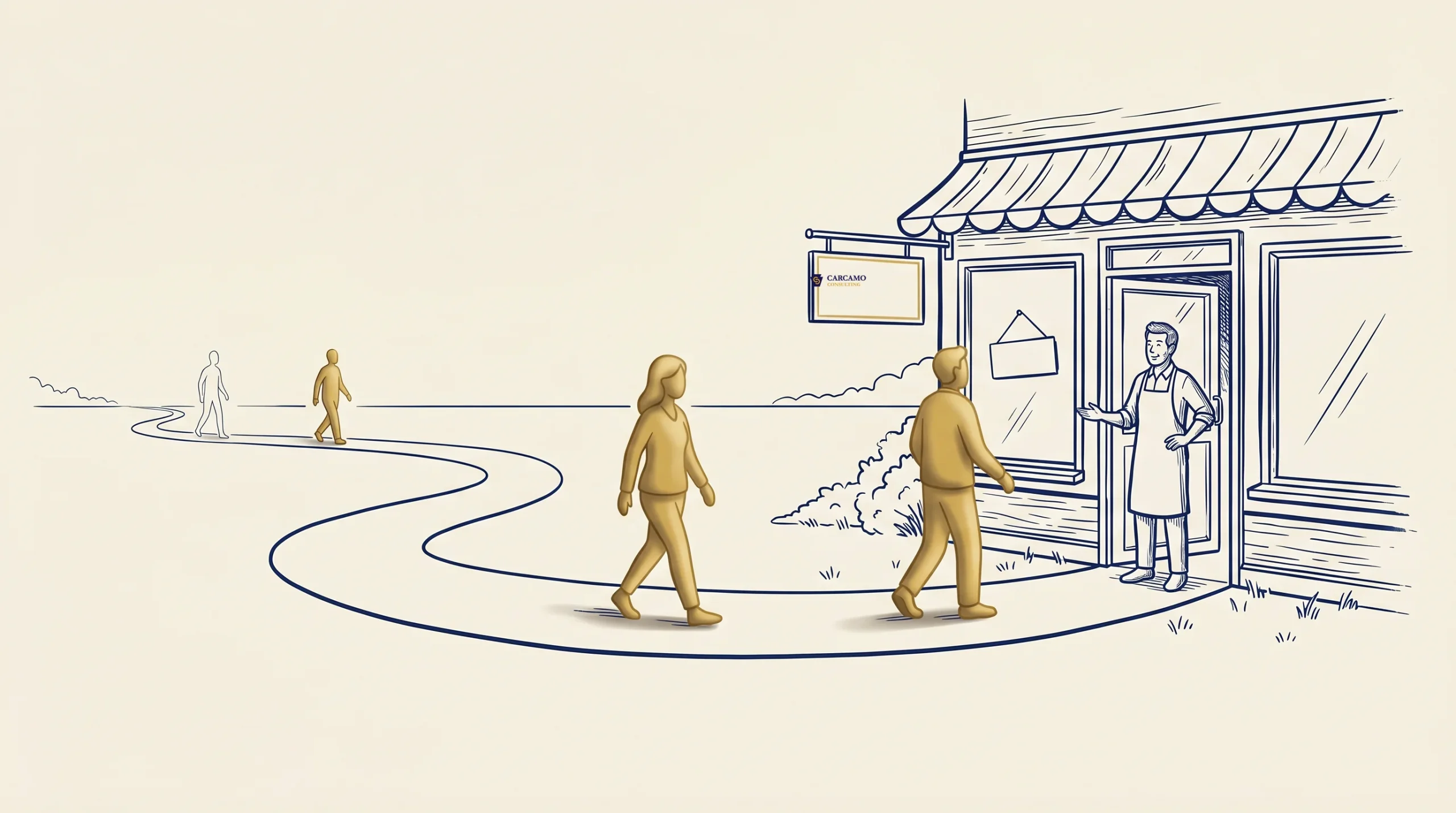
Ask ten small business owners what customer acquisition means and most will say “marketing,” or just “ads.” That is part of it. But it is not the whole thing, and the gap between the two is where a lot of money quietly gets wasted.
Here is the plain version. Customer acquisition is the entire process of turning a stranger into a paying customer: getting their attention, earning their trust, and closing the sale. Marketing is the part that gets you noticed. Acquisition is everything from that first hello to the moment money actually changes hands.
Treating it as bigger than marketing is what separates businesses that grow from businesses that just spend.
What customer acquisition actually means
Customer acquisition is the full journey a person takes from never having heard of you to becoming a paying customer. Not one ad, not one post. The whole path.
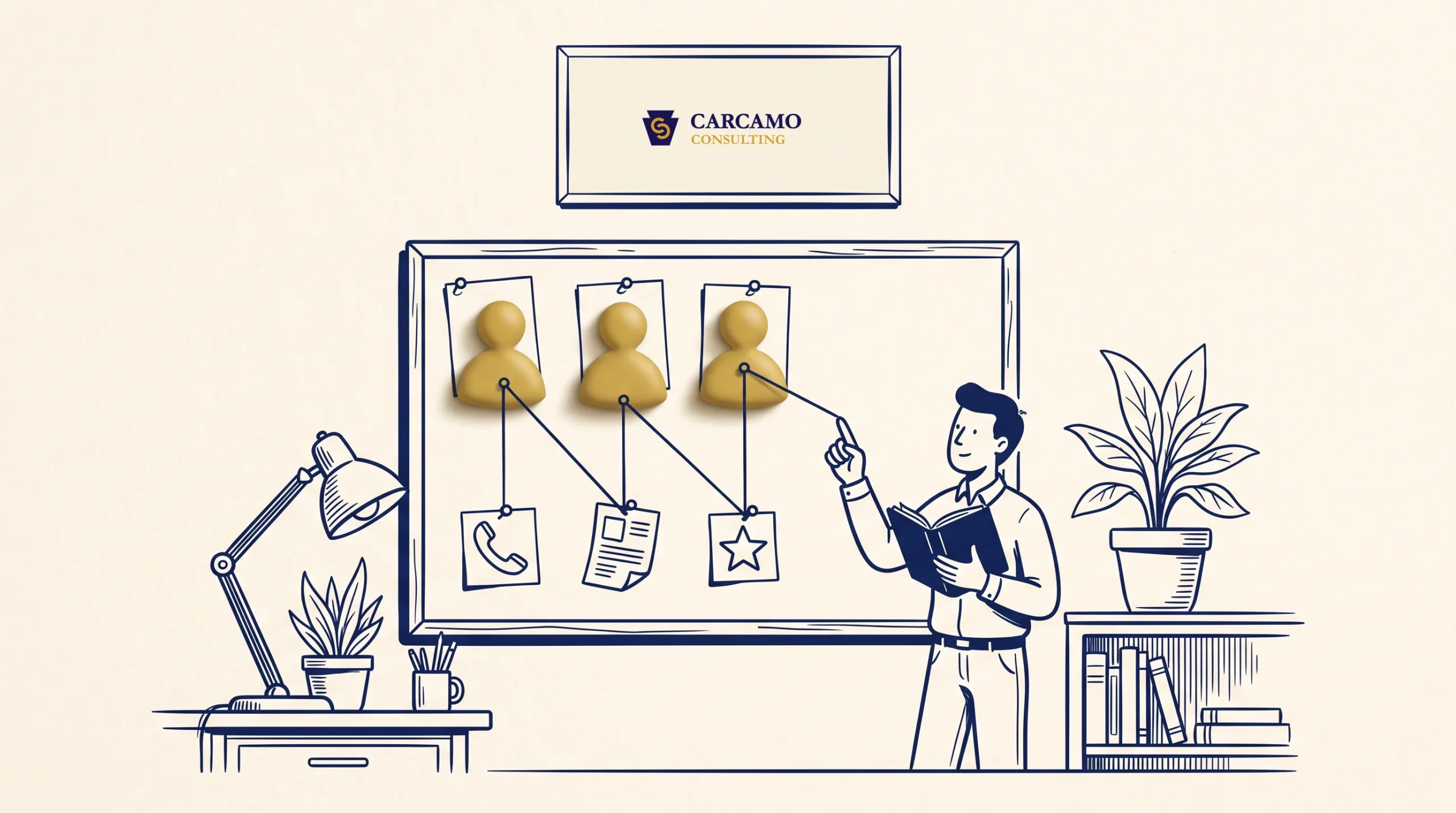
Most definitions break that path into three moves:
- Attract. Get the right people to notice you in the first place.
- Convert. Turn that attention into a decision: a call, a booking, a purchase.
- Keep. Deliver well enough that they come back and tell other people.
The word that matters is process. A customer who wanders in by luck is nice. A repeatable system that brings them in on purpose is a business. Acquisition is that system, built so the next customer is not an accident.
Why it is more than marketing
Marketing gets someone’s attention. That is one job out of several, and attention alone never paid an invoice.
Think about what actually has to happen between “they noticed you” and “they paid you”:
- The offer has to make sense. A clear, fair, easy-to-say-yes-to offer does half the selling.
- The path to buy has to work. A great ad pointed at a broken booking page or an unanswered phone acquires nobody.
- Someone has to close. A reply, a quote, a follow-up, the human moment where interest becomes a yes.
- The first experience has to deliver. How you handle a new customer decides whether you acquired one customer or the three they would have referred.
That is marketing, sales, your website, and your service all doing their part. Acquisition is the whole relay, not just the first runner. When owners say “marketing isn’t working,” the real problem is often a different leg of the race: the offer, the follow-up, or the booking step.
The customer acquisition funnel, in plain English
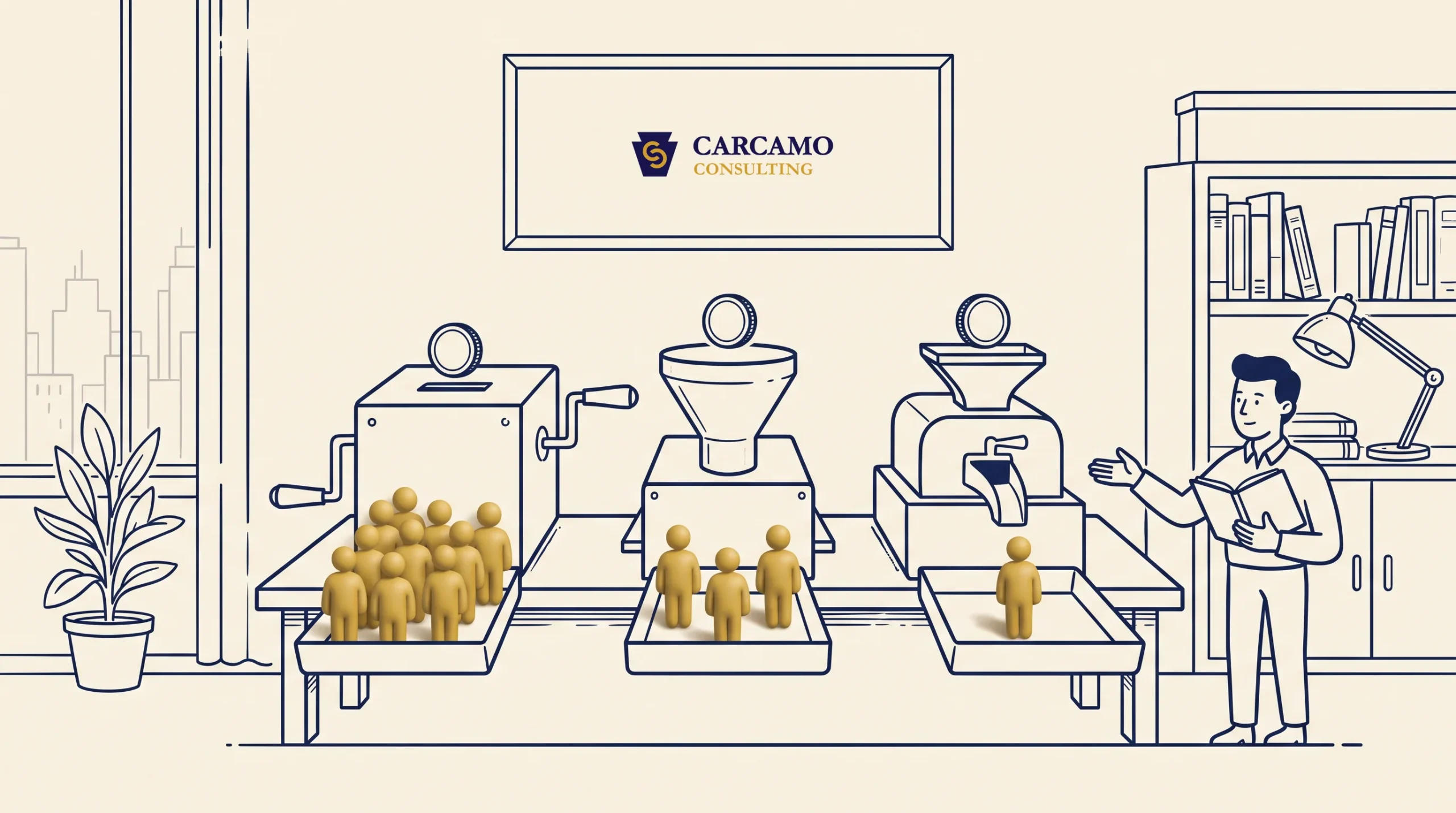
The “funnel” is just the shape of that journey. It is wide at the top because lots of people glance at you, and narrow at the bottom because only some buy.
- Awareness: they find out you exist.
- Interest: they look closer and start to trust you.
- Decision: they compare you to the alternatives, including doing nothing.
- Purchase: they buy.
Every stage leaks. People drop off at each step, which is normal. The point of understanding the funnel is simple: when sales are slow, you can find the stage that is leaking instead of guessing. Lots of views but no calls is a different problem than lots of calls but no bookings.
Customer acquisition cost, the number most owners underestimate
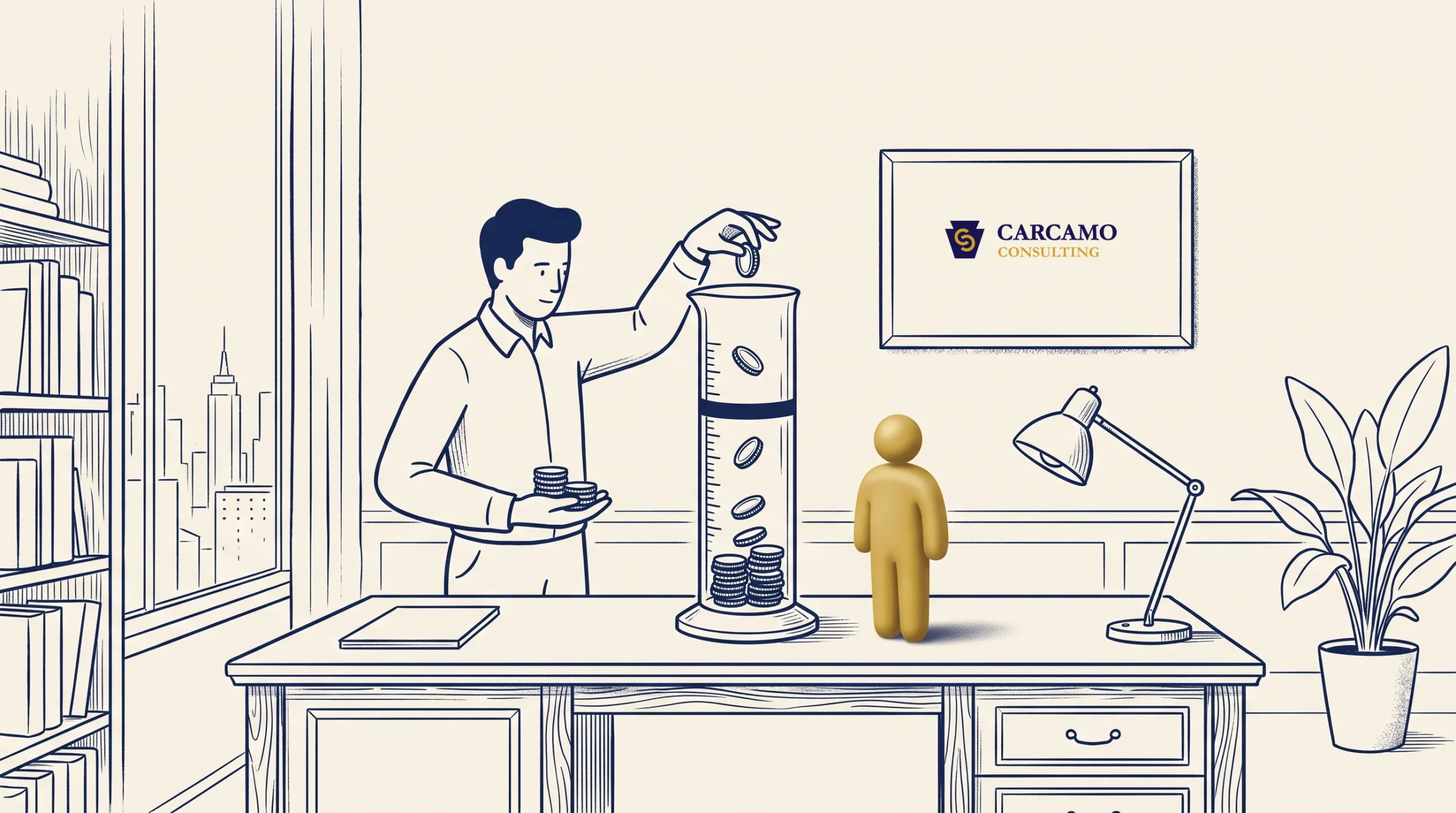
Customer acquisition cost, or CAC, is what it costs you, on average, to get one new customer. The basic math is everything you spent to win customers divided by the number of customers you won.
If you spent 1,000 dollars in a month and got 10 new customers, your CAC is 100 dollars.
The trap is counting only ad spend. A real CAC includes the tools, the software, the fees, and the hours you or your team put in. Time is a cost even when no invoice changes hands. Owners who skip that part think their acquisition is cheaper than it is, then wonder why a “free” channel still left them broke and exhausted.
You do not need a perfect number. You need an honest one, because everything else depends on it.
CAC only means something next to lifetime value
A 100 dollar CAC is neither good nor bad on its own. It only makes sense next to what a customer is worth to you.
Customer lifetime value, or LTV, is the total profit you earn from a customer over the whole time they buy from you. A customer who spends 50 dollars once is very different from one who spends 200 dollars a year for five years.
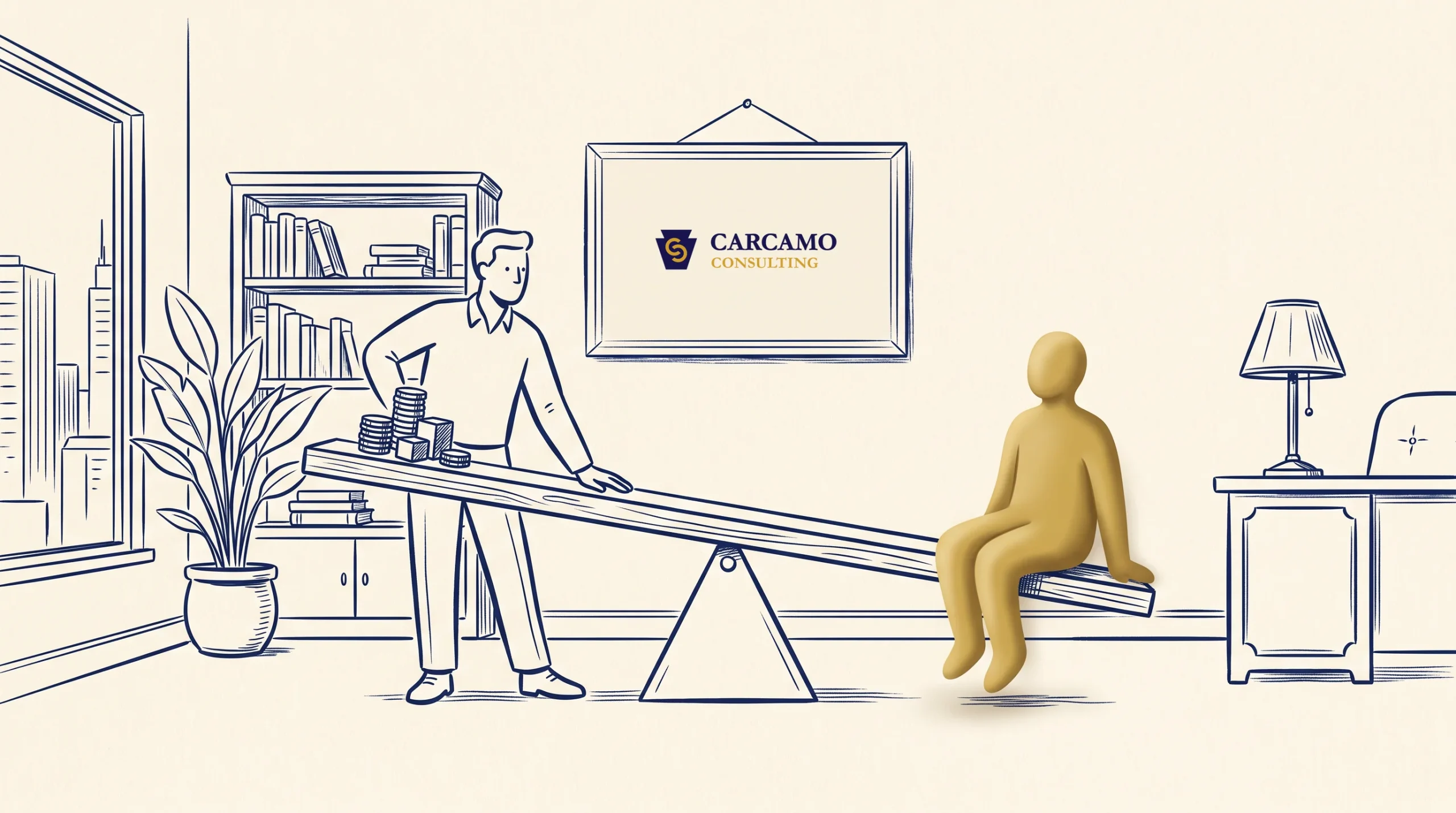
Put the two together and you get the question that actually matters: does what a customer is worth comfortably beat what they cost to get? A widely used rule of thumb is that lifetime value should be around three times acquisition cost. The exact ratio matters less than the habit of comparing the two. If a customer is worth far more than they cost to acquire, you can afford to spend more to get more. If the numbers are close, scaling up just loses money faster.
Acquisition versus retention: you cannot out-acquire a leaky bucket
Acquisition gets new customers. Retention keeps the ones you have. Owners obsess over the first and ignore the second, which is backwards more often than not.
Here is why retention belongs in any honest conversation about acquisition:
- Keeping a customer is usually far cheaper than winning a new one. You already paid to acquire them once.
- Happy customers lower your CAC for everyone else. Referrals and reviews bring in new customers you did not have to pay to attract.
- A leaky bucket makes acquisition feel impossible. If customers pour out the bottom as fast as you pour them in at the top, no amount of marketing fixes the level.
You will always need to acquire. Just do not treat it as the only lever when the cheaper one is sitting right next to it.
What this means for your business
You do not need a finance degree to use any of this. You need a few honest numbers and a clear order of operations.
- Know your rough CAC. Even a back-of-the-napkin figure beats flying blind.
- Know what a customer is worth. Once you see LTV, you know how much you can safely spend.
- Fix conversion before you spend more. A working website, a fast reply, a clear offer. Patching the leak makes every dollar after it work harder.
- Pick channels you can actually afford and sustain. The best channel is the one you will still be doing in six months.
When you are ready to move from understanding acquisition to actually doing it, a step-by-step playbook for getting your first customers walks through which channels to start with and in what order.
The owners who grow are not the ones who spend the most. They are the ones who understand the whole system, fix the weak part, and then turn up the volume on what already works.
Frequently Asked Questions
What does customer acquisition mean?
Customer acquisition is the complete process of gaining new customers: attracting people who do not know you, converting their interest into a sale, and turning them into paying customers. It covers everything from the first time someone notices your business to the moment they buy, not just advertising.
What is the difference between customer acquisition and marketing?
Marketing is one piece of customer acquisition. Marketing creates awareness and interest; acquisition is the full path from that attention all the way to a completed sale, including your offer, your sales follow-up, the website or phone experience, and the close. Marketing gets people in the door. Acquisition is everything that happens until they buy.
How do you calculate customer acquisition cost?
Divide everything you spent to win customers in a period by the number of new customers you got in that same period. Include ad spend, tools, fees, and the value of the time you and your team spent, not just advertising. If you spent 1,000 dollars and gained 10 customers, your customer acquisition cost is 100 dollars per customer.
What is a good customer acquisition cost?
There is no universal number, because a good CAC depends entirely on what a customer is worth to you. A CAC is healthy when a customer’s lifetime value comfortably exceeds it. A common rule of thumb is a lifetime value to acquisition cost ratio of about three to one, but the real test is whether you profit from the customers you buy.
What is the difference between customer acquisition and lead generation?
Lead generation is one stage inside customer acquisition. Lead generation captures interested prospects, the names and contacts of people who might buy. Customer acquisition is the whole journey, including everything that turns those leads into paying customers. Leads are potential customers; acquisition is finishing the job.
Is customer acquisition the same as sales?
No, but sales is a major part of it. Sales is the act of closing, turning an interested prospect into a buyer. Customer acquisition is broader: it includes the marketing that creates awareness, the lead generation that captures interest, and the sales that close the deal, all working together.
If you are trying to figure out where your own customers actually come from, or why the marketing you are paying for is not turning into sales, that is exactly the kind of question we like. We help small business owners untangle this in plain English, with no jargon and no judgment. It is free to ask, so send us your question and a real person will help you find the leak.
 Previous