Most lists of customer acquisition mistakes hand you ten items in no particular order and leave you to guess which one is bleeding you. That’s the wrong shape for an owner with four spare hours a week. What you need is a ranking: which mistakes actually end businesses, which ones quietly cost you money for years, and which ones you can safely leave alone.
So that’s how this is sorted. Three tiers, ordered by damage rather than by how often you hear the mistake mentioned. Eleven mistakes in total, and one of them appears on nearly every list ever written about small business marketing while belonging squarely in the bottom tier.
The ranking comes from what actually closes doors: not enough customers, arriving unpredictably, at a cost nobody tracked.
Customer Acquisition Mistakes, Ranked by Damage Instead of Frequency
Two mistakes can look equally bad on a list and be nothing alike in practice.
Take marketing to everyone versus having an outdated logo. Both get written up as errors. One of them means your message lands on nobody in particular and every dollar you spend converts badly, for years. The other means your business card looks a little dated.
Filed side by side as bullet points, those two read as equals. They’re not.
So each mistake below carries three things: how much damage it does, how long before you feel it, and how much it costs to fix. That last one matters more than it sounds, because the cheapest fixes are usually in the top tier and the expensive ones are usually in the bottom. Owners tend to do the opposite.
One honest caveat before the list. Every business is different, and a bottom tier mistake for a plumber can be a top tier one for a bakery where the sign on the door is the entire storefront. Read the ranking as the default, then adjust it for how your customers actually find you.
Tier 1: The Three Mistakes That Actually End Small Businesses
These are the ones that show up in the story of a closed business. Each does damage slowly enough that you can talk yourself out of it for a year, then all at once.
Having no repeatable way to get customers
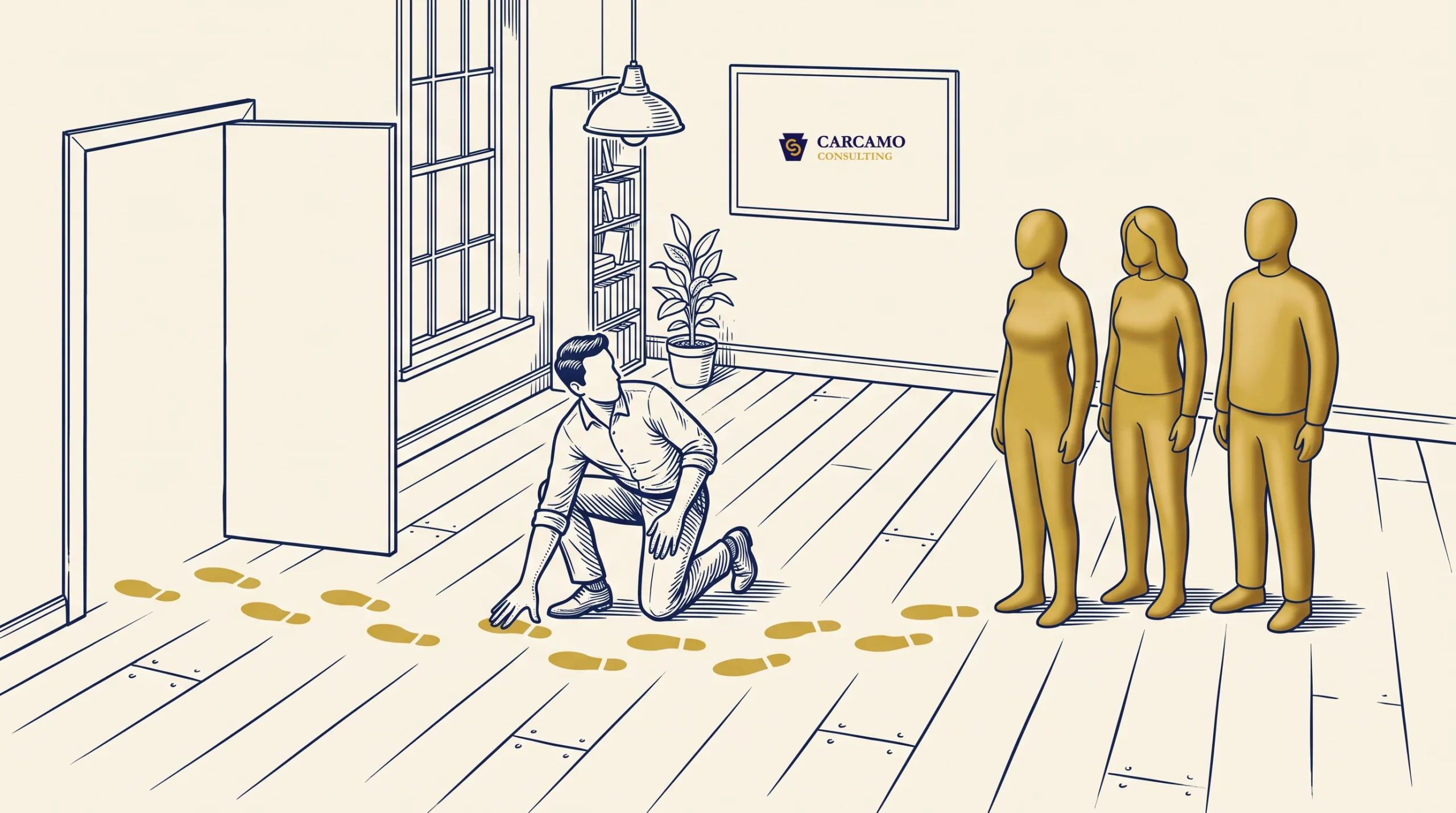
You’ve had customers. What you haven’t had is a method. Work arrived from a friend, then from a neighbour who saw the van, then from someone who found you on Google that one time. Each was real, and none of it can be repeated on purpose.
This is the most dangerous mistake on the list because it’s invisible while it’s working. Business feels fine right up until the month nothing arrives, and then you have nothing to turn up, because there was never a dial. Every other mistake here assumes a system exists to fix. This one is the absence of a system.
The fix costs nothing but a decision: pick one way of getting in front of new people, do it every week for 90 days, and write down what came back.
Depending on a single source of customers
One channel, one referral partner, one platform, one big client. It works beautifully until it changes, and the thing about a single source is that you don’t control any of it. An algorithm shifts, a partner retires, a contract ends, and your whole pipeline goes with it.
Concentration is a top tier mistake purely because of the size of the drop. It isn’t a slow leak, it’s a cliff, and it usually arrives in a month you were feeling good about.
Spending money without being able to tell what worked
This is the expensive one. Industry data puts roughly a quarter of small and mid sized business marketing budgets on activity that produces no measurable revenue, and audits of smaller accounts with no tracking in place find waste running far higher than that. Only about a quarter of small businesses have any clearly defined way of measuring marketing performance at all.
Read those together and the picture is grim: most owners are spending real money and genuinely cannot say which half of it worked. That means the losing spend never gets cut, because nobody can identify it, so it repeats every month for years.
The fix is not a dashboard. It’s one intake question that tags every new lead with where it came from, asked every time, written in one sheet. That single habit turns your budget from a guess into a decision.
Tier 2: The Four That Quietly Cost You for Years
None of these will close your doors. All four will make everything you do cost more than it should, indefinitely, which is its own kind of expensive.
Marketing to everyone
Trying to appeal to all possible customers feels like the safe play. It’s the opposite. A message written for anybody lands on nobody, because nobody reads a generic sentence and thinks that’s exactly my situation.
The tell is your own homepage. If you could swap in a competitor’s name and every sentence would still be true, you haven’t said anything. Narrowing to a specific kind of customer feels like turning down business, and it’s the change that most reliably makes the same marketing budget work harder.
Not following up
Someone asked for a price and then went quiet, so you left it. That’s the single most common place small businesses lose money they already earned.
A quote that goes unanswered isn’t a no. It’s usually a person who got busy, and who will hire whoever is still politely present in two weeks. Following up several times without being pushy is free, takes about ten minutes a week, and quietly raises your close rate more than any change to your pricing will.
Sending people somewhere that doesn’t answer their question
You paid for the click, the ad promised emergency drain cleaning, and the page it landed on says welcome to our family owned company serving the region since 1998. The visitor came with a specific question, found a brochure, and left.
The cost here is real and easy to miss, because the ad account looks fine. Clicks are arriving. It’s the destination that fails, and no amount of budget tuning repairs a page that doesn’t say what you do, who it’s for, and what to do next.
Quitting a channel at week six
Almost every channel worth using pays late. Search takes months to move, email needs a list before it’s anything, and referrals need a body of finished work behind them.
Show up for six weeks, feel nothing happening, and move on, and you’ve paid the entire setup cost of that channel while collecting none of the return.
Do that four times in a year and you’ve run four experiments that each proved only that you stopped early.
Tier 3: The Four Everybody Worries About That Barely Matter
Here’s the one that sits on every list and doesn’t deserve to be near the top.
Your logo
A dated logo has never once stopped somebody from calling a plumber at nine at night. Design matters for how established you look after somebody already has a reason to consider you, and almost never for whether they consider you.
It stays a mistake in the sense that a genuinely amateur look costs a little credibility. It’s a bottom tier mistake because fixing it costs real money and moves almost nothing, and because owners reliably reach for it when the actual problem is upstream. If your calendar is empty, a new logo will produce a nicer looking empty calendar.
How often you post on social media
Owners agonise over cadence. Twice a week or five times, mornings or evenings, does the algorithm punish a gap. Almost none of it matters compared to whether the same handful of people keep seeing you or whether new people do.
Posting more often to the same small audience is not more reach. It’s the same reach, more tired.
Not being on every platform
Being absent from a platform is only a mistake if your customers are on it and looking. For most local service businesses, one platform done properly beats five done occasionally, and the effort you’d spend maintaining a presence nobody visits is better spent making the one that works bigger.
Charging a bit more than the competition
Price sits in the bottom tier for a specific reason: if you’re closing a healthy share of the people you quote, your price is fine, and cutting it just makes each hard won customer worth less. Price only becomes a real problem when almost nobody says yes, and even then the answer is usually the package rather than the number.
What Each Tier Costs and How Fast It Shows Up
The same three questions, applied across the tiers.
| Tier | Damage if ignored | How fast you feel it | Cost to fix |
|---|---|---|---|
| Tier 1: no repeatable method | The business closes | A year or more, then all at once | Free, one decision and 90 days |
| Tier 1: single source | Sudden loss of most of your pipeline | Overnight, whenever it changes | Low, one second channel started early |
| Tier 1: no tracking | A quarter or more of your budget wasted every year | Never, which is the problem | Free, one intake question |
| Tier 2: all four | Everything costs more than it should | Months, and it compounds | Free to modest, mostly habits |
| Tier 3: all four | Slightly less polish | You mostly won’t | Hundreds to thousands, for very little |
Read the last column next to the first one. The three mistakes that can actually finish a business are all free to fix, and the four that barely matter are the ones with invoices attached.
Why the Usual Advice Has the Order Backwards
There’s a reason logos and social cadence dominate the conversation while tracking and follow up don’t.
Tier three mistakes are visible. Somebody can look at your logo and have an opinion, so people talk about it, and plenty of businesses sell the fix. Nobody can see that you never asked where your last ten customers came from, and there’s nothing to sell you for it either.
Tier three mistakes are also comfortable. Picking new brand colours is a pleasant afternoon. Admitting you have no repeatable way of finding customers is not, and it doesn’t come with a nice deliverable at the end.
That’s most of it. The advice you hear is sorted by how easy the mistake is to see and sell, and this list is sorted by what it does to you. Those two orders rarely match.
Fix One Mistake, Not Ten
Reading a list like this and recognising six of them is normal. Trying to fix six at once is how nothing gets fixed.
Take the highest tier item you recognised and work on only that for the next month. If you spotted something in tier one, the other ten don’t matter yet, because a business without a repeatable method or without tracking will undo any tier two improvement you make.
If nothing in tier one applies and you’re working on tier two, pick the one where you lose people latest in the process. Follow up first, then the page they land on, then the audience you’re speaking to. Later stages are cheaper to repair and pay back faster, because those people already found you.
And if you can’t tell which tier you’re in, that’s a diagnosis problem rather than a mistake problem. The yes or no checklist that isolates demand, reach, and offer takes about an hour and will tell you where you actually stand before you spend anything.
Frequently Asked Questions
What is the single biggest customer acquisition mistake small businesses make?
Not having a repeatable way to get customers. Plenty of businesses survive for years on work that arrives by luck, and they feel fine until the month it stops, at which point there’s no lever to pull. Every other mistake on this list assumes a system exists to improve. That one is the absence of a system, which is why it sits at the top.
How much small business marketing budget actually gets wasted?
Industry data puts roughly a quarter of small and mid sized business marketing budgets on activity that generates no measurable revenue, with the figure running considerably higher in accounts that have no conversion tracking at all. Around a quarter of small businesses have clearly defined marketing performance measures. The fix is subtraction rather than more budget: find what isn’t working and stop paying for it.
Do I need a professional logo before I start getting customers?
No. A logo helps you look established once somebody has a reason to consider you, and it very rarely creates that reason. If your calendar is empty, spending on design will produce a better looking empty calendar. Get to a repeatable flow of customers first, then spend on polish when you’re choosing between jobs rather than chasing them.
How long should I stick with a marketing channel before deciding it doesn’t work?
Ninety days of consistent weekly effort is a fair minimum for most channels, and search or content realistically needs six months. The important word is consistent. Ninety days of posting when you remember is not a test of the channel, it’s a test of your schedule, and it will tell you nothing either way.
Should my business be on every social media platform?
Only where your customers actually are and actually look. For most local service businesses one platform maintained properly beats five maintained occasionally, because a channel only pays once the same people keep encountering you. An empty profile on a fourth platform costs you nothing but also does nothing, so it’s rarely worth the maintenance.
Is hiring a marketing agency too early a mistake?
It can be an expensive one. An agency scales something that already works; it can’t invent your positioning, your offer, or your economics from a discovery call. If you don’t yet know what a customer costs you or where your last ten came from, a retainer usually pays somebody else to figure out what you needed to decide yourself. Get the basics in place, then hire to scale them.
What should I fix first if my marketing isn’t working at all?
Stop adding and start subtracting. Find the one channel that produced at least one paying customer in the last six months and put everything into it for a quarter, then pause the rest. Most struggling small businesses aren’t doing too little, they’re doing five things too thinly for any of them to reach the point where they start compounding.
If you read this and recognised something in tier one, that’s the useful outcome, and it’s a better place to start than a new logo. Send us the mistake you spotted and a real person will tell you what we’d do about it first.
 Previous