Relying on one channel doesn’t feel risky while it’s working. That’s exactly what makes it dangerous. One source brings in nearly all your customers, it’s been reliable for a couple of years, and every hour you’d spend building something else feels like an hour stolen from the thing that already pays.
Then it changes. Not because you did anything wrong, and usually not gradually.
A platform adjusts what it shows people, a search result you’d held for years slides down the page, an ad account that broke even at fifty dollars a day now needs ninety, or the partner who sent you half your work retires. The channel didn’t fail. Somebody else changed the rules of it.
What follows is the same story in nearly every business it happens to, and it runs in stages. There’s one specific point in that sequence where the fix is still cheap and quick, and almost every owner sails straight past it without noticing.
Why Relying on One Channel Sinks Businesses That Are Doing Fine
The businesses this takes down aren’t struggling ones. They’re the ones having a good year.
That’s not irony, it’s mechanics. A channel that works pulls all your attention toward it, because that’s where the return is. You post more there, spend more there, and quietly stop doing the two or three other things that used to bring in the odd customer.
Every one of those decisions is individually correct. Together they build a business with one leg.
The concentration doesn’t hurt while the channel holds. It only shows up as a number when the channel moves, and by then the other legs have been gone for two years.
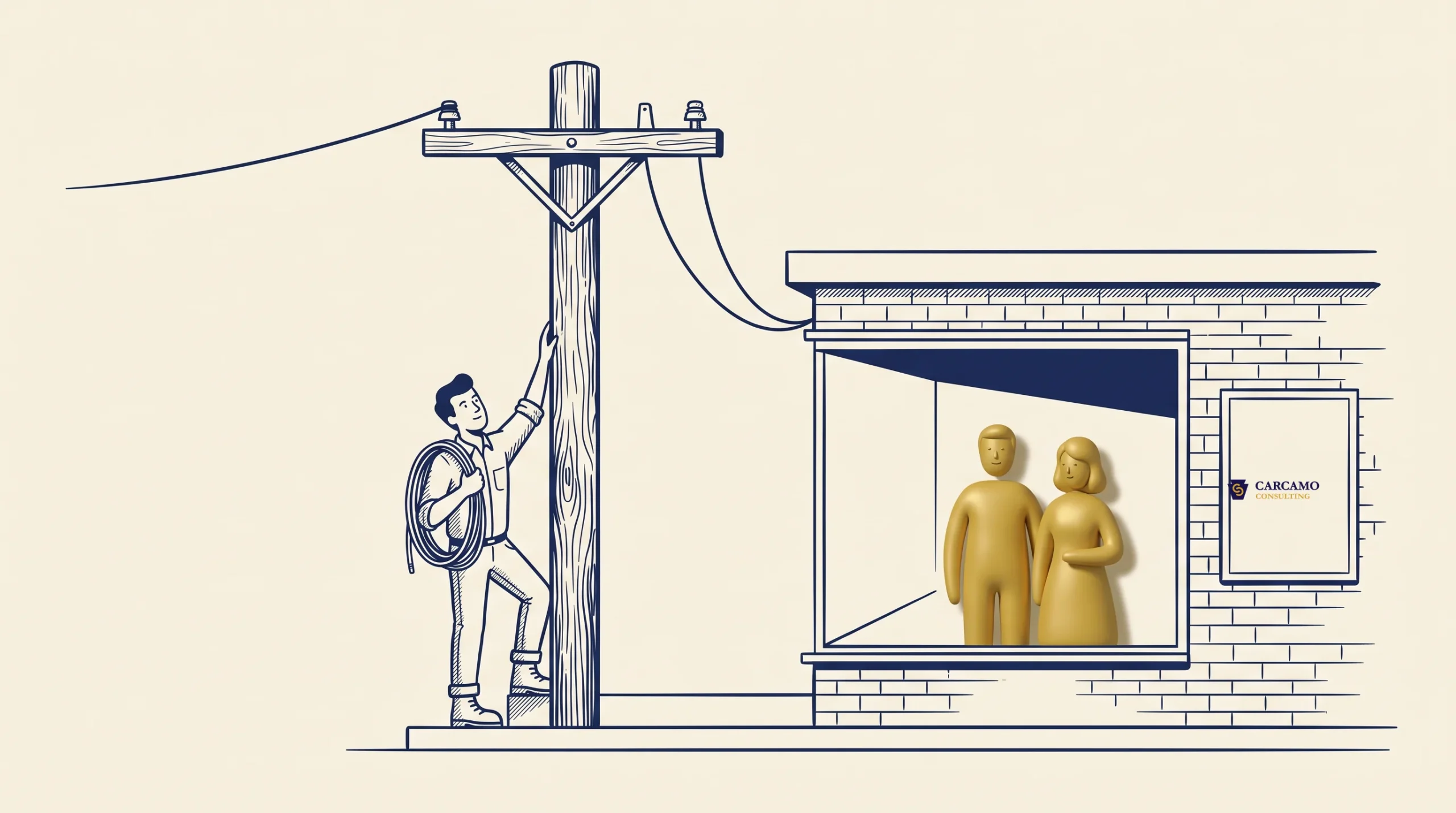
A remodeler we know spent three good years on this exact path. One builder sent him roughly seven of every ten jobs, and the work was steady enough that he stopped bidding, stopped asking past customers for referrals, and let his listing go stale because it wasn’t where the work came from.
Then the builder took on an in house crew. Nothing about the remodeler’s work had changed and his reputation was intact, but his calendar emptied inside six weeks, because the only route customers had to him ran through somebody else’s business.
This is why concentration ranks as one of the mistakes that actually ends small businesses rather than one that merely costs money. Most marketing problems are slow leaks. This one is a cliff, and you arrive at it during a month you felt good about.
The Single Channel Failure Pattern, Stage by Stage
Five stages, and they’re the same nearly every time.
Stage 1, something works. You try a few things and one of them produces customers. Reasonably, you do more of it.
Stage 2, you lean in. The channel earns its share of your time, then more than its share. Results improve, which confirms the decision.
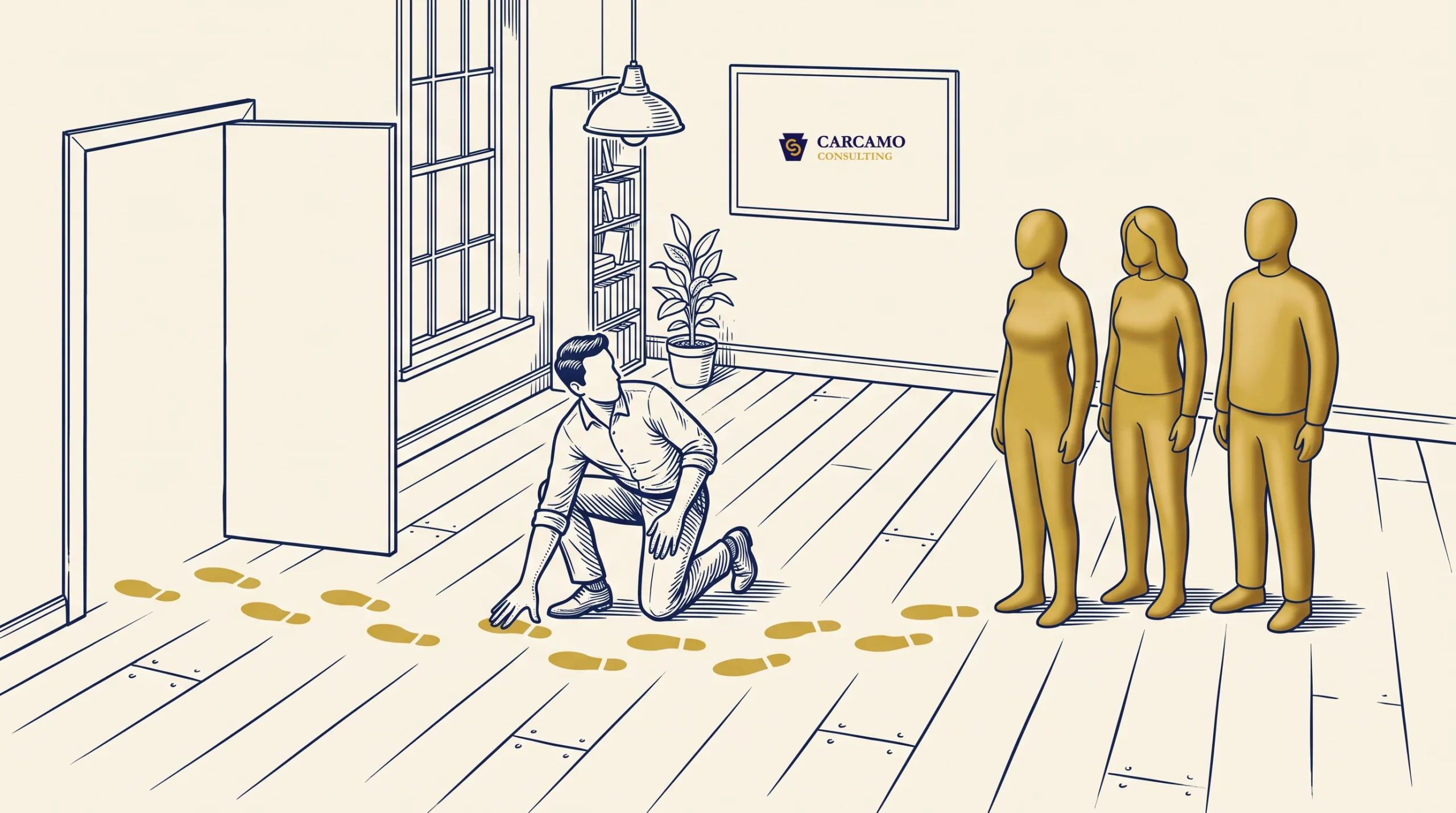
Stage 3, everything else quietly stops. Nobody decides to abandon the other channels. They just get skipped for a busy week, then a busy month. This is the stage where the fix is cheap, and it’s the one nobody notices, because from the inside a good quarter and a dangerously concentrated quarter look identical.
Stage 4, the drop. Reach falls, rankings slip, costs climb, or the partner moves on. Inquiries fall off a shelf within a few weeks.
Stage 5, the scramble. You start building a second channel now, under pressure, with revenue falling. The trouble is that channels pay late: search takes months, an email list needs a list first, and referrals need finished work behind them. You’re planting in the season you needed the harvest.
The whole argument for acting early lives in the gap between stage 3 and stage 5. The work is identical. At stage 3 it costs you a couple of hours a week while money still comes in. At stage 5 it costs the same hours plus the runway you no longer have.
Rented Channels and Owned Channels Are Not the Same Risk
Here’s the distinction that makes diversification actually work, and it’s missing from most advice on the subject.
Some channels you rent. Social reach, search rankings, map listings, ad platforms, marketplace listings. You can be excellent at all of them and still lose access overnight, because the terms belong to somebody else.
Some channels you own. Your email list, your customer phone numbers, your past customers, your referral relationships. Nobody can change the reach of a list you hold. It doesn’t get throttled, updated, or repriced.
| Type | Examples | What can change it | Who controls it |
|---|---|---|---|
| Rented | Social reach, organic rankings, map pack, paid ads, marketplaces | Algorithm updates, policy changes, auction prices, bans | The platform |
| Owned | Email list, phone list, past customers, referral relationships | Only your own neglect | You |
| Borrowed | One big referral partner, one large client, one contractor who subcontracts you | Their retirement, their strategy, their budget | Them |
That third row catches out more local service businesses than the first two. A single referral partner sending you half your work is exactly as concentrated as depending on one platform, and it fails for reasons you’ll never see coming.
The practical rule this produces: your second channel should be a different type from your first. Adding a second social platform to a social heavy business barely reduces your risk, because a bad quarter for organic reach is bad on both. Adding an owned channel does.
What Actually Changes Under You
These aren’t hypotheticals. They’re the ordinary weather of the channels small businesses use.
- Organic reach gets throttled. Facebook’s changes to what it shows people have cut organic page reach dramatically over the years, with reported drops in the range of 80 to 98 percent, so pages now pay to reach the people who already chose to follow them.
- Search results get reshuffled. Google’s diversity update limited how often a single domain appears in both the local pack and the organic results. Businesses lost organic positions they’d held for years without changing a thing on their site.
- Ads get more expensive. Ad auctions are competitive by design. A new competitor with a bigger budget entering your market raises your cost per customer, and you find out through your bank balance.
- Platforms face legal and policy risk. Whole platforms have come close to disappearing in some markets. If your marketing lives on one, so does your business.
- People move on. The partner retires, the manager who liked you changes jobs, the big client brings the work in house. No algorithm involved, same result.
Notice how little of that list you could have prevented with better marketing. That’s the point. Concentration risk isn’t about doing the channel badly, it’s about how much of your business sits on ground you don’t own.
How Much Concentration Is Too Much
You can measure this in about ten minutes, and most owners have never done it.
Take your last twenty customers and write down where each one came from. If you can’t do that from records, that’s a separate problem worth fixing first, and one intake question that tags every lead with its source solves it inside a month.
Now count. As a working rule for a small business:
- Under 50 percent from any one source is comfortable. A bad quarter in one channel is survivable.
- 50 to 70 percent is normal and worth watching. Most healthy small businesses live here, and it’s fine as long as something real sits underneath.
- Over 70 percent means a change in that channel is a change in your business. This is the number to act on.
- Over 90 percent means you don’t have a marketing mix, you have a dependency.
Run the numbers on a real month and the exposure usually surprises people. Say fourteen of your last twenty came through Google, four came from a single contractor who subcontracts you, and two walked in off the street. That reads as three sources, which feels diversified.
It isn’t. Seventy percent of your business sits on a ranking you don’t own, another twenty sits on one person’s decision, and ten percent is genuinely yours. A search update and a phone call could take ninety percent of your work in the same quarter.
One caution about the arithmetic. Two channels that fail together count as one. If eight of your last twenty came from Instagram and four from Facebook, that isn’t 40 and 20 percent, it’s 60 percent riding on social reach behaving itself. Group your sources by what would knock them out, not by their names.
The Two Channel Plan
The fix is smaller than it sounds, and it isn’t “be everywhere”. Most small businesses do best on very few channels, so the target here is two that genuinely work, not five that half do.
Keep the main channel exactly as it is. You’re not rebalancing, you’re adding. The working channel keeps all the budget and most of the attention.
Pick a second channel of a different type. If your first is rented, make the second owned. For most local service businesses that means building an email or phone list from the customers you already have, or turning past customers into a deliberate referral habit rather than a lucky one. Both are unglamorous, cheap, and immune to somebody else’s update.
Give it two hours a week, for 90 days. Not a launch, a habit. Two focused hours, the same two hours each week, for a quarter. That’s about 26 hours total, which is less than most owners spend rewriting their website in a panic.
Those two hours are less mysterious than they sound. In practice a week looks like writing one short useful message to your list, or making three calls to past customers, or asking two happy clients for an introduction, and then updating the one sheet where you track who came from where. It’s unglamorous work that fits between jobs, which is the point: anything that needs a good week to happen will not survive a bad one.
Judge it on inquiries, not on feelings. At the end of 90 days, count how many inquiries the second channel produced. Even three or four is a success, because you’ve proven the channel functions and you now have something to grow rather than something to start.
Then leave it running. The second channel doesn’t need to match the first. It needs to exist, be maintained at a low fixed cost, and be capable of scaling up in the month you need it to.
When You Should Not Diversify
Diversification is bad advice at the wrong time, and plenty of businesses have been hurt by taking it too early.
If you’re new and don’t yet have one channel producing customers reliably, adding a second one is not risk management. It’s dilution. You can’t spread risk across two things that don’t work, and splitting a small amount of time across two immature channels is the most reliable way to make sure neither reaches the point where it starts paying.
Concentrate deliberately until something works. One channel, done properly, until it’s producing customers on a predictable schedule. Then start the second, from strength, while the first is still healthy.
The same applies during a genuine crunch. If revenue is falling this month, fixing the channel you have usually beats starting one that pays in six months. Build the second channel out of surplus, not out of desperation. That’s the entire timing argument, and it’s why stage 3 matters so much more than stage 5.
Frequently Asked Questions
How many marketing channels should a small business actually have?
Two that work beats five that half work. For most small businesses, one primary channel carrying the bulk of the volume plus one secondary channel of a different type is the right shape. Three is fine once you have the time to maintain them properly. Beyond that you’re usually spreading yourself too thin for any of them to reach the point where they compound.
Is it bad if all my customers come from referrals?
It’s the best problem to have and still a real one. Referrals are cheap, high trust, and they convert well, but the volume isn’t yours to control and it moves with things you can’t see, like whether your best referrer is busy this quarter. Keep referrals as the primary channel and build one channel you control alongside it, so a quiet month is a dip rather than a cliff.
Should I start a second channel before the first one is working?
No. Splitting limited time between two immature channels usually means neither gets past the point where it starts producing. Get one channel to a predictable flow of customers first, then add the second while the first is still healthy. Adding from strength works; adding from panic rarely does.
How long does a second marketing channel take to produce customers?
Plan for 90 days at minimum and six months for anything search or content based. Email is faster if you already have customer contacts to start from, referrals depend on how much finished work sits behind you, and paid channels are fastest but cost money from day one. That timeline is exactly why you build the second channel while the first is still paying the bills.
Why did my rankings or reach drop when I didn’t change anything?
Because the platform changed something. Search algorithm updates reshuffle results regularly, and social platforms have cut organic page reach heavily over the years, so a page that reached thousands now reaches a fraction of its own followers without paying. It’s rarely a penalty and usually not personal, which also means there’s often nothing to fix. The lesson is about what you own, not about what you did wrong.
Is email marketing still worth it for a small local business?
For a small local business, an email or text list is usually the single most valuable owned asset you can build, because it reaches people who already bought from you and nobody can throttle it. It doesn’t need to be sophisticated. A list of past customers and one genuinely useful message a month outperforms an elaborate automation that never gets built.
Does having a second location or a second service count as diversifying?
Not for this purpose. Channel risk is about how customers find you, not what you sell them. Two services marketed through the same single channel carry the same risk as one, because the thing that would break is the same thing. Diversify the path to the customer, then worry about the offer.
Working out your own concentration takes about ten minutes with your last twenty customers, and the number is usually higher than owners expect. If you’d rather not guess at what your second channel should be, tell us where your customers come from now and a real person will tell you what we’d build alongside it.
 Previous