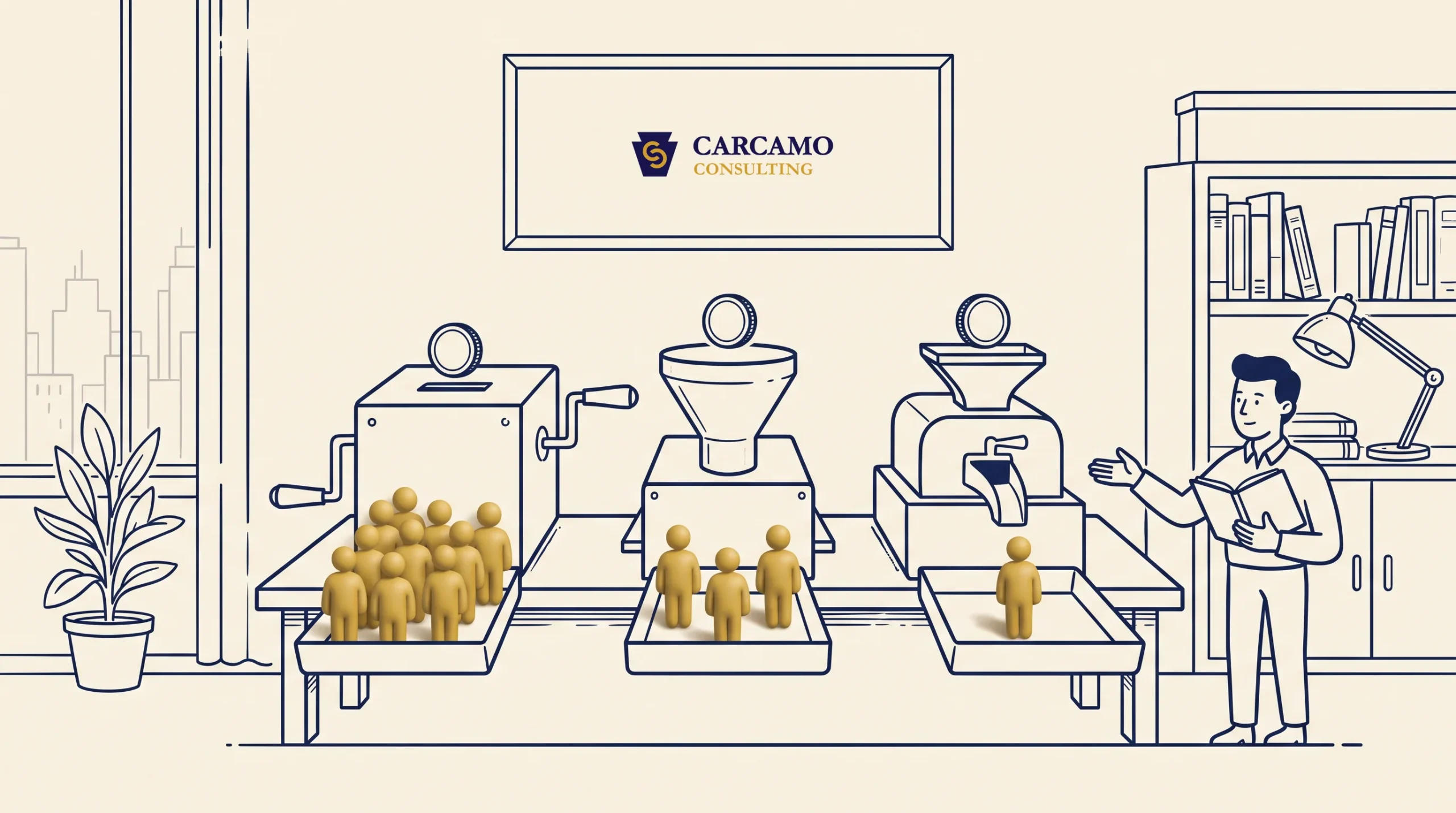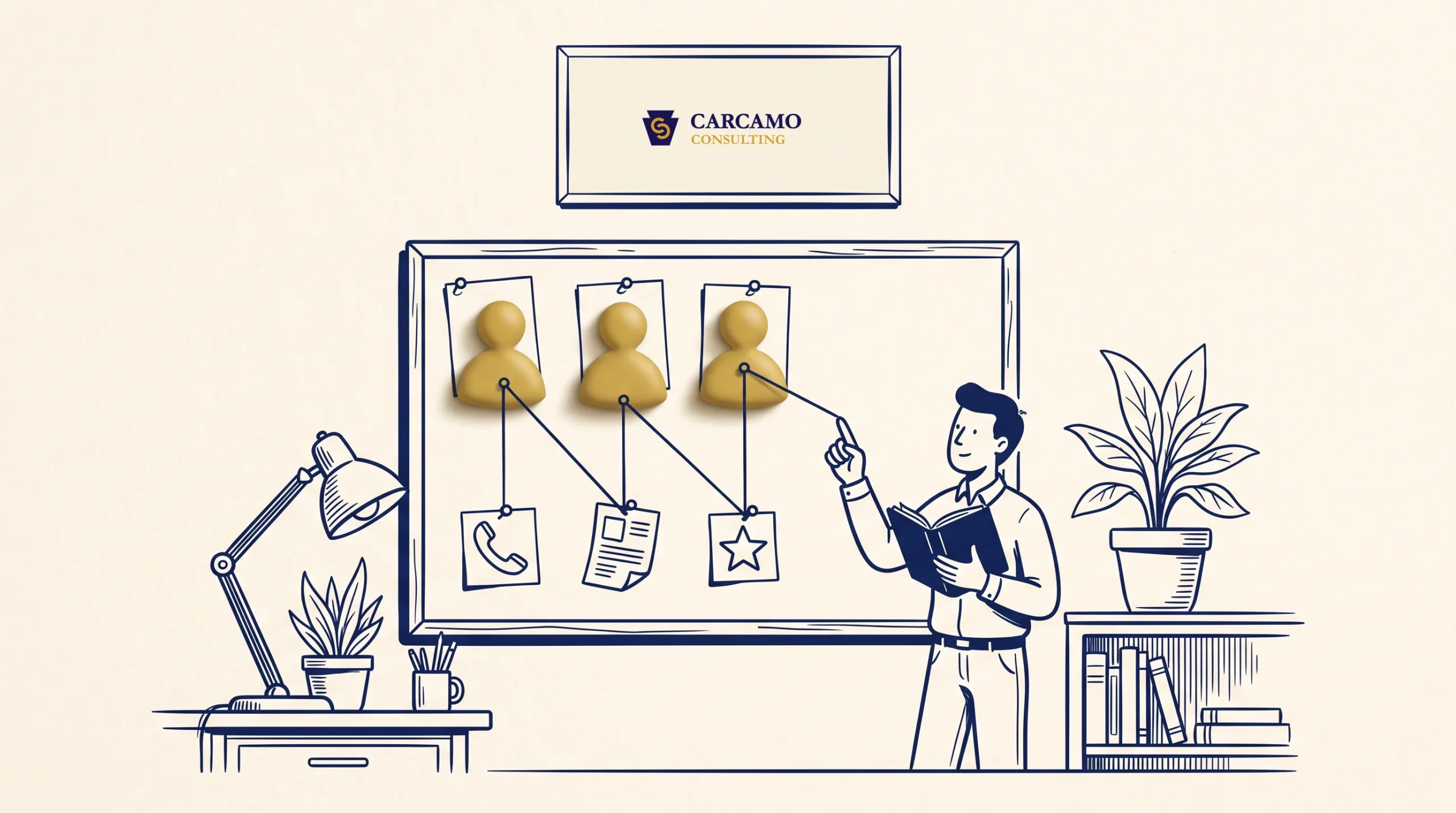

How you pay yourself from a Pennsylvania LLC depends entirely on how the LLC is taxed — not on what you prefer. Most PA LLC owners take what’s called an owner’s draw. But the mechanics shift if your LLC has multiple members, or if you’ve elected to be taxed as an S corporation.
Single-Member LLC: Owner’s Draw
By default, the IRS treats a single-member LLC as a disregarded entity. In practice, this means the IRS sees you and your LLC as the same taxpayer. You cannot pay yourself a W-2 salary from a disregarded entity — you’re not an employee of your own business for federal tax purposes.
Instead, you pay yourself through an owner’s draw: a transfer of money from the LLC’s business bank account to your personal account. There’s no payroll involved, no withholding, and no W-2 at year-end.
The tax implications work like this: your LLC’s net profit (total revenue minus expenses) flows to Schedule C on your personal tax return. You owe income tax and self-employment tax on that profit — not on how much you drew out. Drawing less than your profit doesn’t reduce your tax bill. Drawing more than your profit doesn’t create a deduction.
Multi-Member LLC: Guaranteed Payments
A multi-member LLC is taxed as a partnership by default. Partners cannot be employees of their own partnership for self-employment purposes, so W-2 salaries are not available here either.
What multi-member LLCs use instead are guaranteed payments — fixed amounts paid to members that are not dependent on the LLC’s profits. They function similarly to a salary from a practical standpoint: you get a predictable payment, and it’s deductible at the LLC level as a business expense. The member receiving the payment reports it as ordinary income and owes self-employment tax on it.
Any profits remaining after guaranteed payments are distributed to members based on their ownership percentages (or as specified in your Operating Agreement), and each member pays income tax on their share.
S-Corp Election: Salary Plus Distributions
A Pennsylvania LLC can elect to be taxed as an S corporation by filing IRS Form 2553. This changes the payment structure significantly.
Under S-Corp taxation, you become an employee of your own company. The LLC must pay you a “reasonable compensation” — a W-2 salary that reflects what you’d pay someone else to do your job. On top of that salary, you can take additional distributions from the LLC’s remaining profit.
Here’s why this matters: the W-2 salary is subject to payroll taxes (Social Security and Medicare — 15.3% split between employer and employee halves). The distributions are not. If your LLC generates $150,000 in profit and you pay yourself a $70,000 salary, only the $70,000 is subject to payroll taxes. The remaining $80,000 distributed to you as a shareholder avoids that 15.3% hit.
Pennsylvania Tax Considerations
Pennsylvania imposes a flat 3.07% personal income tax rate on all income. This applies whether you’re taking an owner’s draw from a disregarded entity, receiving guaranteed payments from a partnership, or drawing a salary and distributions from an S-Corp.
Pennsylvania does not recognize the federal S-Corp distinction for state income tax purposes in the same way. PA taxes S-Corp income similarly to other pass-through income — consult a PA-based CPA before making an S-Corp election to confirm the state-level implications for your situation.
Local taxes also apply in Pennsylvania. If you operate in Philadelphia, the Business Income and Receipts Tax (BIRT) and Net Profits Tax apply to your LLC’s income. Other municipalities may impose a Local Services Tax on earned income. The specifics depend on where your business is located and where you work.
When Does an S-Corp Election Make Sense?
| Situation | Best Approach |
| LLC is new or low revenue | Owner’s draw (disregarded entity) — simplest, least overhead |
| Net profit $40K–$80K/year | Consult a CPA — the math is close and added complexity may not be worth it |
| Net profit consistently above $80K/year | S-Corp election often saves money on self-employment taxes |
| Multiple members | Guaranteed payments under partnership taxation |
| Multiple members with high profit | S-Corp election possible, but more complex — requires proper payroll for each owner-employee |
The S-Corp route adds real overhead: payroll processing, quarterly payroll tax deposits, Form 1120-S at year-end, and higher accounting fees (typically $1,000–$2,500/year more). The tax savings need to exceed that cost to make the election worthwhile.
A Simple Rule of Thumb
If you’re just starting out or your net profit is below $40,000, stick with the default structure and take owner’s draws. Keep records of every transfer. Don’t commingle personal and business funds.
Once you’re consistently profitable above that threshold, the conversation with a CPA about S-Corp election becomes worth having. The math is different for every situation — your salary requirement, your profit level, and your state tax situation all factor in.
Frequently Asked Questions
Not under the default tax structure. A disregarded entity cannot pay its sole owner a W-2 salary. You take owner’s draws instead. If you want W-2 income from your own LLC, you’d need to elect S-Corp status.
As often as you want, as long as there’s money in the business account to cover it. Many owners take draws weekly, biweekly, or monthly. There’s no legal requirement for a schedule — but consistency helps with budgeting and bookkeeping.
Not directly on the draw itself — you pay taxes on the LLC’s net profit. If your LLC made $80,000 in profit but you only drew $50,000, you still owe taxes on $80,000. The draw is just moving money — it doesn’t change your taxable income.
The IRS requires S-Corp owner-employees to pay themselves a salary that reflects what the market would pay for their role. There’s no exact formula, but paying yourself $30,000 as CEO while taking $300,000 in distributions will draw IRS scrutiny. Work with a CPA to set a defensible salary.
Self-employment tax is calculated on net profit. No profit, no self-employment tax. If the LLC has a loss, that loss flows to your personal return and may offset other income.
No. Pennsylvania LLCs don’t pay a separate state income tax at the entity level (with limited exceptions for certain entity structures). Income passes through to members, who pay PA’s 3.07% personal income tax on their share.
 Previous