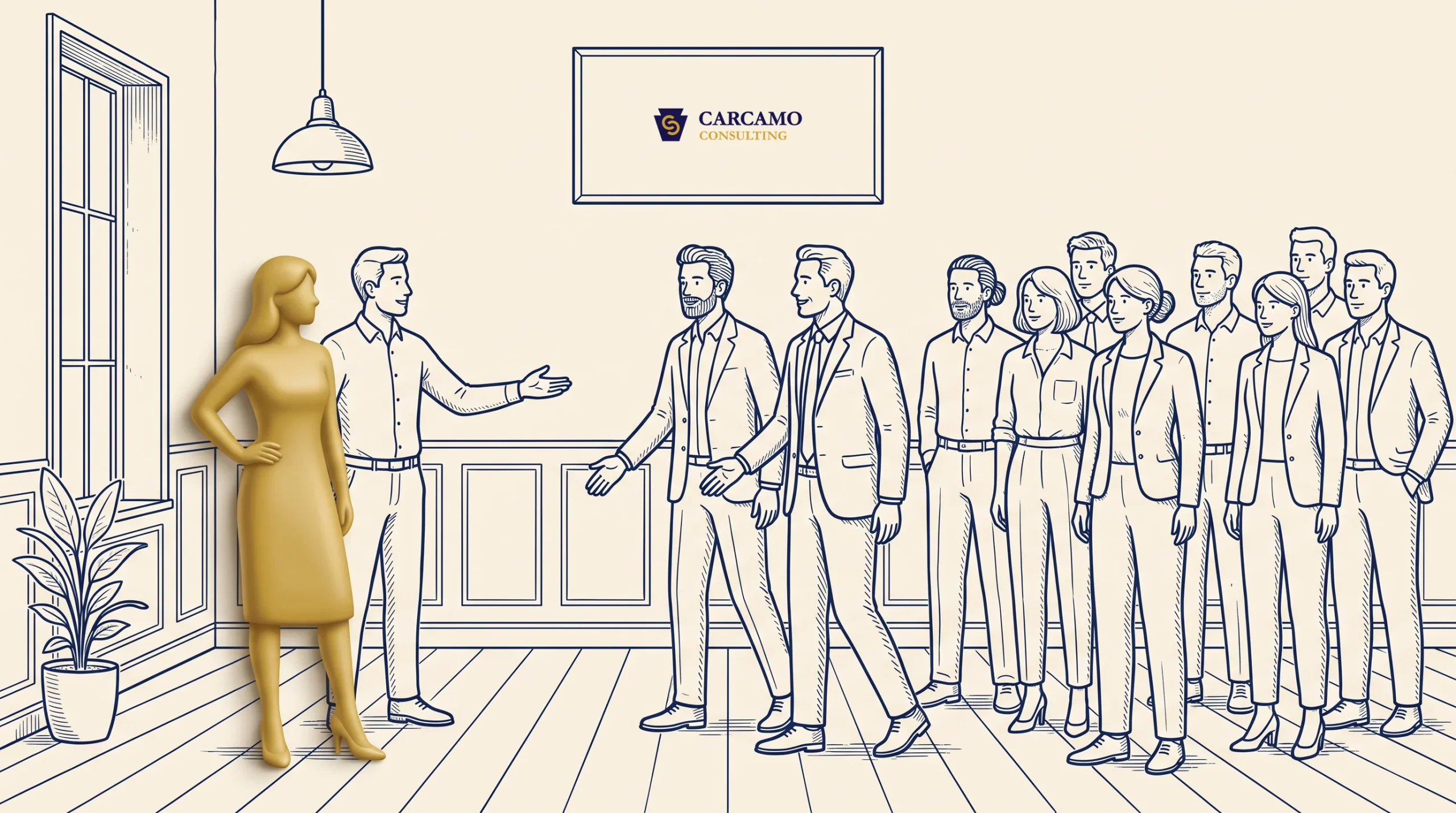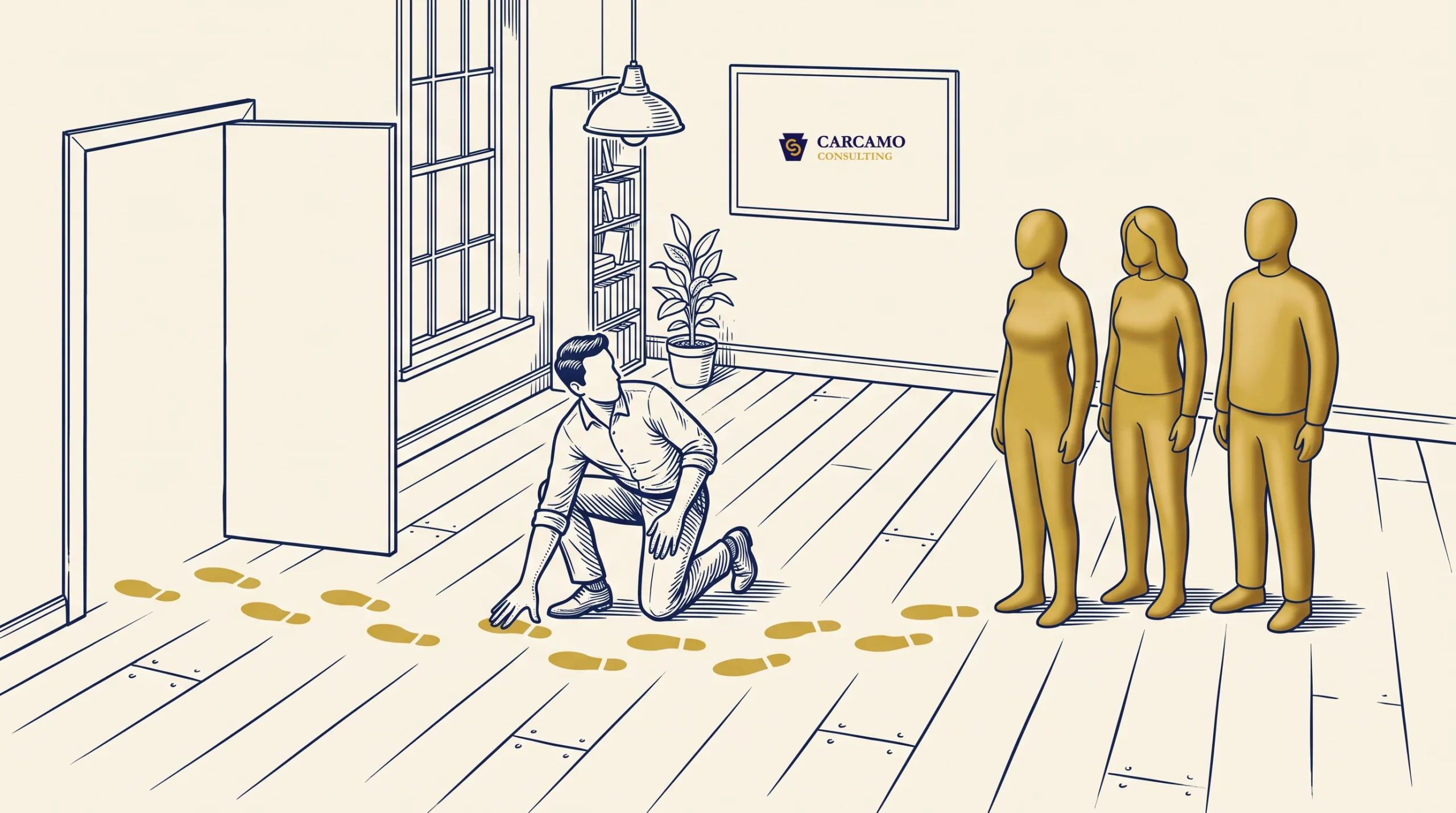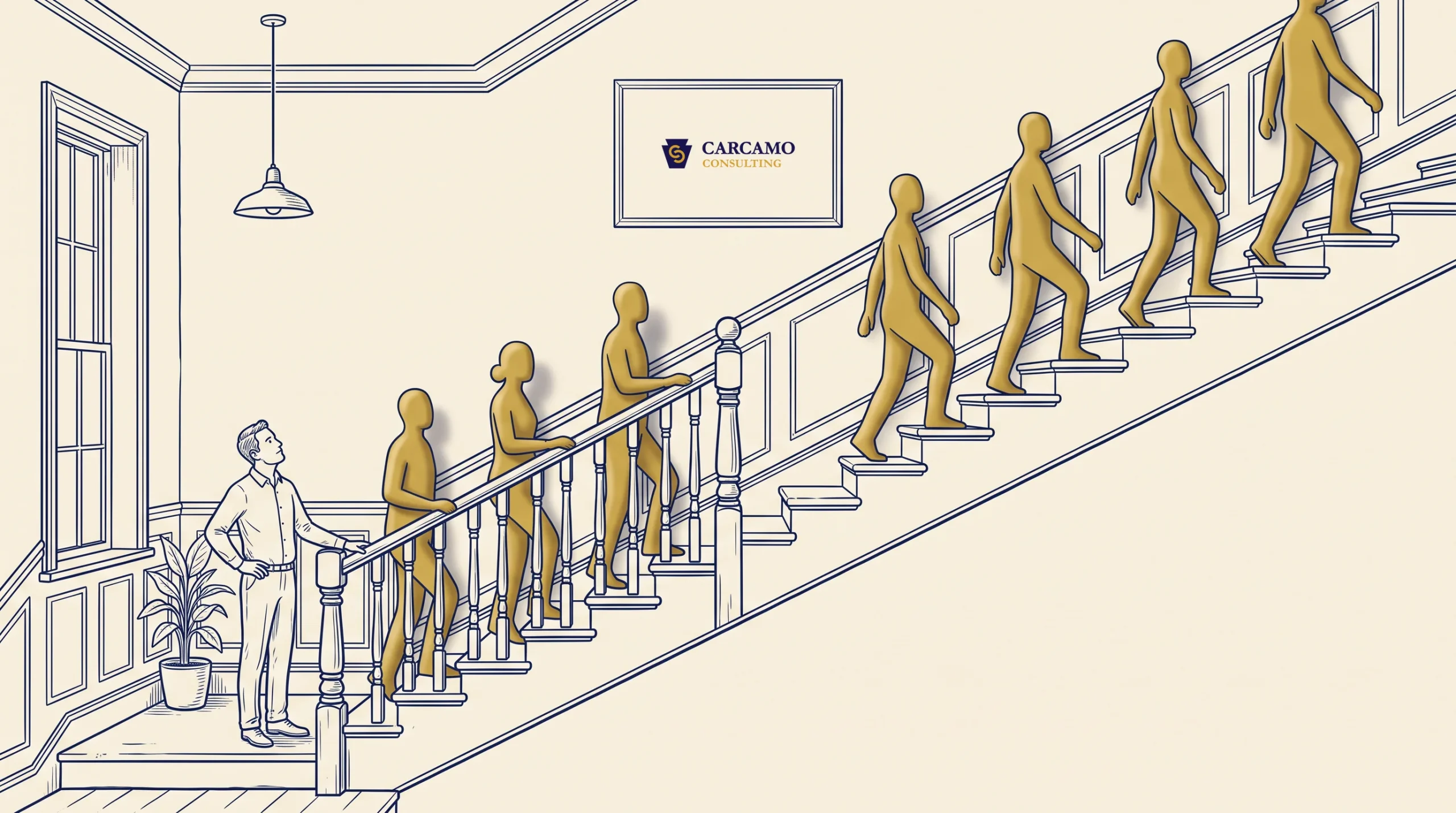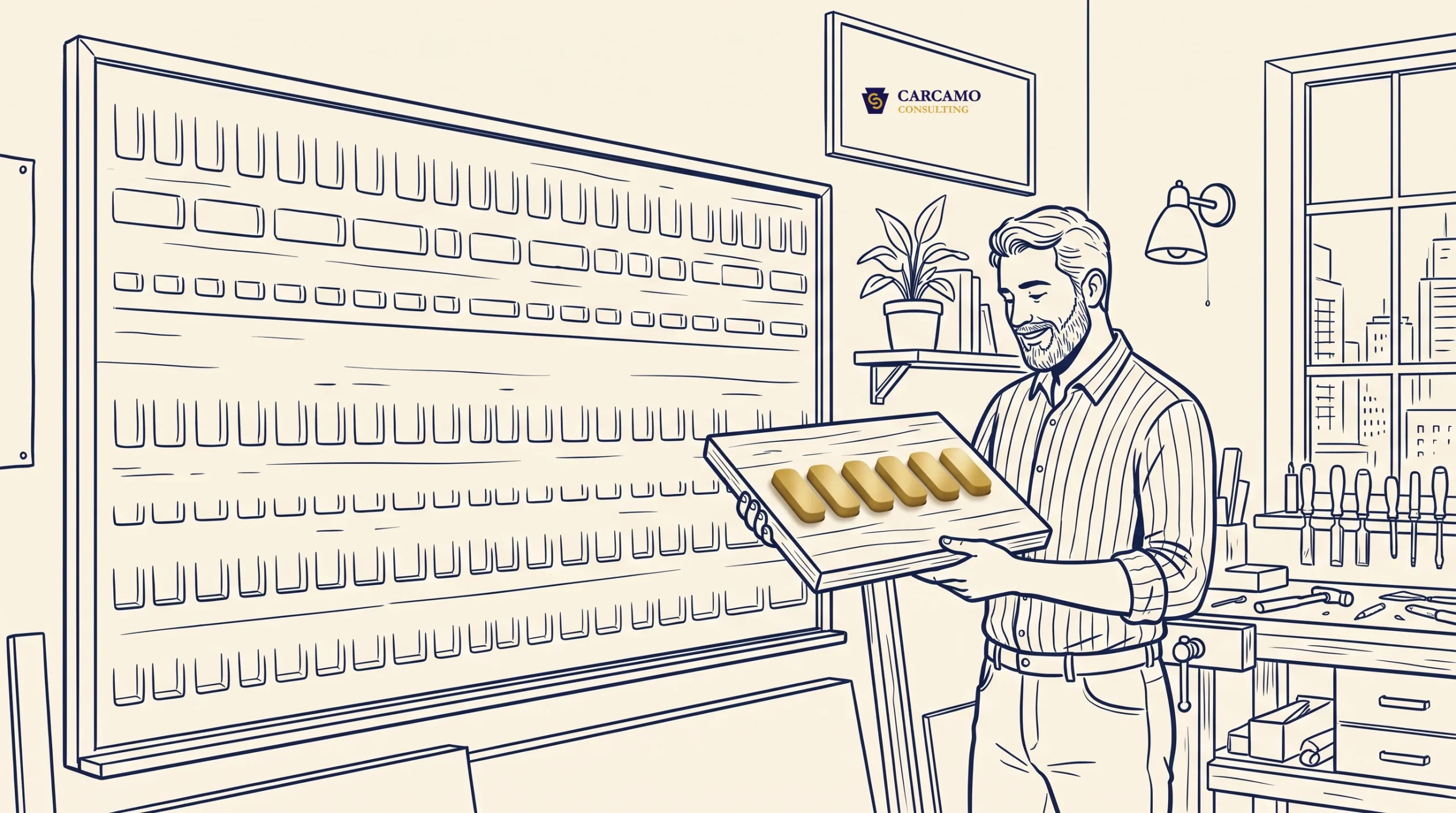

The real difference in B2B vs B2C customer acquisition comes down to four things about a single sale, and not one of them is whether your customer is a person or a company.
How many people have to agree. Whose money is being spent. How long the decision takes. How many times that customer buys again.
Score any sale on those four and your channel, your message, and your follow up all fall out of the answer. That’s also why the labels mislead so often. There’s an everyday consumer purchase, one almost every homeowner makes, that runs a textbook business to business playbook, and seeing why it does will change how you read your own sales.
What Really Differs in B2B vs B2C Customer Acquisition
The two usually get set up as personality types. Businesses buy with logic, consumers buy with feeling. That’s tidy and it isn’t true, as anyone who’s watched a purchasing manager pick the vendor he golfs with can tell you.
What genuinely differs is structural, and it’s worth naming precisely.
How many people have to agree. In a consumer sale that’s usually one person, occasionally two. Gartner has repeatedly found the typical business buying group involves six to ten decision makers, each doing their own research and each able to stall the whole thing.
Whose money is being spent. A consumer spends their own, so the fear is regret. A business buyer spends the company’s, so the fear is being blamed. Those two fears want completely different reassurance.
How long the decision takes. Consumer decisions commonly run from minutes to a few days. Business decisions commonly run from weeks to several quarters, because the calendar belongs to the committee and not to you.
How many times they buy again. Consumer purchases are often small and frequent. Business purchases are often large, infrequent, and locked into a contract that renews on a date you don’t control.
Everything else in this comparison, every channel choice and every difference in cost, is downstream of those four. Get them right for your own sale and the rest of the decisions stop being guesswork.
The Side by Side
| Variable | Usually consumer | Usually business | What it changes for you |
|---|---|---|---|
| People who must agree | One, sometimes a couple | Six to ten, per Gartner | Sell to a person, or arm someone to sell for you inside |
| Whose money | Their own | The company’s | Answer regret, or answer blame |
| Time to decide | Minutes to a few days | Weeks to several quarters | Close now, or stay visible for months |
| Times they buy again | Many, small, unpredictable | Few, large, on a contract date | Chase frequency, or chase renewal |
| What a lead costs | Low single digits to low tens | Tens to low hundreds | Volume economics, or precision economics |
| What proof looks like | Reviews and other buyers like them | Case studies and references | Social proof, or documented outcomes |
Read the table by row rather than by column, because the row is the decision. Whichever column your sale sits in for a given row is what that row is telling you to do, and it’s completely normal to land in different columns on different rows.
How Long the Decision Takes
Cycle length is the variable that quietly determines your whole marketing calendar, and most owners get caught out by it in the same way.
If a decision takes an afternoon, your job is to be present at the moment of intent and to remove friction. Search, maps, a phone that gets answered, a price that’s visible. Anything that adds a step costs you the sale.
If a decision takes four months, being present at the moment of intent is useless, because you don’t know when that moment is and neither does the buyer. Your job becomes staying credible and visible across a stretch of time, so that when the committee finally convenes you’re already a known quantity.
That difference shows up in three practical places:
- Your measurement window. Judging a long cycle channel on 30 day results will make you kill things that were working.
- Your follow up cadence. Short cycles want speed. Long cycles want a reason to be in touch that isn’t “just checking in”.
- Your budget rhythm. Short cycles let you turn spend up and down with demand. Long cycles punish you for stopping, because the pipeline you switch off today is revenue you lose two quarters from now.
The most expensive mistake here is running a long cycle sale on a short cycle scorecard. An owner spends three months on a channel, sees no closed deals, and shuts it off in month four, which is exactly when the first ones would have landed.
The fix is to measure the step instead of the outcome. If your cycle runs four months, you can’t judge a channel on revenue for four months, but you can judge it weekly on the thing that comes first: conversations started, quotes requested, site visits booked.
Pick the earliest step that reliably precedes a sale, count it, and hold the channel to that. Then check the conversion from that step to closed once a quarter, when you finally have enough of them to mean anything.
On the consumer side the opposite discipline applies. Because feedback arrives in days, you can afford to change one thing at a time and actually learn from it, and owners who batch a month of changes together throw that advantage away.
Where Each One Finds Customers
The channel lists overlap almost completely. Search, social, email, referrals, ads, and events appear on both sides. What flips is the weighting, and why each one works.
For consumer sales, discovery is usually passive and local. Somebody needs something and looks for it, or sees it while they’re doing something else. Maps, reviews, search, and paid social carry most of the load, and the full version of that playbook is in how to get customers for a local business.
For business sales, discovery is usually deliberate and targeted. You can name the companies you want, you can often name the person inside them, and you can reach that person by role in a way you simply cannot with consumers.
The same channel behaves differently in each:
- Email. On the consumer side it’s mostly retention to people who opted in. On the business side it’s often the opening move to someone you researched.
- Referrals. Consumers recommend to friends unprompted. Businesses refer through partners and professional relationships, and it usually needs asking.
- Social. Consumer social sells the product. Business social builds the reputation of a person, which is why it looks so much slower.
- Events. A consumer event is a promotion. A business event is a pipeline exercise that pays out months later.
Notice that none of this makes one side easier. It makes them differently shaped, which matters because the tactic that feels like it’s failing is often just the right tactic on the wrong clock.
What the Message Has to Do
Here’s where the “logic versus emotion” cliche does real damage, because it sends people in exactly the wrong direction.
Business buyers are emotional. They’re just afraid of something different. A consumer’s private worry is wasting their own money and feeling stupid about it. A business buyer’s private worry is that this goes wrong and everybody remembers whose idea it was.
So the message has two different jobs:
- For a consumer, remove regret. Show other people like them who are glad they did it, make the outcome easy to picture, and make the downside small and reversible.
- For a business buyer, remove blame. Give them something defensible to bring into a room you’ll never be in: a documented result, a reference they can call, a written scope, clear terms.
That second point is the one most small firms miss when they start selling to companies. Your buyer isn’t the decision, your buyer is your advocate in a meeting you don’t attend, and everything you hand them is ammunition.
It’s worth being concrete about what ammunition means, because it isn’t a brochure. It’s a one page summary with the scope and the price on it, so nobody has to remember what you said. It’s a reference doing something similar who has agreed to take a call, your certificate of insurance before anybody asks, and a start date in writing.
None of that persuades your contact, who is already persuaded. All of it protects them in front of the person who wasn’t in the room.
The full version of that argument, including how to arm that person properly, is in how to get B2B customers.
Why the Same Budget Behaves Differently
Cost is where people conclude that one side is harder, and the numbers get misread almost every time.
Published benchmark sets vary enormously, but the pattern is consistent: business leads commonly cost tens to low hundreds of dollars each, and consumer leads commonly cost low single digits to low tens. Read alone, that looks like a verdict. It isn’t one, because the two sit against completely different deal sizes.
Run it. A business lead at $150 that closes one time in twenty costs you $3,000 per customer. Against a $40,000 contract that’s 7.5 percent of revenue, which is a perfectly healthy acquisition cost.
Now the other side. A consumer lead at $6 converting one time in ten costs $60 per customer. Against a single $22 order that’s a catastrophe, but if that person comes back monthly at 60 percent margin they throw off about $158 of margin over a year, and the $60 pays for itself before spring.
Both models work. They just balance on different things, which is the practical point:
- Business acquisition is justified by deal size and contract length.
- Consumer acquisition is justified by repeat frequency and margin.
- A high cost per lead is only a problem relative to what the customer is worth.
Whichever side you’re on, the arithmetic runs through the same figure, and working out what a customer is actually worth over their lifetime is the number that makes every cost above either sensible or reckless.
Where the Labels Break Down
Now the everyday purchase from the opening. A homeowner replacing a roof is a consumer sale by every label there is, and it behaves almost nothing like one.
Two people have to agree, and they’ll disagree at least once. It’s fourteen thousand dollars of their own money, so the fear is enormous. The decision takes three to six weeks and involves three quotes. And they’ll buy again in about twenty years, which for your purposes is never.
Score that sale on the four variables and it lands in the business column on three of them. Which is why roofing companies that win consistently run something that looks a lot like a business playbook: references, a written scope, a named person who answers, proof of insurance, and patience across weeks.
Now flip it. The office manager reordering coffee for the break room is a business purchase by label. One person decides, the money is trivial, the decision takes two minutes, and she reorders every month. That’s a consumer motion wearing a company badge, and treating it like enterprise selling would be absurd.
The pattern holds generally. The sale has a shape, not the company. Sort your offers by that shape rather than by who signs the check, and the pillar view of which playbook fits which kind of business becomes a lot easier to apply to your own situation.
How to Score Your Own Sale
Take your single most important offer and answer four questions honestly. Give each one a point if the answer leans toward the business column.
- More than one yes. Does anybody besides your contact have to approve it? A couple counts. A committee definitely counts.
- Somebody else’s money. Is the spender using funds that aren’t theirs, or an amount large enough that it feels that way?
- Longer than two weeks. Measure from first contact to signature, not from the day you sent the quote.
- Rare and large. Will they buy fewer than three times in the next five years? Infrequent and expensive counts as business shaped.
Three or four points means run the business playbook even if you’re technically selling to consumers. Zero or one means run the consumer playbook even if your invoices go to companies. Two means you’re genuinely in the middle, and the tiebreaker is question three, because cycle length dictates more of your calendar than anything else on the list.
Do this per offer, not per company. Most owners find that different things they sell score differently, and that’s the discovery that saves the money.
Running Both at Once Without Averaging Them
Plenty of small businesses run both motions and don’t realize it. A cleaning company that does houses and offices. A bakery with a retail counter and a wholesale route. A photographer shooting weddings and corporate headshots.
Our own team lives on both sides of this line. One of the businesses we run serves dinner to whoever walks through the door, and another sells cleaning contracts to facility managers who take three months to sign. Almost nothing that works for one works for the other.
If you’re running both, the discipline is separation:
- Keep separate numbers. An averaged conversion rate across both motions describes nothing that exists.
- Keep separate calendars. Judge the short cycle side monthly and the long cycle side quarterly, at minimum.
- Keep separate messages. The same page cannot reassure a nervous homeowner and a cautious facility manager.
- Share the brand, not the playbook. One consistent look and one consistent standard helps both. One shared tactic helps neither.
The failure mode is always the same, and it’s averaging. An owner blends both motions into one dashboard, sees a mediocre middle number, and starts optimizing something that doesn’t exist. Split them and you usually find one side is doing fine and the other needs work, which is a far more useful thing to know.
Frequently Asked Questions
What is the main difference between B2B and B2C marketing?
The number of people who have to agree, and whose money they’re spending. A consumer usually decides alone with their own money, so the message removes regret. A business purchase typically involves six to ten people spending the company’s money, so the message has to give your contact something defensible to carry into a meeting. Everything else follows from that.
Is B2B harder than B2C?
Neither is harder, they fail in different ways. Business acquisition is slower and costs more per lead, but the deals are larger and the relationships last. Consumer acquisition is fast and cheap per lead, but it only works at volume and with repeat purchases. Pick the wrong scorecard for your side and either one will look like a failure.
How long is a typical B2B sales cycle?
Commonly weeks to several quarters, depending on deal size and how many approvals sit in the way. The practical consequence matters more than the average: if your cycle runs four months, judging a channel on 30 day results will make you shut off things that were about to work. Measure a full cycle before you decide.
Can a business be both B2B and B2C?
Yes, and many small businesses are without noticing. A cleaning company doing homes and offices runs two different motions with two different cycles. The rule is to keep them separate: separate numbers, separate calendars, separate messages, one shared brand. Averaging the two produces a number that describes neither.
Does social media work for B2B?
It works, but slowly and for a different reason. Consumer social sells the product directly. Business social builds the reputation of a person, and that reputation is what gets a reply months later when a need appears. Judge it on conversations started and inbound mentions, never on same week sales.
Why is B2B customer acquisition cost so much higher?
Because you’re paying to reach a small, specific group of people through a long decision, rather than a large group through a fast one. A $150 lead that closes one time in twenty means $3,000 per customer, which is fine against a $40,000 contract and ruinous against a $60 product. Cost only means something next to deal size and contract length.
Stop asking which box your business belongs in. Ask how many people have to agree, whose money it is, how long they’ll take, and how often they’ll come back, and the answer will tell you which playbook to run for that particular sale.
Then do it again for the next offer, because the answers change. If you’d like a second opinion on how one of your offers scores, or which of your two motions is the one actually leaking, send us the question and a real person will work through it with you.
 Previous