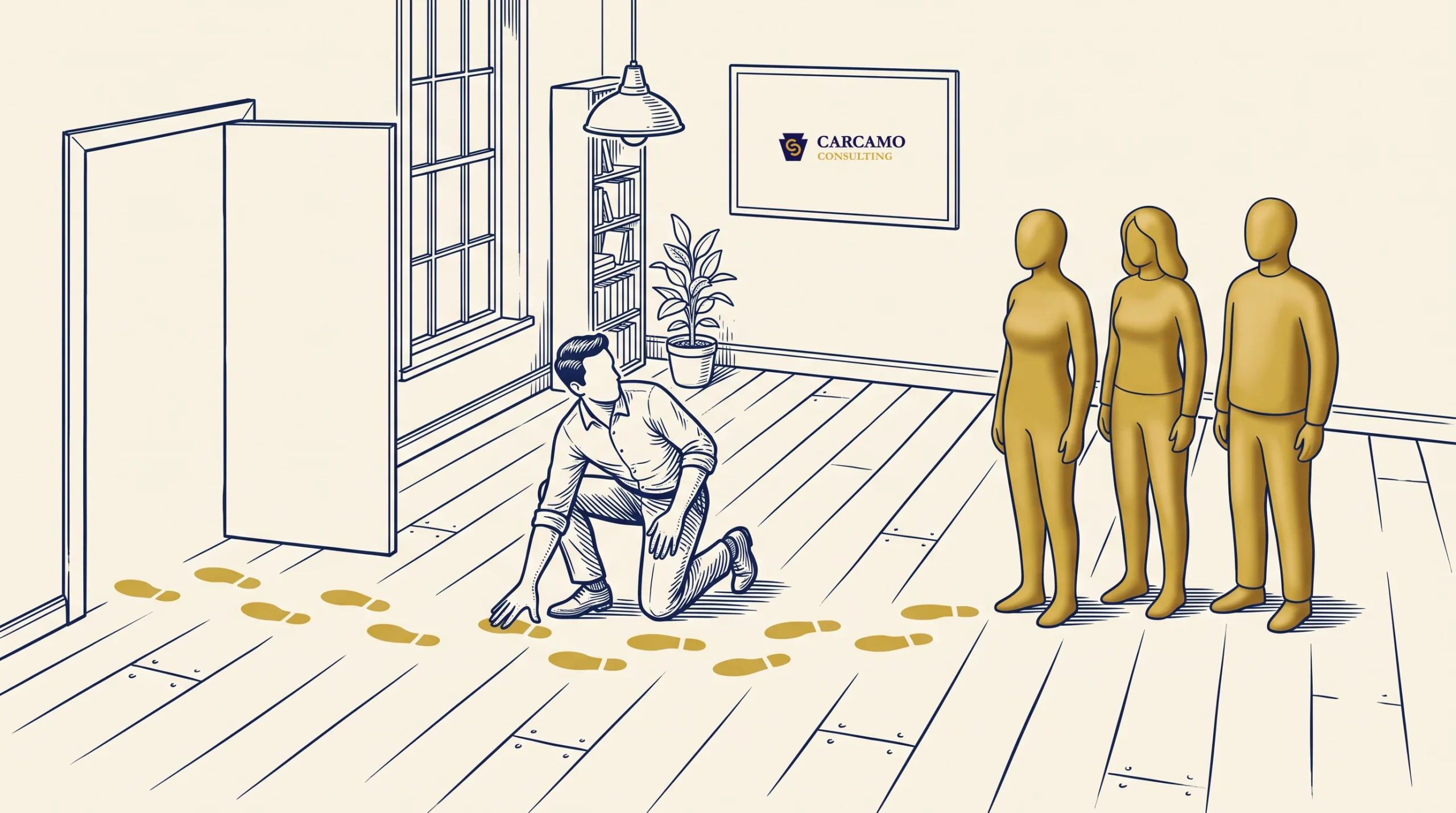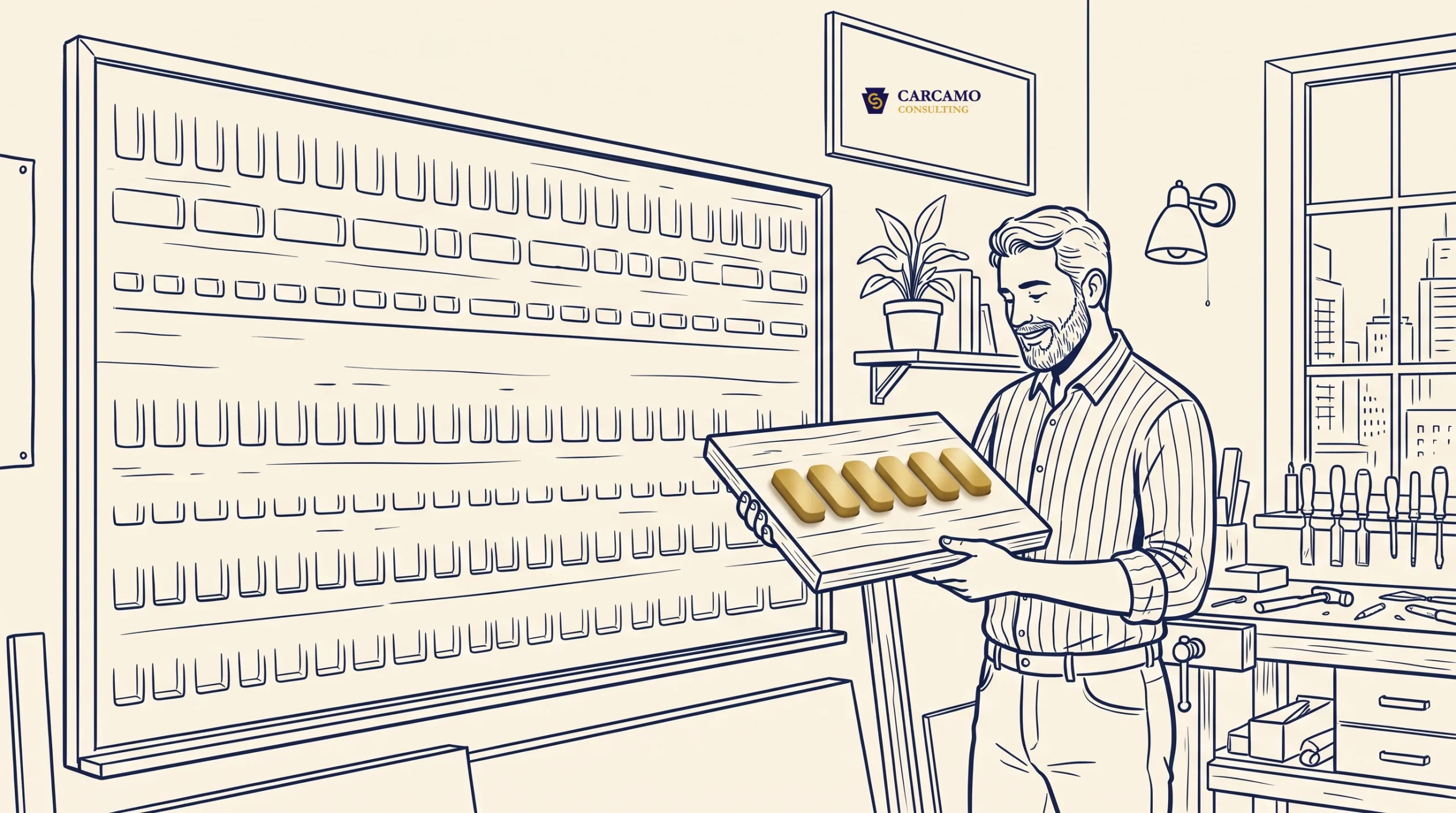

You don’t have a Facebook problem, a website problem, or a Google problem. You have one machine with a few parts missing, and digital marketing is the name of the whole machine.
Digital marketing is the practice of promoting your business and winning customers through online channels: search, your website, content, social media, email, and paid digital ads. That’s the whole definition. It isn’t a job title, a certificate, or a piece of software you buy. For someone who runs a business, it’s simply everything you do so that a person who needs what you sell can find you, believe you, and get in touch without ever having met you.
Six channels, one machine. Two of those six are the only ones you actually own, and most owners set both of them up last.
Digital Marketing, Marketing, and Advertising Are Not the Same Thing
These three words get used as if they mean the same thing, and mixing them up is how budgets get spent in the wrong place.
Marketing is the whole job of getting the right people to want what you sell. It includes your prices, your name, your reputation, the sign on your truck, and the way you answer the phone.
Digital marketing is the part of that job that happens through internet connected channels. A yard sign is marketing. A Google ad is marketing and digital marketing.
A flyer under a windshield is marketing. That same flyer as a targeted Facebook post is digital marketing.
Advertising is one channel inside it, the part where you pay a platform to put you in front of people. Every ad is marketing. Most marketing isn’t advertising.
Why it matters: when an owner says “I need to do digital marketing,” he usually means “I need to run ads,” and ads are the one part that stops working the second you stop paying. The other channels keep working after you build them. Knowing which is which is the difference between renting attention and owning it.
The Six Channels of Digital Marketing, and What Each One Is For
Every list of “types of digital marketing” you’ll find runs to eight or nine items, but they collapse into six real channels. Here’s what each one is actually for.
Search (SEO and your Google Business Profile). Being found by someone who is already looking for what you sell, at the moment they’re looking. This is the highest intent traffic there is: nobody searches “emergency plumber near me” out of curiosity. It’s free to appear and slow to earn.
Your website. The place everything else sends people. It isn’t a brochure, it’s the room where the sale happens. Every other channel on this list is a hallway leading to it.
Content (blog posts, videos, guides, photos). Answering the questions your customers ask before they’re ready to buy. Content is what makes search work, what gives social something to post, and what an AI assistant reads when it decides whether to mention you.
Social media. Staying visible to people who already know you exist, and getting shared to people who don’t. Useful for reputation and reach, unreliable for demand. Your posts reach a fraction of your own followers, and the platform picks that fraction, not you.
Email (and text). Talking directly to people who already raised their hand. It’s the cheapest per customer of anything on this list, because you’re not paying anyone for access.
Paid digital ads. Buying attention on demand. Ads are the only channel where you can turn on traffic this afternoon, which is exactly why they’re the most overused and the most expensive per lead when the rest of the machine is broken. If you’re weighing this one, the honest comparison of which acquisition channel actually returns the most is worth reading before you fund it.
Rented attention versus owned attention
Now the part that matters more than the list. Ask one question about each channel: if the platform changed its mind tomorrow, would you still have it?
Search, social, and ads are rented. Google can rewrite its algorithm, Meta can throttle your reach, and your ad account can be suspended by a system with no phone number, and none of those are things you get a vote on.
Your website and your email list are owned. Nobody can take a list of 400 customer email addresses away from you. That’s the answer to the promise at the top of this piece, and it’s why the two cheapest channels to build are the two most owners get to last, after they’ve spent a year renting.
The practical version: use the rented channels to fill the owned ones. Every dollar of rented attention should end with somebody on your list or in your database, or you paid for a visit and kept nothing.
How Digital Marketing Actually Works: Five Parts of One Machine
Channels get listed side by side, which makes them look interchangeable, like flavors. They aren’t. They’re parts of one system, and they run in sequence:
- Attention. Somebody sees you. Search, social, content, ads.
- A place to land. They arrive somewhere that belongs to you. Your site, your booking page, your profile.
- A reason to act. Something clear and worth doing right now. A quote, a call, a booking, a first order.
- A way to follow up. Most people don’t buy on the first visit. Email, text, retargeting, a phone call.
- A way to measure. Knowing which of the four above actually produced money.
Break any one part and the other four are wasted. That’s the whole explanation for the most common complaint in small business: “I tried marketing and it didn’t work.” Traffic showed up somewhere that gave people nothing to do.
Here’s what it’s worth in numbers. Send 1,000 visitors to a site that turns 1 percent of them into inquiries and you get 10 leads. Fix the same site so it converts at 3 percent and those same 1,000 visitors produce 30.
You didn’t buy more attention. You tripled the business on traffic you already had. That’s the same store on the same spend, worth three times as much.
And there’s one part of this machine almost nobody turns on, which quietly turns the other four into a guess.
The part everybody skips
Measurement. Not “how many likes,” but the plumbing: a tracking setup that tells you a form fill happened, which page it came from, and which ad or search or post sent that person in the first place.
Without it you’re making budget decisions on a feeling. You’ll cancel the thing that was working because it was quiet, and you’ll keep funding the thing that felt busy. Owners who can’t tell which channel produced a customer end up guessing about all of them, and guessing is expensive at any budget. If you’re stuck at that exact point, the diagnostic checklist for when leads dry up walks the same logic in the order you should check it.
It’s the least exciting part of digital marketing and it’s the one that makes every other part improvable.
What Each Part Costs and How Long It Takes to Pay
Two questions get skipped in almost every explanation of this topic, and they’re the only two an owner actually needs answered before starting.
What should you spend? The Small Business Administration’s widely quoted guideline puts total marketing at 7 to 8 percent of gross revenue for businesses under $5 million a year, assuming healthy margins. On $200,000 of revenue that’s roughly $1,200 to $1,350 a month for all marketing, digital and otherwise. Most small businesses spend far less than that, which is a real choice with real consequences, not a rule you’re breaking.
How long until it pays? The channels differ by an order of magnitude, and that’s the single most useful thing to know before you pick one.
| Channel | Cost to start | Time before it produces |
|---|---|---|
| Google Business Profile | Free | Days to weeks |
| Paid ads | Your daily budget | Same day |
| Email to an existing list | Under $30 a month | One send |
| Social media | Free, but hours | Weeks to months |
| Content and SEO | Free, or writer cost | 3 to 6 months for movement, 6 to 12 for meaningful results |
| A new website | $1,000 to $8,000 typical | Immediate, once traffic arrives |
Published SEO timelines vary by who’s writing them, but they agree on the shape. A local business in a moderate market can see map pack movement in two to four months. A brand new site competing in a crowded category often needs six to twelve. Nobody credible promises a date.
Which means paying for speed is a legitimate decision, not a failure of patience. If you need customers this quarter, ads buy you that. If you need customers in three years without paying per click, content and search buy you that. Most businesses need both, in that order, and the useful framing of when it’s actually time to start paying for traffic is a timing question rather than a budget one.
A realistic first month at $200: claim and fill out the Google Business Profile (free), get an email tool and import every past customer ($30), and put the rest into ads on one specific service with one specific landing page. That’s a complete small machine, not a channel.
The Newest Part: Customers Are Asking AI, Not Just Searching
A customer who used to type “best HVAC company Scranton” into Google now sometimes asks an assistant instead, and gets three names back with no ranked list to scroll.
Ranking well on Google no longer covers it. SOCi’s 2026 Local Visibility Index analyzed more than 350,000 business locations across 2,751 brands and compared where each one showed up.
Those brands appeared in Google’s local three pack 35.9 percent of the time. ChatGPT recommended 1.2 percent of them. Gemini recommended 11 percent and Perplexity 7.4 percent.
The number that should get your attention isn’t any of those. It’s this: only about 45 percent of the brands doing well in traditional local search also showed up in the AI answers. More than half of the businesses winning on Google are invisible in the place a growing number of customers now ask.
Nobody has this fully solved yet. What’s clear so far is that assistants build their answers from consistent business information, from third party sources like directories and reviews, and from written content that actually says what you do and where. Which means the unglamorous work (accurate listings, real reviews, plain content that answers questions) now feeds two systems instead of one.
What Has to Be True Before Any Channel Works
Traffic multiplies whatever you already have. If what you have is nothing, it multiplies that too.
Before you spend a dollar on any channel, four things need to be true:
- Someone answers. A real person, quickly. The fastest response usually wins the job, and a missed call is a paid click thrown away.
- The offer is clear. A stranger should be able to tell in five seconds what you do, where you do it, and what happens next. “Quality service since 2011” tells them nothing.
- The site works on a phone. Most of your visitors are on one. If it loads slowly or the button is hard to hit, the traffic doesn’t matter.
- You can tell where a lead came from. Even a written note next to the phone counts. Without it, see the section above.
Any channel will amplify a business that has those four. No channel can fix a business that doesn’t, and spending more just makes the leak louder.
Where to Start, Based on Where You Are
Three honest starting positions, and one move each.
If people already find you and you just want more of them: fix the middle of the machine first. Improve what happens after the click, then add paid ads to pour more traffic into something that now converts. This is the cheapest growth available to you and almost nobody does it first.
If people can’t find you at all: start with search and your profile. Claim the Google Business Profile, fill in every field, ask your last ten happy customers for reviews, and put a real page on your site for each service you sell. It’s slow, it’s free, and it compounds.
If you need customers this month: run ads to one service, on one page, with one clear action, and track it. Don’t spread a small budget across three channels to see what sticks. A small budget spread thin teaches you nothing, because none of the tests get enough traffic to mean anything.
Whatever your position, the shape of the first move changes with what you sell, and the playbook by business type sorts that out faster than trial and error will.
Come back to the machine. Attention, a place to land, a reason to act, follow up, measurement. When digital marketing “doesn’t work” for a business, it’s almost never because the owner picked the wrong channel. It’s because one of those five parts was missing, and the other four were quietly paying for it.
Frequently Asked Questions
What are the main types of digital marketing?
Search (SEO and your Google Business Profile), your website, content, social media, email and text, and paid digital ads. Longer lists split these further into things like affiliate marketing, influencer marketing and video, but every one of those sits inside the six above.
Is digital marketing the same as social media marketing?
No. Social media is one channel inside digital marketing, and for most small businesses it isn’t the one that produces the most customers. Search and email typically reach people closer to buying, because those people came looking or already gave you their address.
What is the difference between digital marketing and online marketing?
In everyday use they mean the same thing. The technical distinction is that digital marketing includes channels that don’t need the internet, like SMS or a digital billboard, while online marketing is only the internet based part. For running a business, treat them as the same word.
How much should a small business spend on digital marketing?
The Small Business Administration’s widely quoted guideline is 7 to 8 percent of gross revenue for businesses under $5 million a year, covering all marketing. Plenty of businesses start well below that. What matters more than the percentage is spending enough on one channel to learn something, rather than a little on four.
How long does digital marketing take to work?
It depends entirely on the channel. Paid ads can produce leads the same day. Email to an existing list works on the first send. Content and SEO typically show movement in three to six months and meaningful results in six to twelve, faster for a local business in a less crowded market.
Can I do digital marketing myself, or do I need to hire someone?
You can do more of it yourself than most people assume. Claiming your Google Business Profile, collecting reviews, sending email, and writing pages about your own services are all owner sized jobs. Ad management, technical website work, and tracking setup are where hiring usually pays for itself.
Do I need a website if I have a Facebook page?
Yes. A Facebook page is rented: the platform controls who sees it, and it can change or disappear without your input. Your website is the only place online you actually own, and it’s where search results, ads, and AI assistants all send people.
Is digital marketing worth it for a small local business?
For most, yes, because it’s the only advertising you can start at $10 and measure honestly. The risk isn’t the money, it’s spending it on attention while the site, the follow up, and the tracking are still missing. Build the machine first, then feed it.
 Previous