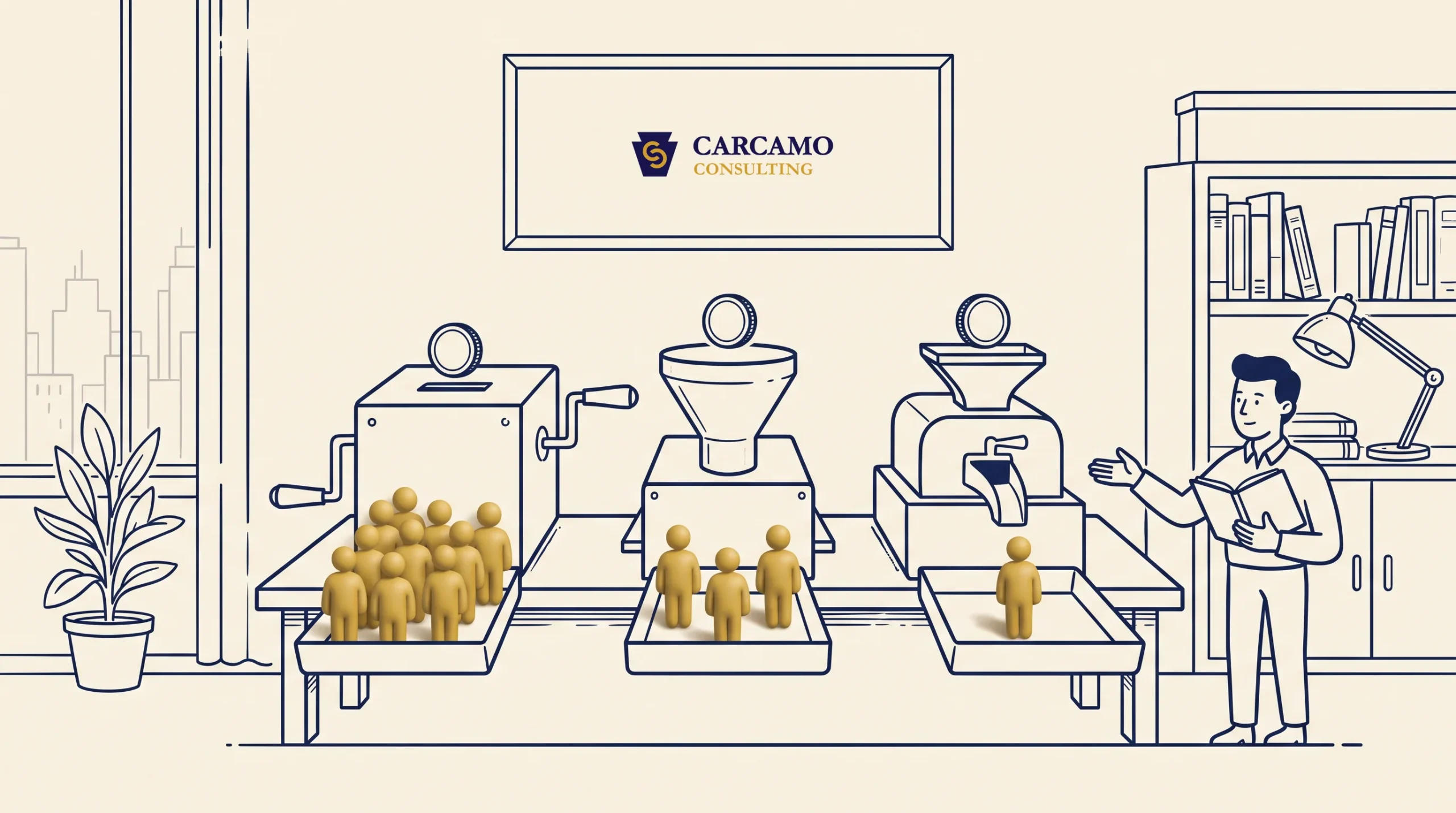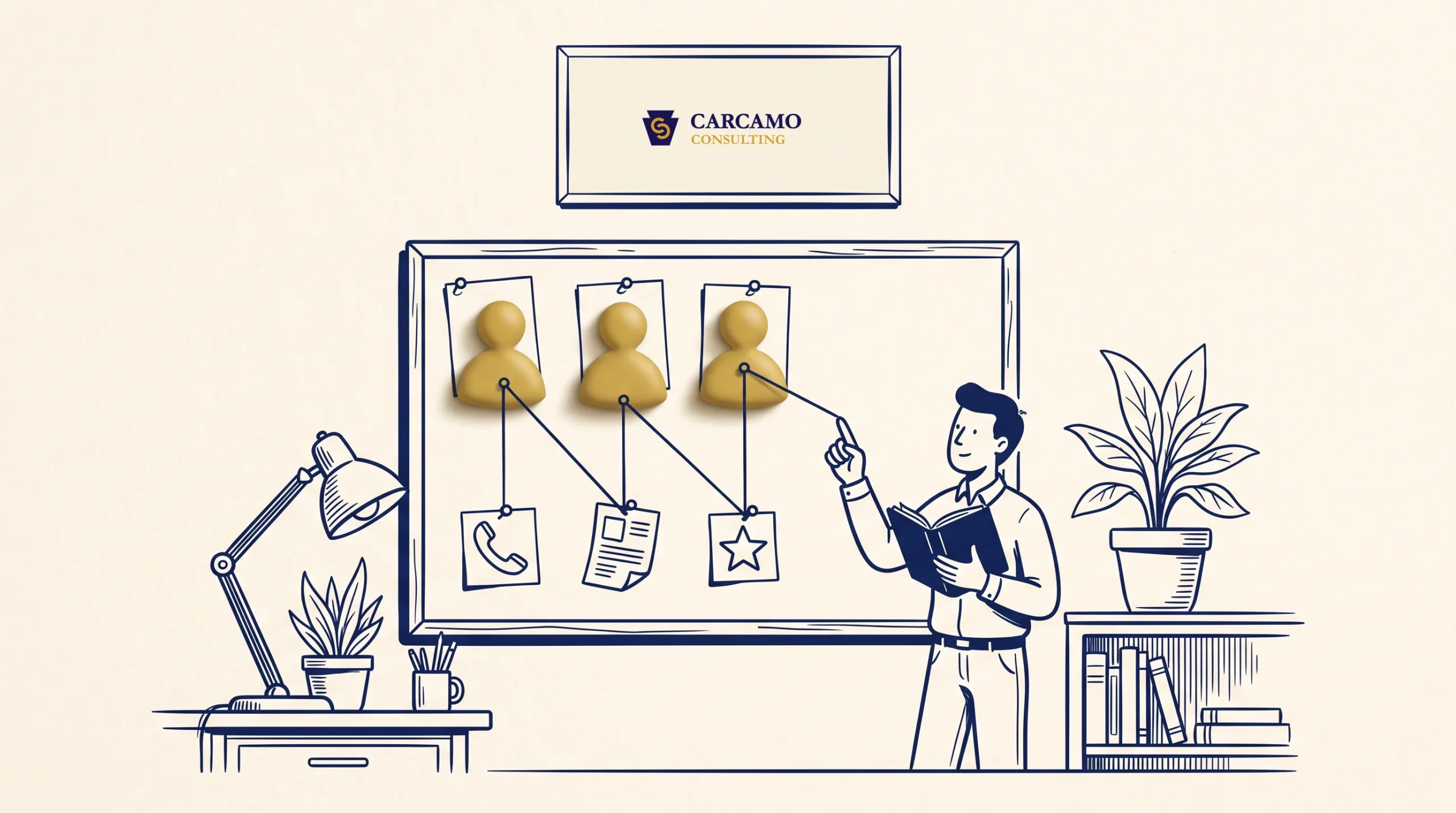

If people already search for what you sell, your first paid channel should be search ads. If they don’t search for it, or they buy on want rather than need, start with social ads instead. That’s the whole decision: search captures demand that already exists, social creates demand that doesn’t exist yet. A plumber and a custom cake baker should give opposite answers to the same question, and both would be right.
Most owners agonize over this choice by comparing platform features, ad formats, and dashboards. There’s a faster route. One question about your last five customers settles search vs social in about a minute, and almost nobody thinks to ask it. First, though, it helps to be clear about what each channel actually does with your money.
What Search Ads Actually Do
Search ads put your business at the top of the results page the moment someone types a problem into Google. A homeowner searches “water heater replacement near me,” and the first thing they see is an ad from a plumber who paid to be there. You bid on the words your customers type, and you pay only when someone clicks.
The person on the other end of that click raised their hand first. They have a need, they went looking, and your ad met them mid search. That’s why search traffic converts so well: WordStream’s benchmark data puts the average conversion rate for Google search ads at 3.75 percent, against 2.1 percent for social ads. Nearly double, because intent was there before your ad was.
That intent has a price. In WordStream’s benchmark data, the average cost per click on Google search runs around $2.69 across industries, and in crowded service categories it climbs fast. Legal and consumer services clicks average $6 and up, because everyone in town wants the same handful of searches.
One more trait matters for a first campaign: search spend maps cleanly to revenue. A click came from a search for your service in your area, so when the phone rings you know exactly what you paid for it. That clarity makes search the easier channel to judge in your first 90 days, which matters more than most feature differences.
Search ads have two honest limitations. They’re text, so there’s no scroll stopping photo or video to lean on. And they can only harvest demand that exists: if your service gets 40 searches a month in your area, no budget in the world turns that into 400 customers.
What Social Ads Actually Do
Social ads, mostly the Meta network of Facebook and Instagram for small businesses, work the other way around. Nobody on Instagram is searching for a cake. They’re scrolling with half their attention while dinner cooks. Your ad interrupts that scroll with a photo of a three tier birthday cake, aimed at parents within 15 miles whose kids have birthdays coming up.
Nobody asked to see it. That’s the point. Social ads create the want in people who weren’t shopping, which is exactly what a business needs when its customers don’t go looking, don’t know the service exists, or buy on impulse and delight rather than urgency.
The economics reflect the lower intent. Clicks are cheaper, averaging about $1.72 across industries, and you get rich visual formats: video, carousels, stories. Conversions come slower, because you’re planting seeds rather than harvesting. Someone sees your cake ad in March and orders in June for a birthday you knew nothing about.
Social also demands creative. A search ad is two lines of text; a social ad lives or dies on the photo or video behind it. If your work photographs well, that’s an asset. If you’d be advertising drain cleaning with a stock photo, it’s a handicap.
Picking where to run those ads matters too, and it follows the same logic as choosing the social platform your customers actually use organically: fish where your people already are.
The One Question That Decides It
The question promised at the top: did your last five customers go looking for you, or did they stumble onto you?
Think through them one at a time. The furnace call in January went looking. The kitchen remodel probably started with a search, or with a referral that ended in a search of your name.
The birthday cake order started when someone saw a photo a friend shared. The gym membership started with a January resolution and an ad that showed up at the right moment.
Customers who go looking are intent customers, and intent customers belong to search. Customers who get found are interest customers, and interest customers belong to social. Your business almost certainly has both, but one side dominates, and that side is your first paid channel.
Here’s the same split as a rule of thumb. Need driven, urgent, or researched purchases lean search: plumbing, HVAC, roofing, accounting, legal, LLC registration, medical, auto repair. Want driven, visual, or impulse purchases lean social: bakeries, boutiques, restaurants, photographers, event services, home decor, fitness.
A Wilkes-Barre plumber’s customer is standing in an inch of water typing into a phone. No amount of charming video reaches that person faster than the top result on that search. The reverse holds for the baker: nobody searches “custom cakes” until the want already exists, and social is where the want gets planted.
Search vs Social at a Glance
| Search ads | Social ads | |
|---|---|---|
| Customer state | Actively looking, has a need now | Scrolling, didn’t ask to see you |
| What it does | Captures existing demand | Creates new demand |
| Average cost per click | About $2.69, higher in service niches | About $1.72 |
| Typical conversion rate | Around 3.75% | Around 2.1% |
| Speed to first sale | Days to weeks | Weeks to months |
| Creative needed | Two lines of text | Real photos or video, refreshed often |
| Best first fit | Need driven services people search for | Visual, want driven, or new offers |
| Main weakness | Capped by local search volume, pricey clicks | Lower intent, slower payback |
The table points the same direction as the five customer question. If both point the same way for your business, you have your answer.
How to Pick Your First Paid Channel
Run down these in order and stop at the first one that matches:
- People search for your service when they need it. Start with search. Bid on your highest value service phrases plus your area, not broad terms. This is the common case for trades and professional services.
- Your last five customers mostly stumbled onto you. Start with social. Your buyer doesn’t go looking, so meet them where they scroll.
- Almost nobody searches for what you sell locally. Start with social, whatever your category. A specialty with 30 monthly searches in your county can’t feed a search campaign. Check the volume before you commit; Google’s Keyword Planner shows it free.
- Your product is beautiful in photos and priced for impulse. Start with social even if some search volume exists. The photo does work text can’t.
- You sell to businesses on a long decision cycle. Start with search. B2B buyers research; be the answer when they do.
If two of those pull in opposite directions, weight the first one that matches higher. The list is ordered by how reliably each signal predicts where your first profitable dollar comes from. And whichever channel you land on, the fundamentals of running it, tracking, landing pages, and a clear offer, are the same ones covered in our beginner’s strategy for getting customers with paid advertising.
Pick One and Feed It
The advice you’ll find at the bottom of nearly every comparison is to use both channels together, and for a business spending $5,000 a month, that’s fine. For a business starting with $300 to $900 a month, it’s the most expensive advice on the internet.
Both platforms run on machine learning that needs conversion data to find your buyers. Meta’s own guidance is that an ad set needs roughly 50 conversion events in a week to exit its learning phase; Google’s systems want a steady flow of conversions too. Split $600 between two platforms and neither one ever collects enough data to get smart. You pay full tuition twice and graduate from neither school.
There’s a compounding cost to splitting that owners rarely see. Every dollar spent on the starved channel also buys worse information: you finish the quarter not knowing whether search failed because search is wrong for you or because it never got enough fuel to work. Concentrating the budget buys you a clean answer either way, and a clean answer is worth almost as much as a customer at this stage.
A common agency rule of thumb says run one channel until you’re near $3,000 a month in total ad spend. You don’t have to treat that number as law to respect the principle behind it: one channel, funded properly, beats two channels starved. How much “funded properly” means in dollars is its own decision, and we’ve broken it down in how much to spend to get your first paid customers.
Proving that one channel takes about 90 days, and the first month’s numbers will look worse than what you’ll actually end up with.
What the First 90 Days Should Look Like
Month one is tuition. The platform is learning who clicks and who buys, and you’re learning which ads and search terms are junk. Expect your cost per lead to be at its ugliest here. Judging the channel in week two is the most common way owners quit a campaign that was three weeks from working.
Month two is tightening. Cut the search terms that spend without converting, kill the ad creative nobody clicks, and push budget toward what’s working. Costs per lead should fall noticeably.
Put numbers on it with a real shape of a campaign. A remodeler spends $25 a day on search, $750 for the month. Month one delivers 15 leads at $50 each and one signed job. Month two, after cutting the junk terms, delivers 20 leads at $37 and two jobs.
Month three lands at $32 a lead and three signed jobs worth far more than the $2,250 total spent. Every one of those months looked like a failure to someone staring at week one, and the campaign was working the whole time.
Month three is the verdict. Now the numbers mean something: what does a lead cost, what does a customer cost, and is that customer worth more than you paid?
If the math works, scale the winner gradually, about 10 to 20 percent at a time so you don’t reset the learning phase. If the math clearly fails after a real 90 day effort with decent tracking, you picked the wrong channel for your business, and the other one just became a much better informed bet.
Add the second channel only after the first is profitable and steady. The cheapest bridge between them is retargeting: social ads shown only to people who already visited your site from search. Warm audience, small budget, and it uses each channel for what it does best.
Frequently Asked Questions
Is it better to advertise on Google or Facebook?
Neither is better overall; they do different jobs. Google Ads reaches people actively searching for a solution, so it converts faster and suits need driven services. Facebook and Instagram ads reach people who aren’t searching, so they’re better for building awareness and selling visual or impulse purchases. The better platform is the one that matches how your customers find you.
Are Facebook ads cheaper than Google Ads?
Per click, usually yes. Facebook’s average cost per click runs about $1.72 against Google search’s $2.69, and the gap widens in expensive service niches. But cheaper clicks carry less intent, so the cost of an actual customer can favor either platform depending on your business. Judge by cost per customer, never by cost per click.
Can I run Google Ads and Facebook Ads at the same time?
You can, and established advertisers usually do. On a first budget under a few thousand dollars a month, you shouldn’t. Each platform needs enough conversion data to optimize, and a split budget starves both. Prove one channel first, then add the second, starting with retargeting.
Do Facebook ads work for local service businesses?
They can, but usually as a second channel. When a pipe bursts, people search; they don’t wait for an ad to scroll by. Where social shines for service businesses is staying visible between needs, showing off finished work, and retargeting past site visitors so you’re the name they remember when the need returns.
What if nobody searches for what I sell?
Then search ads can’t help you yet, no matter how good they sound. Low search volume is common for new product categories, specialty offers, and small markets. Start with social to create the demand, and revisit search later; branded searches for your business name tend to grow as your social presence does.
How long does it take for paid ads to start working?
Expect useful signals in 2 to 4 weeks and a fair verdict at 90 days. The first month runs expensive while the platform’s learning phase finds your buyers and you cut the junk. Search tends to produce its first leads faster than social because the intent is already there; social builds slower and compounds.
If you’ve run the five customer question and still aren’t sure which way your business leans, ask us. Carcamo Consulting runs paid campaigns for our own businesses in northeastern Pennsylvania, we’ve paid for plenty of tuition ourselves, and we read every message. It’s free to ask, and you’ll get an answer from someone who has spent their own money on both channels.
 Previous