To turn leads into paying customers, you need five things to happen after the inquiry arrives: a fast response, a quick check that the lead actually fits, a clear written quote, follow up until you get a yes or a no, and a payment step so easy it never becomes the obstacle. None of it requires a sales team. Most of it is speed and follow through.
That matters because the race is usually lost early: 78 percent of buyers end up choosing the company that responds first, while the average business takes nearly two days to reply. One habit fixes more of this than everything else combined, and it is Step 1 below.
Where Leads Die Before They Turn Into Paying Customers
A lead is a person who raised their hand: they called, filled out your form, messaged your page, or asked for a price. Between that moment and a paid invoice, there are only a few places things go wrong, and they are almost always on the business side:
- The reply came too late. By the time you answered, they had already talked to someone else.
- Nobody sorted the serious from the curious. Hours went to tire kickers while real buyers waited.
- The quote was slow or confusing. No price, no next step, no reason to act.
- The follow up never happened. One message, then silence, while the deal needed four or five touches.
- Paying was harder than buying. No deposit option, no easy way to sign or pay.
Five failure points, five steps. Work them in order.
Step 1: Answer While the Lead Is Still Hot
Speed is the cheapest conversion tool that exists. Research on lead response finds a lead contacted within five minutes is about 21 times more likely to convert than one contacted a half hour later, and industry surveys put the average company’s response time at around 47 hours. Only about 7 percent of companies respond within five minutes.
Read those two numbers together. Your competition is measured in days. Answering within the hour puts you ahead of nearly everyone, and answering within minutes practically wins the job on its own for local services.
Make it real with three habits:
- Treat a new inquiry like a ringing phone, not an email to batch for later.
- Set up an instant acknowledgment (a text or email that says you got the message and when you will call) for the hours you genuinely cannot answer.
- Reply in the channel the lead used. Form fill gets an email and a call. Text gets a text.
We run a remodeling business and a commercial janitorial company alongside the consulting work, and the pattern is boring in its consistency: the bid that goes out same day gets the conversation, and the one that waits until Friday gets voicemail.
Step 2: Qualify Before You Chase
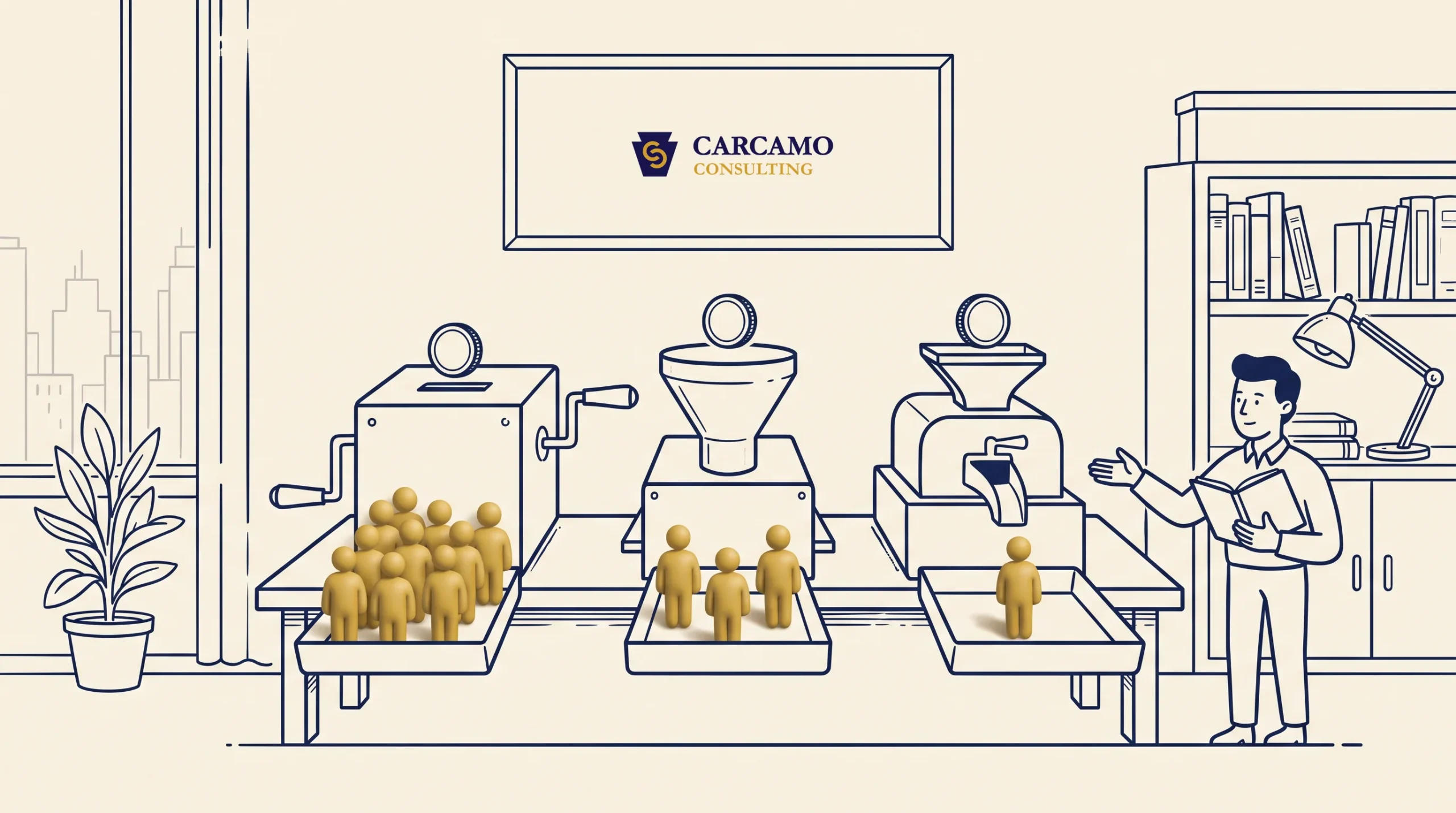
Not every lead deserves the full pursuit. Ten minutes of sorting protects the hours that matter. Three questions tell you nearly everything:
- Do they need what you actually sell? A wrong fit job costs more than it pays. Refer it out and earn goodwill instead.
- Can they buy? Are you talking to the decision maker, and is the budget in the realistic range for your work?
- When do they want it? “This month” and “someday” are different pipelines. Chase the first hard; nurture the second gently.
Score each new lead hot, warm, or cold against those three, and spend your energy from the top down. Cold does not mean discard; it means a slower rhythm, not a daily chase.
Step 3: Quote Fast, Clear, and in Writing
The quote is where interest becomes a decision, and vague quotes lose winnable jobs. A quote that closes has five parts:
- What exactly they get, in plain words, scoped tightly enough that nothing feels hidden.
- The price, stated plainly, with options if options genuinely help (good, better, best works because it turns “yes or no” into “which one”).
- What happens next: the single action that starts the work, like approving the quote and paying the deposit.
- When it expires. An open ended quote invites an open ended decision. Thirty days is plenty.
- Why you: one or two lines of proof, a guarantee, a review, a differentiator. If your offer feels interchangeable, sharpen it with a real value proposition.
Send it the same day as the conversation whenever possible. A quote that arrives while the need is loud lands differently than the same quote a week later.
Step 4: Follow Up Until You Hear Yes or No
Follow up is where most of the money is left behind. Sales studies have found that 44 percent of salespeople give up after a single follow up attempt, while the majority of deals need four or five touches to close. In one analysis, 60 percent of customers who eventually bought said no before they said yes.
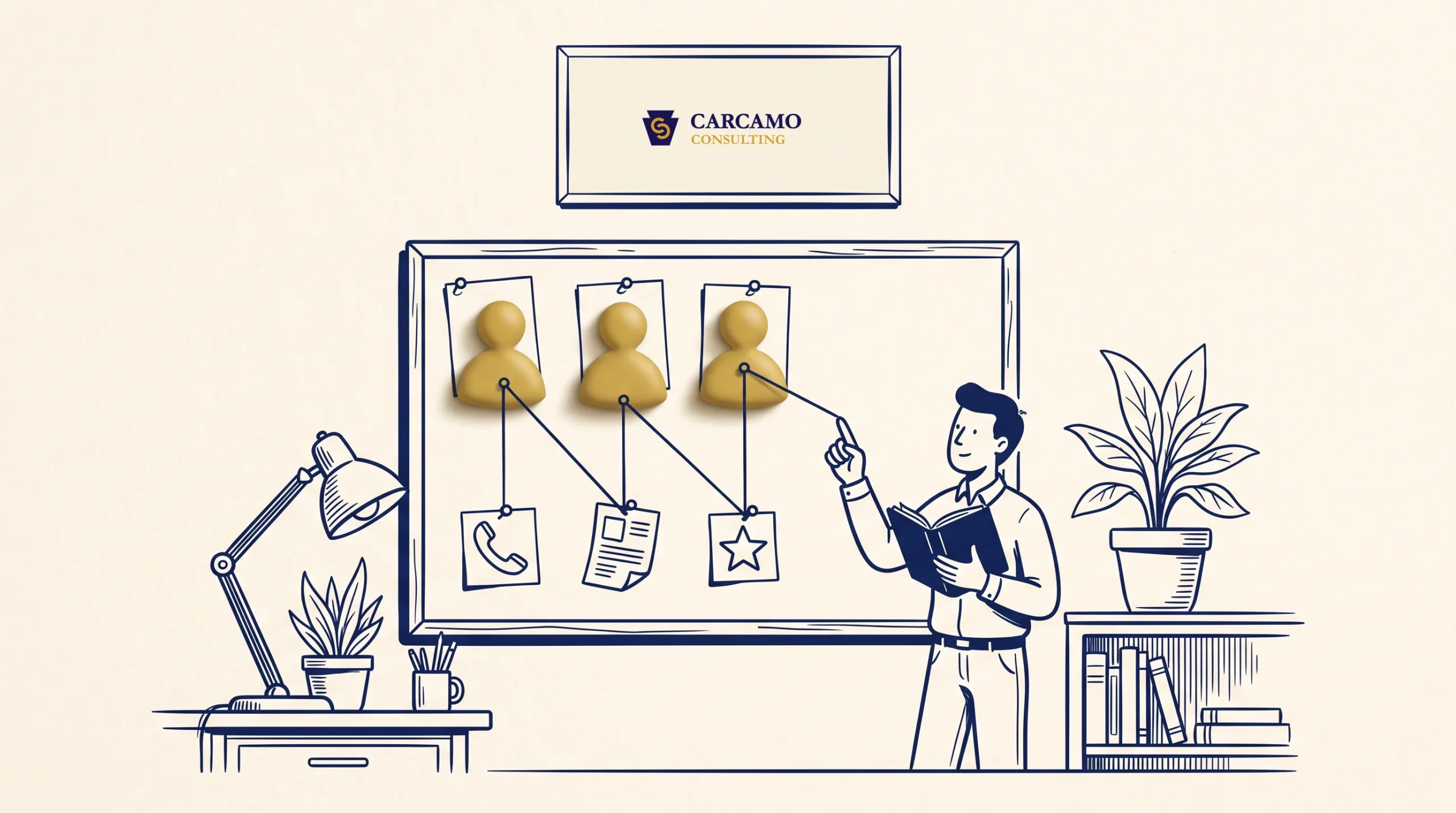
So the goal is not “check in once and hope.” The goal is a polite rhythm that ends in an answer: a note the day after the quote, a call a few days later, then spaced touches until you get a yes or a clear no.
A no is a win too; it frees your attention for leads that will pay. The full cadence, including how many touches the data says to plan for, is in how many outreach touches it takes.
Two rules keep follow up from feeling like pestering:
- Add something with each touch: an answer to a question they raised, a relevant example, a small clarification to the quote.
- Ask plainly at the end: “Would you like to go ahead?” Soft closes hide the question the lead needs to answer. If closing conversations feel awkward, the fix is in turning a conversation into a customer.
Step 5: Make Paying Easy
You asked for the sale and they said yes. This is where “paying customer” gets literal, and where friction quietly kills deals that were already won:
- Take a deposit to lock the yes. A signed quote with money down does not evaporate. A verbal yes often does.
- Accept the payment methods people actually use: card and bank transfer at minimum. Every extra hoop is a chance to stall.
- Make approval one step. An e signature or a simple “reply APPROVED” beats printing, signing, and scanning.
- Confirm immediately with what happens next and when. Buyer’s remorse grows in silence.
If a yes sits unsigned for a week, treat it as a follow up, not a formality. The deal is not done until money moves.
Know Your Numbers (So You Fix the Right Step)
Lead conversion rate is customers divided by leads, times 100. Twenty leads and five paying customers is 25 percent. Track it monthly, along with how long a lead takes to become a customer and which source your buyers came from.
The point is diagnosis.
A pile of leads and few quotes means Step 1 or 2 is broken. Many quotes but few yeses points at Step 3 or 4. Yeses that never turn into deposits is Step 5.
Fix the step where your own numbers sag, not the one a random article shouts about. And if the top of the funnel itself is thin, that is a different problem than conversion; start with lead magnets that turn visitors into leads.
If you would rather have a second set of eyes on your pipeline, tell us where your leads come from and where they stall. It is free to ask, and a real person from our Pennsylvania team will point you at the step that is costing you the most.
FAQ
What is a good lead conversion rate?
For website leads across industries, 2 to 5 percent of visitors becoming leads is typical, and anything above 5 percent is strong. For a service business converting direct inquiries into customers, healthy rates run far higher, often 20 to 50 percent, because the person already asked for a price. Measure your own baseline first; improving your number matters more than matching someone else’s.
How quickly should you respond to a new lead?
Within five minutes if you can, and within the hour as your standard. Leads contacted within five minutes are roughly 21 times more likely to convert than those contacted after a half hour, and most buyers end up choosing whoever responded first. If you cannot answer live, send an instant acknowledgment that says exactly when you will.
How do you qualify a lead?
Check three things: they need what you sell, they can pay for it and are the person who decides, and their timeline is real. A lead that passes all three gets pursued immediately. One that fails on fit gets referred out, and one with a distant timeline goes into a slower nurture rhythm rather than the daily chase.
Why are my leads not converting?
Track where they stall. Leads that never become conversations usually mean slow response. Conversations that never become quotes suggest weak qualifying or unclear pricing. Quotes that never close point to missing follow up or a quote with no next step and no deadline.
Fix the earliest broken stage first, because everything downstream depends on it.
What is the difference between a lead and a prospect?
A lead is anyone who showed interest: a form fill, a call, a message. A prospect is a lead you have qualified, someone with the need, the budget, and a real timeline. Every prospect is a lead, but only qualified leads earn the time it takes to be treated as prospects.
 Previous