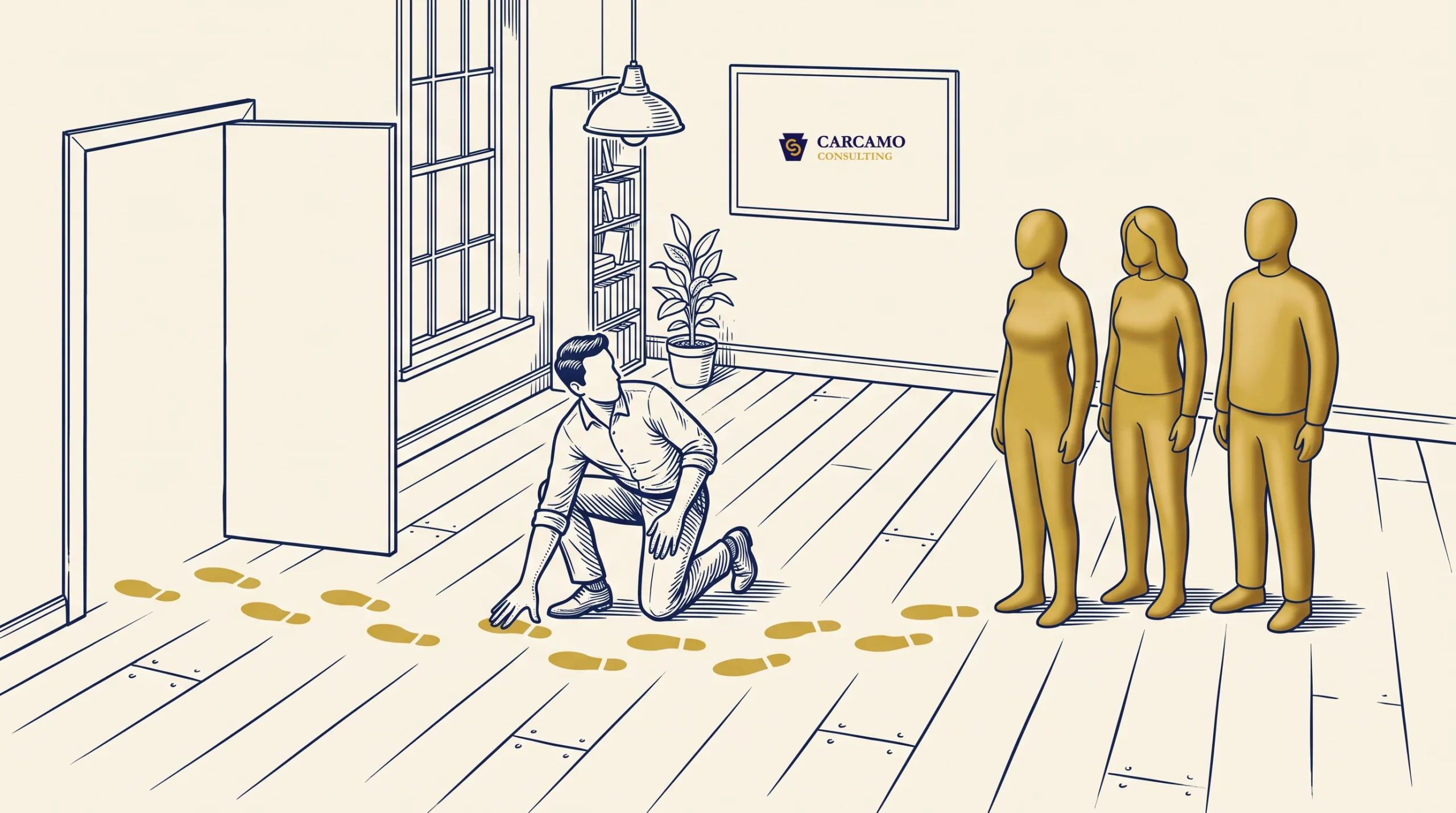

If you have more time than money, start with organic. If you need customers this month and have a budget to spend, start with paid. That is the real split, and for most small businesses the smartest version of it is to build an organic foundation first, then add a small paid budget to move faster while that foundation catches up.
The trouble is that organic vs paid customer acquisition gets framed as a fight you have to win. It is not. They do different jobs, on different timelines, with different bills. Once you see clearly what each one actually costs you and how fast it pays back, the right place to start gets obvious fast. There is one mistake that wastes more ad money than any targeting setting ever will, and we will get to it below.
What you are really choosing between
Strip away the jargon and this is a choice between two currencies: time and money.
Organic acquisition means customers find you through things you create and own. Your website ranking on Google, your blog answering a question someone searched, your Google Business Profile showing up in the map, your social posts landing in the feed. You are not paying a platform to be seen. You are paying with the work it takes to build something worth finding.
Paid acquisition means you hand a platform money and it puts you in front of people right now. Google Ads, Facebook and Instagram ads, sponsored placements. You pay, you appear. You stop paying, you disappear.
That is the whole tradeoff in one line: organic costs time and compounds, paid costs money and stops when you do. If you want the longer breakdown of how these fit alongside earned channels like referrals, our guide to the three customer acquisition channels lays out the full map.
Organic vs paid customer acquisition at a glance
| Factor | Organic | Paid |
|---|---|---|
| What it costs | Mostly time and effort | Money, every single month |
| Speed to first customer | Slow, often months | Fast, sometimes the same day |
| What happens when you stop | Keeps working for a long time | Goes silent immediately |
| Cost over time | Drops as it compounds | Stays flat or rises with competition |
| Trust it earns | High, people trust what they find | Lower, people know it is an ad |
| How easy to measure | Harder, slower to attribute | Easy, clear numbers per click |
| How easy for rivals to copy | Hard, built over time | Easy, anyone with a budget can run ads |
Neither column is the winner. The left column is an asset you build. The right column is a tap you turn on. A healthy business eventually uses both, but while you are small and cash is tight, you usually have to lead with one.
When to start with organic
Organic is the right first move when your situation looks like this.
- You have more time than cash. This is the big one. If your budget is tight but you can put in consistent hours, organic lets you trade effort for reach instead of dollars.
- You can be patient for a few months. Organic rarely produces much in the first 30 to 60 days. If you can wait for the curve to bend upward, the payoff lasts far longer than any ad.
- You are a local business. Claiming and optimizing your free Google Business Profile is the single highest-value hour of marketing most local owners will ever spend. It puts you in the local map results where ready-to-buy people are already searching.
- You want lower costs down the road. A blog post that ranks can bring in customers for years with no ongoing spend. The work is upfront, and then it keeps paying.
The real downside is patience. Organic is slow to start and harder to measure, so it can feel like nothing is happening right when you most want proof that it is. Organic is not free, it is prepaid. You do the work now and collect later.
If you are building that foundation from zero, our complete playbook for getting customers walks through the order to do it in.
When to start with paid
Paid earns its place when speed matters more than savings.
- You need customers now. Paid is the only channel that can put a lead in your inbox this afternoon. If cash flow depends on customers this month, organic is too slow to lean on alone.
- You have a budget you can actually sustain. Paid is rent, not a purchase. A campaign you can fund for two weeks and then cut off will not teach you much. Budget for a few months or hold off.
- You are launching or have a seasonal push. When you need a spike of attention on a specific date, paid delivers it on command in a way organic never can.
- You want to test fast. Ads are a quick way to learn which message and which offer actually make people click and buy. What you learn can then shape the organic content you build.
The catch is built into the name. The moment you stop paying, the customers stop coming. Paid also punishes businesses that are not ready: if your website is confusing or nobody returns the call, paid traffic just means you are paying to lose people faster. Paid works best on top of a foundation, not instead of one.
So which should you start with?
Find the line below that sounds the most like you, and start there.
- If you need leads this month and can fund ads for a few months, start with paid. Run one small, focused campaign aimed at your best service, and fix your website and follow-up before you spend a dollar driving traffic to them.
- If money is tight but you have time to work, start with organic. Claim your Google Business Profile today, then build your site and start answering the questions your customers actually ask.
- If you are a local service business, start with your Google Business Profile and reviews no matter which camp you are in. It is free, it is fast by organic standards, and it reaches people at the exact moment they are looking.
- If you are launching on a deadline, start with paid for the spike, and use the attention to capture emails and reviews so you are not starting from scratch when the ads turn off.
Notice that none of these say “do everything.” Trying to run ads, write a blog, post daily, and chase reviews all at once is the fastest way to do all of them badly. Pick the one that fits your situation, get it working, then add the next.
If you want a deeper framework for matching a channel to your specific business, we wrote a whole guide on how to choose the right acquisition channel.
The smarter play: foundation first, paid as the accelerator
Here is the mistake we promised to circle back to. Most owners pour money into paid ads before they have anything to send that traffic to. No clear website, no fast reply to inquiries, no reviews to back them up. They rent an audience they are not ready for, the audience bounces, and they conclude that “ads do not work.” The ads worked fine. The bucket had holes.
The version that works for most small businesses is not organic or paid. It is organic foundation, paid accelerator, in that order.
A realistic first 90 days looks like this:
- Days 1 to 30, build the foundation (organic). Claim and fully fill out your Google Business Profile. Make sure your website clearly says what you do, who you help, and how to contact you. Set up a fast, reliable way to answer leads. This is the bucket. Patch it before you pour anything in.
- Days 15 to 90, light the first fire (earned and paid). Ask every happy customer for a review, with the direct link, because reviews make every other channel convert better. Then, if you have budget, turn on one small, tightly targeted paid campaign for your most profitable service to start generating leads while organic warms up.
- Days 30 to 90 and beyond, build the engine (organic). Start publishing content that answers your customers’ real questions. Each piece becomes an asset that keeps working, slowly lowering how much you have to lean on paid.
Paid buys you customers today. Organic builds the machine that brings them in for years. Earned, the referrals and reviews that grow out of both, becomes the cheapest growth you will ever get. You are not picking a side. You are sequencing them so each one funds the next.
Frequently asked questions
Is organic or paid acquisition cheaper?
Organic is usually cheaper over time, and paid is cheaper to get started. Paid costs real money for every customer and keeps costing it for as long as you run ads. Organic costs mostly time upfront, then gets cheaper per customer as your content and rankings compound. For a business that can be patient, organic almost always wins on cost in the long run.
How long does organic acquisition take to work?
Plan on a few months before organic produces steady results, and longer to reach full strength, especially for SEO. The exact timeline depends on your market and how consistently you publish. The upside is that once it is working, it keeps bringing in customers without ongoing ad spend, which is why it pays to start early even though it feels slow.
Should a brand new business spend money on ads?
It can, but only after the basics are in place. If you have a clear website, a way to answer leads quickly, and a budget you can sustain for a few months, a small paid campaign is one of the fastest ways to get your first customers. If those pieces are missing, fix them first, or you will pay to send traffic to a business that cannot convert it.
Can I run organic and paid at the same time?
Yes, and the two actually help each other. Paid brings in customers and quick data while organic is still warming up, and what you learn from your ads, such as which offers and messages convert, makes your organic content sharper. The usual approach for a newer business is to lean on paid for fast wins while steadily building organic so you can rely on ads less over time.
Does running paid ads improve my organic SEO rankings?
No, not directly. Paying for Google Ads does not lift your organic ranking, and Google treats the two separately. Paid can help indirectly by driving traffic, building brand awareness, and surfacing which keywords and messages work, which you can then feed into your organic strategy. The boost is strategic, not a ranking shortcut.
What happens to my customers when I stop paying for ads?
They stop almost immediately. Paid traffic is like renting an audience, so when the payments end, the visibility ends with them. This is the core reason not to rely on paid alone. Organic and earned channels keep working after you stop actively spending, which is what makes them worth building alongside your ads.
How much should a small business budget for paid ads?
There is no universal number, but the rule that matters more than the amount is to only spend what you can sustain for at least two to three months. A campaign you fund for a week and then cut will not run long enough to teach you anything. Start small, aim the budget at your most profitable service, and scale up only once you can see it bringing in customers profitably.
Choosing between organic and paid is a lot easier when someone has already run the experiment and paid for the lessons. At Carcamo Consulting, we do not just advise on this from a textbook. We run real local businesses ourselves, here in Pennsylvania and beyond, so the advice comes from what actually worked. When you are ready to map out the right mix for your business, send us your question and a real human will help you figure out where to start.
 Previous