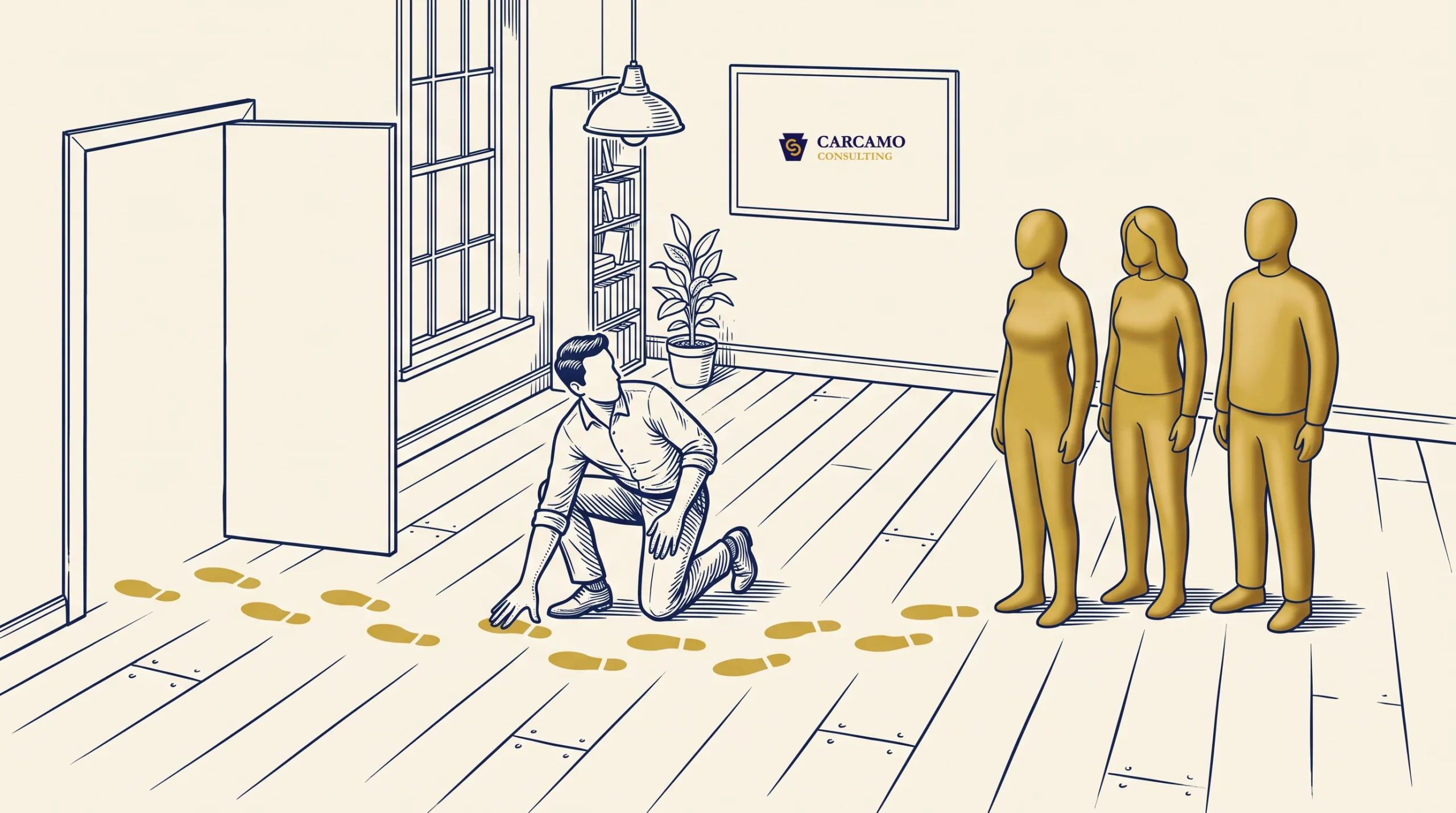

The right customer acquisition channel is the one where your ideal customers already are, that you can afford, and that you can stick with long enough to work. For most small businesses, that means picking two or three channels on purpose, not chasing all at once.
Here is the trap almost everyone falls into. You read that you need SEO, ads, email, social, and referrals, so you dabble in all of them. Months later nothing has worked, because nothing got enough budget or time. A small budget spread thin makes every channel fail.
How to choose the right customer acquisition channel comes down to a short filter: four questions that narrow the options, a quick decision map, and an honest look at how long each channel takes. Choosing well is a decision, not a guess.
What a customer acquisition channel actually is
A customer acquisition channel is any path a stranger travels to become your customer. Search engines, social media, paid ads, referrals, email, local networking, your Google Business Profile: each is a channel.
They sort into three broad families, and knowing which family you are leaning on helps you balance speed against cost. The short version: organic channels you earn over time, paid channels you rent with money, and earned channels other people hand you through trust. If you want the full breakdown, we covered the three customer acquisition channels in detail.
The point of choosing is simple. You have limited time and limited money, and the channels do not all reward you equally. Some pay off this week, some pay off next year, and some only work for certain kinds of businesses. Picking the right ones is how a small budget turns into steady customers instead of wasted spend.
Start with who you are trying to reach
Before you compare a single channel, get clear on who your ideal customer is. The right channel is wherever those specific people already spend their attention, so you cannot choose until you know them.
A homeowner who needs a kitchen remodeled searches Google and reads reviews. A busy office manager hiring a cleaning service asks other managers and checks a Google Business Profile. A 22-year-old buying a first tattoo scrolls Instagram. Same town, three completely different channels.
If you have not pinned this down yet, do that first. Working through how to define your ideal customer makes every channel decision after it almost obvious, because you stop asking “which channel is best” and start asking “where is my customer.”
The four questions that filter your options
You do not need to evaluate twenty channels. You need to run your shortlist through four questions and see what survives.
1. Where are my customers already paying attention?
This is the big one. List the two or three places your ideal customer actually looks when they have the problem you solve.
A local service business almost always lands on search and reviews. A visual or impulse product lands on social. Start where your customer already is, not where you are most comfortable.
2. What can I actually afford, in money and in time?
Every channel costs one or the other, usually both. Paid ads cost money but can run while you sleep. Organic channels like SEO and content cost time and patience but compound for free once they take hold. Be honest about which you have more of right now.
3. How fast do I need customers?
If you need leads this month to make payroll, a slow-building channel will not save you, and a paid channel that can turn on quickly probably fits better. If you are building for the next two years, the slow channels are exactly where the durable advantage lives.
4. What am I actually good at?
A channel you will execute consistently beats a “better” channel you will abandon. If you hate being on camera, short-form video is not your channel no matter how well it works for someone else. Play to a strength you will keep showing up for.
Run your shortlist through these four and usually one or two channels stand out clearly. Those are where you start.
How to choose the right customer acquisition channel for your situation
Once you have answered the four questions, the recommendation usually writes itself. Use this as a starting map, not a law:
- You need customers fast and have some budget: start with paid search or paid social. They can produce leads within weeks when the targeting and offer are right.
- Playing the long game: start with local SEO and content. They take months to build but bring in customers for years without paying per click.
- Your best customers come from word of mouth: build a referral system and get your reviews working before anything else. It is the cheapest channel you have.
- You sell something visual or impulse-driven: lead with the social platform your customer already scrolls, and post consistently.
- You serve a tight local area: your Google Business Profile and local reviews usually outperform everything else for the money.
Notice that none of these say “do all of them.” Pick the one or two that match your situation, commit, and leave the rest for later.
Test small, measure, then double down
You will not know for certain a channel works until you put real effort behind it and watch what comes back. So treat your first move as a test, not a wedding.
Pick one channel, give it a defined budget and a fixed window (say 90 days), and track one number above all others: what it costs you to get one new customer. That number is your customer acquisition cost, and the math is simple.
Customer acquisition cost (CAC) = total spent on the channel divided by the number of new customers it brought in. Spend $600 on ads in a month and land 6 customers, and your CAC is $100. Now you can compare channels honestly instead of by gut feel.
The channel is worth keeping when a customer is worth comfortably more than they cost to acquire. A common healthy benchmark is earning at least three dollars in customer lifetime value for every one dollar of acquisition cost. When a channel clears that bar, pour more into it. When it does not after a fair test, stop and move your effort to the next one.
This is the whole game: test one channel at a time, measure CAC, double down on the winners, and quietly drop the losers. It is also a foundational habit in the larger work of getting customers consistently.
Give each channel enough time before you judge it
The most expensive mistake is quitting a good channel too early. Channels run on different clocks, and judging a slow one by a fast one’s timeline guarantees you pull the plug right before it pays off.
Rough, honest timelines to set your expectations:
- Paid ads: days to weeks. You can see whether the targeting and offer work almost immediately, which is why they are the go-to when you need leads now.
- Local SEO and content: three to six months for first real movement, and six to twelve for momentum that compounds. Slow, then very much worth it.
- Social media: months of consistent posting before it reliably produces customers, not days.
- Referrals and reviews: as fast as your next few happy customers, once you actually ask.
Set the timeline before you start, write it down, and do not move the goalposts mid-test. A channel has not failed until it has had a fair shot on its own clock.
Putting it together
Choosing a customer acquisition channel comes down to a short, repeatable process. Know exactly who you are trying to reach. Run your shortlist through the four questions. Pick the one or two channels that fit your customer, budget, timeline, and strengths. Test one at a time with a real budget and a fixed window, measure your cost per customer, and double down on what clears the bar.
Do that, and you stop guessing and start building. One channel that genuinely works beats five you dabble in, every time.
If you are staring at the options and still not sure where your budget should go first, that is exactly the kind of call we help local owners make. Send us your situation and a real person will tell you where we would start.
Frequently asked questions
What is a customer acquisition channel?
A customer acquisition channel is any path a stranger uses to discover your business and become a customer. Common channels include search engines (SEO), paid ads, social media, email, referrals and word of mouth, and your Google Business Profile. They group into organic channels you earn over time, paid channels you pay to use, and earned channels that come from other people’s trust in you.
How do I know which marketing channel is right for my business?
Start with your ideal customer and ask where they already pay attention when they have the problem you solve. Then filter by what you can afford in money and time, how fast you need customers, and which channel you will actually stick with. Usually one or two clear winners fall out of those questions. Local service businesses most often land on search, reviews, and a Google Business Profile.
What is the cheapest customer acquisition channel?
Referrals and word of mouth are typically the cheapest, because a happy customer brings you the next one at no ad cost. Your Google Business Profile and organic reviews are close behind for local businesses. Organic search and content are inexpensive per customer once they take hold, though they cost time and patience up front rather than money.
How many marketing channels should a small business use?
Most small businesses do best with two or three channels they can run consistently, not one and not ten. Spreading a small budget across many channels usually makes all of them underperform. Master one channel until it produces customers reliably, then add the next. Quality of execution beats quantity of channels every time.
How do I calculate customer acquisition cost?
Divide everything you spent on a channel in a period by the number of new customers it brought in during that same period. If you spend $600 on ads and gain 6 customers, your customer acquisition cost is $100. Track it per channel so you can compare them honestly, and aim for a customer to be worth comfortably more than they cost to acquire, often cited as at least a three to one ratio of lifetime value to acquisition cost.
How long before a marketing channel starts working?
It depends on the channel. Paid ads show whether they work within days to a few weeks. Local SEO and content usually take three to six months for first results and six to twelve months to build real momentum. Social media generally needs months of consistent posting. Referrals can work as fast as your next few happy customers. Set the expected timeline before you start so you do not quit a slow channel right before it pays off.
 Previous