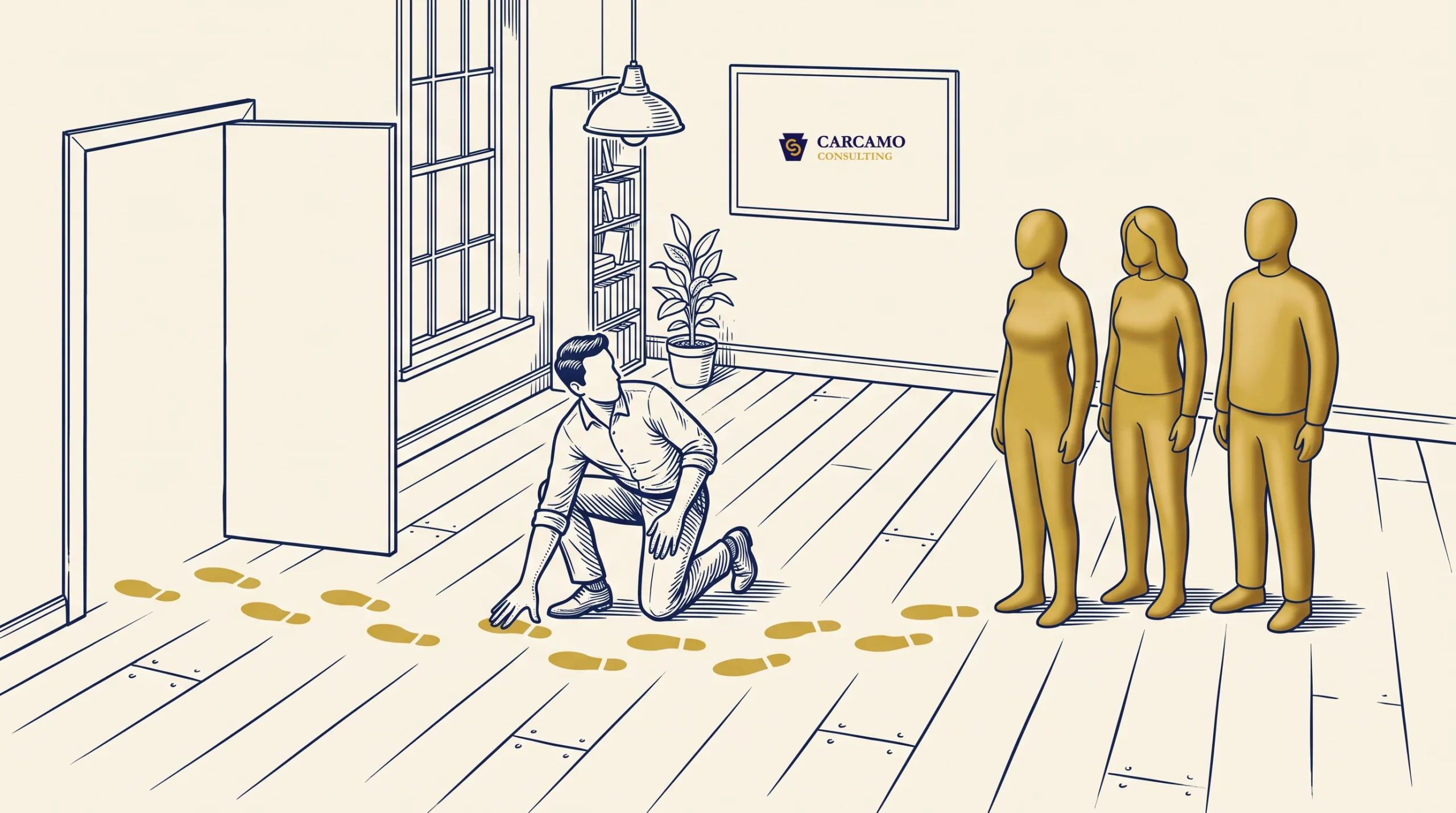
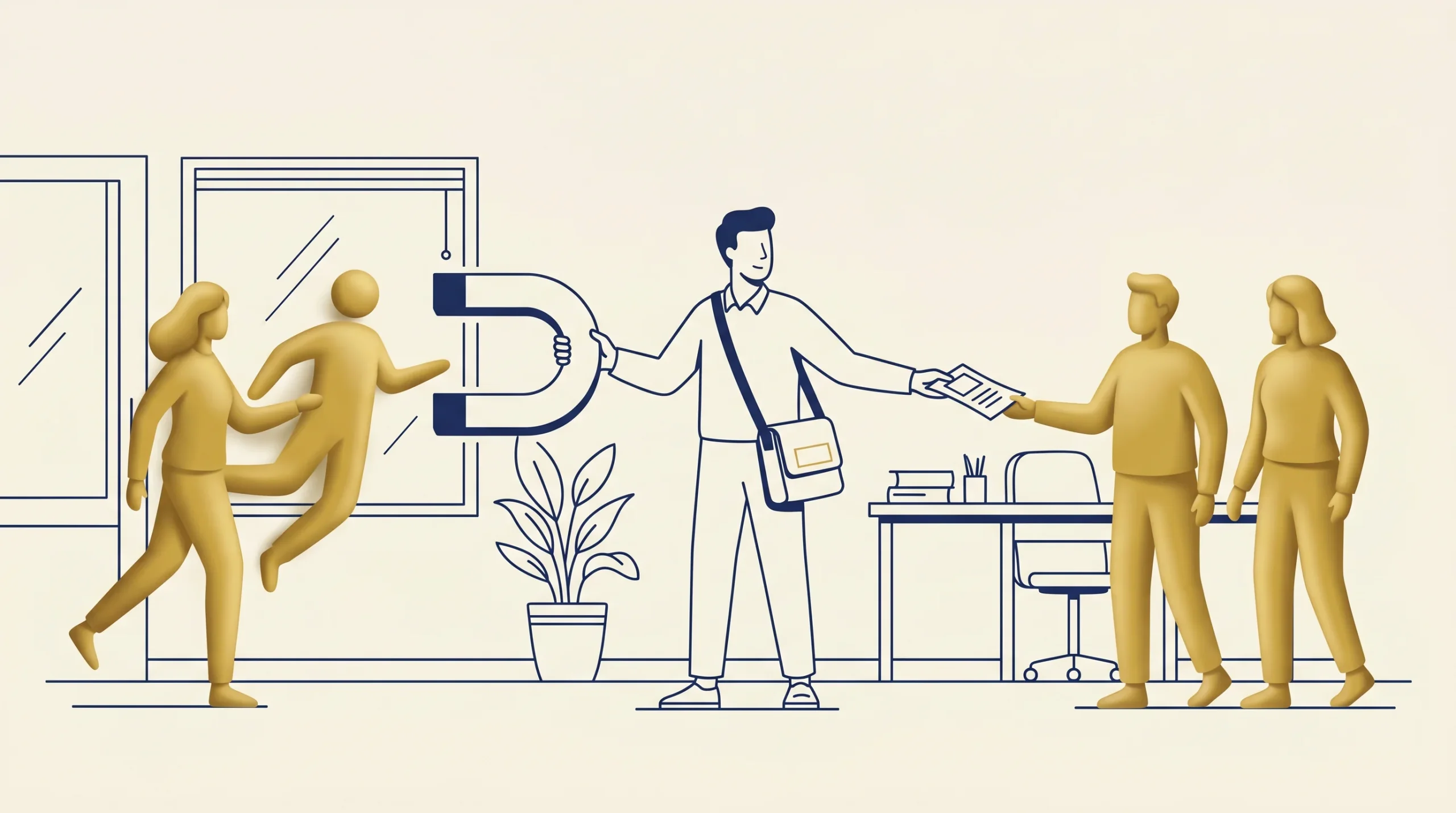
Inbound marketing is when customers come to you. Outbound marketing is when you go to them. That is the whole difference in one sentence, and which one fits you depends on three things: how fast you need customers, how much you would rather be found than do the chasing, and whether the people you want even know they have a problem yet.
Inbound vs outbound marketing gets framed as a contest with a winner. It is not a contest. Inbound and outbound do different jobs, and the smartest move for a small business is usually to lead with the one that fits your situation today and add the other once it is working. There is one trap that quietly wastes more outbound effort than a bad sales pitch ever could, and we will get to it near the end.
What inbound and outbound actually mean
Strip away the marketing speak and you are looking at one thing: who starts the conversation.
Inbound means you build something useful and let people find it on their own. They search a question, your article answers it. They scroll past your post, it helps, they follow. They check the map for a service near them, your Google Business Profile shows up. You set the bait and wait for the bite.
Common inbound examples:
- A blog post that answers what people are searching for
- Your website ranking on Google
- A fully filled out Google Business Profile pulling in local searches
- Social posts that teach or show your work
- A free checklist or guide someone trades their email to get
Outbound means you go and put your message in front of people, whether they asked for it or not. You make the first move.
Common outbound examples:
- Paid ads on Google, Facebook, or Instagram
- Cold calls or cold emails to businesses you want to work with
- Flyers, door hangers, and direct mail
- A booth at a local market or trade show
- Knocking on doors in a neighborhood you just finished a job in
One side attracts. The other side reaches out. Both can fill your schedule. They just get there in opposite directions.
The mix-up almost everyone makes
One distinction causes real confusion, and it is worth clearing up: inbound and outbound are not the same thing as free and paid.
People assume inbound means free and outbound means expensive. It is not that clean. Outbound can be completely free. Handing out flyers, cold calling, and chatting up everyone at a chamber of commerce breakfast cost you nothing but time, and they are pure outbound.
Inbound can cost money too. You might pay a writer to produce content or pay for a tool to manage your SEO.
The free versus paid question is a separate axis from the inbound versus outbound one. If you are trying to sort out the money side specifically, that is its own decision, and we broke it down in our guide to organic versus paid customer acquisition. For a wider view of how all of this fits together, our breakdown of the three customer acquisition channels maps organic, paid, and earned side by side.
Keep the two ideas separate in your head. Inbound versus outbound is about direction: do they come to you, or do you go to them. That is the question this piece answers.
Inbound vs outbound marketing at a glance
| Factor | Inbound | Outbound |
|---|---|---|
| Who makes the first move | The customer finds you | You reach out to them |
| Speed to first customer | Slow, often months | Fast, sometimes the same day |
| Best for reaching | People already looking for a solution | People who do not know you exist yet |
| Trust it earns | High, they chose to find you | Lower at first, you are interrupting |
| What it costs you | Mostly time and patience | Time or money, depending on the tactic |
| What happens when you stop | Keeps working for a while | Stops as soon as you stop |
| Owner it suits | Those who would rather be found | Those willing to start conversations |
Neither column wins outright. The left side builds slowly into something that keeps paying. The right side turns on fast and goes quiet when you stop. A growing business eventually uses both, but while you are small you usually have to lead with one.
When inbound is the right first move
Inbound fits your business when the situation looks like this.
- Your customers are already searching for what you do. Plumbers, remodelers, cleaners, accountants, anyone people look up when a need hits. If demand already exists, your job is to be findable, and that is inbound.
- You would rather be found than do the chasing. Plenty of great owners hate selling. Inbound lets your work and your answers do the talking so you are not cold calling strangers.
- You can be patient for a few months. Inbound rarely pays off in the first 30 to 60 days. The payoff is that it compounds: an article or a strong profile keeps bringing people in long after you make it.
- You want trust built in. When someone finds you by searching and reading, they arrive already half-sold. They came looking. That is a warmer lead than anyone you interrupt.
The real catch is patience. Inbound is slow to start and harder to measure, so it can feel like nothing is happening right when you want proof. Inbound is not free, it is prepaid. You do the work now and collect later.
When outbound is the right first move
Outbound earns its place when speed and reach matter more than waiting.
- You need customers now. Outbound is the only side that can put a lead in front of you this week. If cash flow depends on customers this month, you cannot lean on inbound alone.
- Nobody is searching for you yet. If you are brand new, in a new area, or selling something people do not know they need, waiting to be found does not work. You have to go introduce yourself.
- You are comfortable making the first move. If you can pick up the phone, work a room, or knock on a door without dread, outbound rewards that energy fast.
- You want to launch or push a season. When you need a spike of attention on a specific date, outbound delivers it on command. Inbound cannot turn on like that.
The catch is that outbound stops the moment you do. Stop running ads or making calls and the customers stop too. It also tends to reach colder people, so more of them say no before one says yes. That is normal. Outbound is a numbers game, and the numbers work if you keep showing up.
So which one fits you?
Find the line below that sounds the most like you, and start there.
- If people already search for your service and you can be patient, start with inbound. Claim your Google Business Profile today, make your website clear, and begin answering the questions your customers actually ask.
- If you need leads this month, start with outbound. Pick one channel you can sustain, a small ad campaign or a list of people to call, and aim it at your best service.
- If you are brand new and nobody knows you exist, start with outbound to get on the map, and capture every contact and review so you are building an inbound foundation at the same time.
- If selling makes you want to hide, lean inbound and let your work get found, but do not skip the one outbound move every local business should make: asking happy customers to refer you.
Notice that none of these say “do everything.” Trying to run ads, write a blog, post daily, cold call, and hand out flyers all at once is the fastest way to do all of them badly. Pick the one that fits, get it working, then add the next. If you want a deeper way to match a channel to your exact business, we wrote a full guide on how to choose the right acquisition channel.
The trap to avoid, and the smarter play
This is the trap we promised. The most common outbound mistake is pouring effort into reaching people before you have anything for them to land on. Owners run ads or make calls that send interested people to a confusing website, a voicemail that never gets returned, or a business with zero reviews to back it up.
The outreach worked. The follow-through did not. They conclude that “ads do not work” or “cold calling is dead,” when the real problem was the bucket had holes.
So the smarter play for most small businesses is not inbound or outbound. It is a little inbound foundation first, then outbound to bring in customers while the foundation grows.
A realistic version looks like this:
- Patch the bucket first. Make sure your website clearly says what you do and how to reach you, claim your Google Business Profile, and set up a fast way to answer every inquiry. This is light inbound work, and it makes every outbound dollar and every cold call convert better.
- Turn on outbound for cash flow. Once people who reach you actually stick, start the outreach: one small ad campaign, a calling list, or local flyers aimed at your most profitable service. This brings in customers now.
- Build the inbound engine over time. Ask every happy customer for a review and a referral, and start publishing content that answers real questions. Each piece becomes an asset that slowly lowers how much chasing you have to do.
Outbound brings in customers today. Inbound builds the machine that brings them in for years. You are not picking a side. You are sequencing them so each one supports the other. If you want that mapped out on a single page, our simple customer acquisition strategy framework walks through the order.
Frequently asked questions
What is the difference between inbound and outbound marketing?
Inbound marketing attracts customers to you through things like search results, content, social posts, and your Google Business Profile, so people find you when they go looking. Outbound marketing reaches out to people directly through ads, cold calls, emails, flyers, or events, whether they were looking for you or not. The simplest way to remember it: inbound is getting found, outbound is making the first move.
Is inbound or outbound better for a small business?
It depends on your timeline and your customers. If people already search for what you do and you can wait a few months for results, inbound is usually the better long-term investment because it compounds and earns trust. If you need customers fast or nobody knows you exist yet, outbound gets you in front of people right away. Most small businesses end up using both, starting with whichever fits their situation now.
Which is cheaper, inbound or outbound?
Inbound is usually cheaper per customer over time, and outbound is often faster to get a first customer. Inbound costs mostly time upfront and then keeps working with little added spend. Outbound costs either money (ads, mailers) or steady effort (calls, events) for as long as you keep doing it. Industry research generally finds inbound leads cost less than outbound leads once a foundation is built, but inbound takes patience to reach that point.
Can you do inbound and outbound at the same time?
Yes, and they help each other. Outbound brings in customers and quick feedback while inbound is still warming up, and what you learn from outreach, like which offers make people say yes, makes your inbound content sharper. The common approach for a newer business is to lean on outbound for fast wins while steadily building inbound so you rely on the chasing less over time.
Is cold calling or cold email inbound or outbound?
Outbound. Any time you make the first move and contact someone who did not reach out to you, that is outbound, whether it costs money or not. This trips people up because they assume outbound means paid advertising. It does not. Cold calls, cold emails, flyers, and door knocking are all free or cheap, and they are all outbound.
How long does inbound marketing take to work?
Plan on a few months before inbound produces steady results, and longer to reach full strength, especially for SEO. The exact timeline depends on your market and how consistently you show up. The upside is that once it is working, it keeps bringing in customers without constant spending, which is why it pays to start early even though the first weeks feel quiet.
Is outbound marketing dead?
No. Outbound gets a bad reputation because lazy outbound, spammy cold emails and irrelevant ads, annoys people. Done well and aimed at the right audience, outbound is still one of the fastest ways to get customers, especially for a business nobody has heard of yet. The channels evolve, but reaching out to people directly is not going anywhere.
Figuring out which approach fits is a lot easier when someone has already run the experiment and paid for the lessons. At Carcamo Consulting, we do not advise on this from a textbook. We run real local businesses ourselves, here in Pennsylvania and beyond, so the advice comes from what actually worked. When you are ready to sort out the right mix for your business, send us your question and a real human will help you figure out where to start.
 Previous